

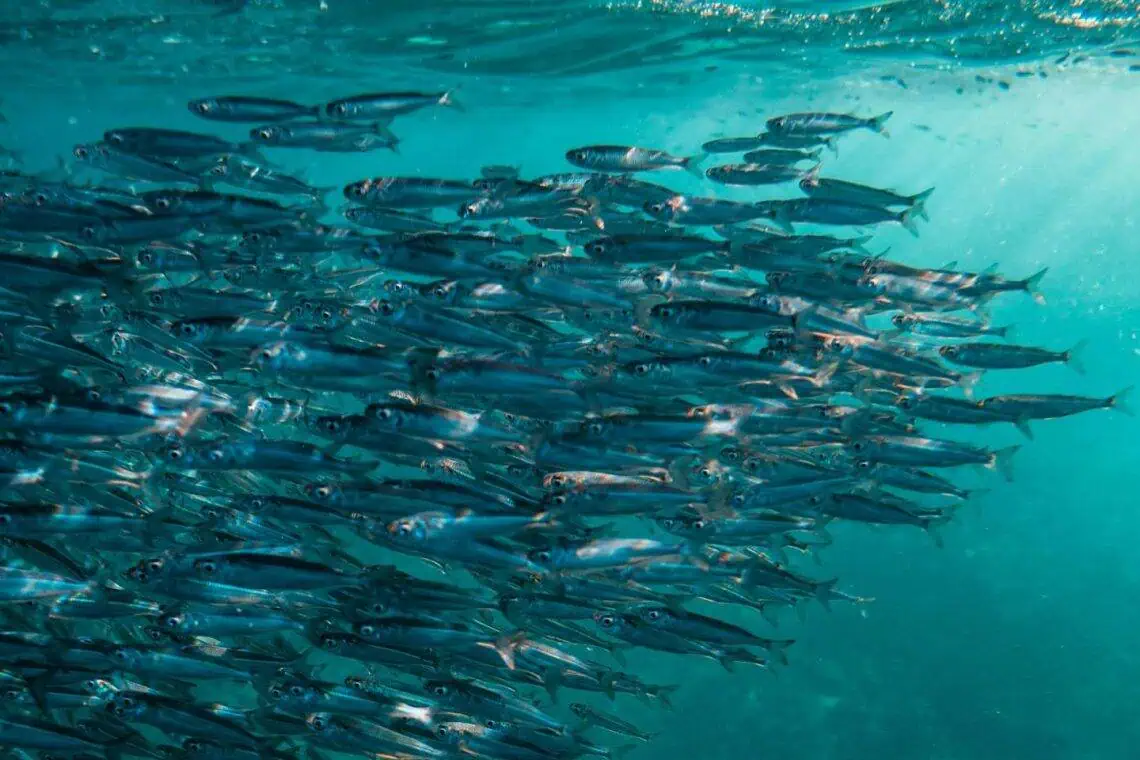

Spot the shoals sustainably: Shark-spotting tours that honor the ocean’s wild frenzy.
Every winter, waters off KwaZulu-Natal (KZN) explode in silver chaos. Billions of sardines—Sardinops sagax—surge north in the legendary Sardine Run, luring predators into a feeding spectacle. Known as the “Greatest Shoal on Earth,” this migration turns the coastline into a raw survival drama. With early 2026 teasers on the horizon, prepare now for ethical dives and shark tours that immerse you in the ballet without breaking its flow. From must-have gear to low-impact practices, this guide ensures your front-row seat respects the ocean’s rhythm.
Sardine Run: Nature’s Epic Under Pressure
More than a migration, the Sardine Run powers an ecosystem. Cold upwellings from the Agulhas Bank push nutrient-loaded currents north, drawing sardines into KZN waters from May to July. Shoals span 7 km long, 1.5 km wide, and 30 m deep, forming bait balls that throb like living missiles. Predators strike: common dolphins corral with flips, Cape gannets dive at 100 km/h, bronze whaler sharks carve paths, and Bryde’s whales swallow swarms.
But threats loom. Research labels it an “ecological trap”—sardines follow cooling currents north, only to hit warming waters above their 14–20°C tolerance.1 Climate shifts delay the run by 1.3 days per decade, slashing biomass to 25% of 2002 levels.2 Commercial fishing adds pressure, harvesting up to 100,000 tons yearly in South Africa, competing with predators like endangered Cape gannets.3 For 2026, peak action targets June–July, with possible late-May sightings off Durban’s South Coast. Stay flexible—track real-time reports from the KZN Sharks Board.
Overfishing quotas remain high despite stock concerns; purse-seine fleets target sardines directly, reducing prey for seabirds and sharks.4 Warmer oceans disrupt upwellings, shortening the run’s duration and intensity. Ethical viewing counters this—your choices support monitoring programs that inform sustainable quotas.
2026 Timing: Lock in Prime Spots Early
Book now as 2025 ends. Tours start mid-May from East London, hitting stride in June at KZN hubs like Port Edward, Umkomaas, and Scottburgh. Durban’s South Coast ignites with “sardine fever”—beaches from Amanzimtoti to Pennington draw netters and onlookers. Wild Coast spots like Port St. Johns and Coffee Bay deliver untamed vibes, aided by spotter planes.
Weather rules: south-westerly winds spark upwellings; north-easterlies disperse shoals. Plan 5–8 nights, mixing Run days with dives at Aliwal Shoal for ragged-tooth sharks and turtles. Packages begin at ZAR 28,000 for Durban flexibility, up to ZAR 68,000 for Wild Coast premium. Watch for aloe blooms—they signal the run’s approach.
Operators like Blue Wilderness offer cage-free shark encounters, blending Run action with reef dives. Compare via Sardine Run Association for certified ethical trips.
Dive Gear Essentials: Battle Cold Chaos
Water dips to 18–21°C with surf launches and 2-knot currents—bring your own gear for reliability. A 7mm semi-dry wetsuit with integrated hood blocks chill; add 5mm boots, gloves, and vest. Dark neoprene only—bright hues mimic prey and alarm sharks.
BCD: low-volume for swift boat climbs. Regulator: balanced diaphragm for cold performance. Fins: black paddle or split for thrust in surges—avoid light colors. Mask with low volume, snorkel, and SMB plus whistle are mandatory. Test buoyancy in currents; PADI Advanced Open Water required.
Camera: GoPro in housing for 4K wide-angle. Dry bag for swaps between snorkel and scuba. Pre-trip: Aliwal Shoal shakedowns. Layer rash guards and windbreakers for 6-hour deck stints.
Skip rentals unless certified fit; personal kit prevents failures in remote launches.
Ethical Shark Tours: Minimize Impact
Shark surges close beaches from Isipingo to Port Edward—nets lift for migration. Obey closures to avoid props or bites. Select Fair Trade Tourism-certified operators; they employ locals and fund communities—the Run creates 3,000 jobs.
Low-impact rules: two guides per boat, ethical plane spotting—no chases. Enter on command, keep 10 m from bait balls. Snorkel for surface action to cut bubbles. No feeding or touching.
Conserve: Join Sardine Run Association efforts with NGOs. Ban plastics; reusable bottles protect reefs. Report sightings to Sharks Board hotline for science-driven management. Live sharks drive ZAR 100 million+ in tourism yearly.5
Choose cage-free; focus on natural behavior. Support bans on shark nets outside Run season.
Safety in the Frenzy
Rough seas, cold shock, sharks: stay sharp. Beach launches via rubber ducks—board legs first, fins off seaward. Group dives only. Check air, weights provided. Cancel if swells exceed 2 m.
Non-divers: Vantage from Blue Marlin Hotel or Pumula. Eco-walks teach food webs. Hydrate, SPF 50+ for sun exposure.
Why It Matters: Ocean Health Stake
Sardines sustain 42 Marine Protected Areas, feeding turtles to whales. As stocks dwindle from heat and nets, ethical tourism funds protection. Your trip backs clinics, anti-poaching, and data for better quotas.
Dawn over Port Edward: engines rumble, then eruption—dolphins leap, gannets plummet, sharks glide. You’re part of it, responsibly. Gear set, principles firm—dive into 2026’s silver storm. The ocean thrives when we watch right.