
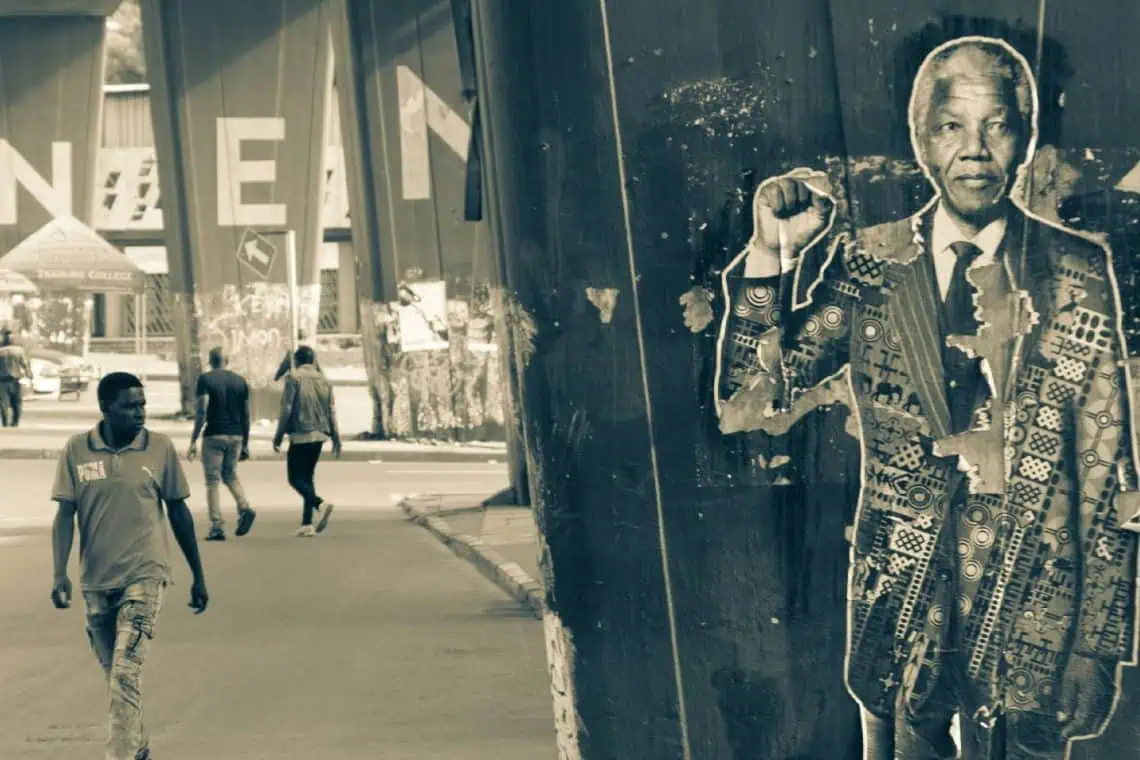

In the shadow of South Africa’s unhealed apartheid scars, a seismic legal battle is unfolding that could redefine justice for the nation’s icons. The family of Chief Albert Luthuli, the first African Nobel Peace Prize laureate, has launched a groundbreaking lawsuit against the state, demanding R100 million in reparations for his brutal 1967 assassination. This isn’t just a quest for compensation—it’s a raw confrontation with a legacy of cover-ups, silenced voices, and denied truths. As the Pietermaritzburg High Court recently ruled his death a deliberate assault by apartheid police, the Luthuli clan’s fight exposes how the regime’s ghosts still haunt democratic South Africa.
The Unyielding Spirit of Chief Albert Luthuli
Born in 1898 in what is now Zimbabwe, Albert John Mvumbi Luthuli rose from humble missionary roots to become a towering figure in the anti-apartheid struggle. Educated at Adams College, he trained as a teacher before embracing traditional leadership as chief of Groutville in KwaZulu-Natal. But it was his presidency of the African National Congress (ANC) from 1952 that immortalized him. Luthuli championed nonviolent resistance, leading the 1952 Defiance Campaign against unjust laws and co-authoring the Freedom Charter in 1955—a blueprint for a democratic South Africa.
His moral authority drew global acclaim. In 1960, despite being under house arrest, Luthuli became the first African to win the Nobel Peace Prize for his “non-violent struggle against apartheid.” Accepting the award in Oslo in 1961, he declared, “I have the feeling that I have been made answerable for the future of the people of South Africa.” Banned, beaten, and isolated, Luthuli’s voice remained a beacon, inspiring figures like Martin Luther King Jr., who echoed his nonviolent ethos in the American civil rights movement. Luthuli’s commitment to peace amid oppression resonated far beyond Africa’s borders, influencing global movements for equality and human rights. His writings, including essays on Christian nonviolence, continue to be studied in universities worldwide, underscoring his role as a philosopher of resistance.
Yet, under apartheid’s iron fist, Luthuli’s influence made him a prime target. The regime’s Special Branch, notorious for assassinations, viewed his global stature as a threat to white minority rule. As bans confined him to Groutville, whispers of surveillance and sabotage grew louder. Declassified documents from the era reveal extensive files on Luthuli, labeling him a “subversive” and detailing plans for intensified harassment. His home was raided repeatedly, and family members reported anonymous threats that escalated in the months leading up to his death. On July 21, 1967, his passing shattered not just a family, but a nation’s hope, leaving a void in the leadership of the liberation struggle that echoed for decades.
A ‘Tragic Accident’ or Calculated Murder?
The official narrative was chilling in its simplicity: Luthuli, strolling along railway tracks near his home, was struck by a goods train, suffering a fractured skull and cerebral hemorrhage. The 1967 inquest, presided over by a magistrate sympathetic to the apartheid state, absolved all parties, declaring no criminal culpability. But from day one, this story rang hollow, contradicted by the absence of typical train impact injuries like dismemberment or widespread trauma.
Family members and activists decried it as a whitewash. Luthuli’s daughters, Thandeka and Albertinah, insisted their father was murdered, pointing to inconsistencies: Why was a man of his discipline wandering tracks at dusk? Why did medical reports ignore signs of blunt force trauma inconsistent with a train impact? Conspiracy theories swirled—poisoned by state agents? Staged accident to silence him? Forensic analysis years later would confirm the wounds were from repeated blows, not high-velocity collision. Eyewitness accounts, suppressed at the time, described seeing white men assaulting him with a shovel near the tracks.
Decades passed, the Truth and Reconciliation Commission (TRC) granting amnesties to perpetrators without full disclosure. Luthuli’s grandson, Sandile Luthuli, called the original probe a “whitewash meant to cover up the activities of the apartheid government.” The pain festered, a generational wound. “The pain still feels fresh,” testified grandson Mthunzi Luthuli in 2025, his voice cracking under the weight of unresolved grief. This grief manifested in family traditions, where stories of Luthuli’s wisdom were passed down orally, keeping his memory alive but the injustice raw.
“We believe the TRC let many families of victims down by giving amnesty to apartheid murderers.” – Albert Mthunzi Luthuli
The TRC’s process, while groundbreaking, left many questions unanswered, particularly in cases like Luthuli’s where no perpetrators came forward. This omission fueled a sense of betrayal among survivors, who saw justice traded for truth without the full accountability they sought. In the years following, advocacy groups formed coalitions to push for reopened inquests, drawing parallels to international efforts for reparative justice in post-colonial contexts.
Legal Bombshells: Reopening the Case
Justice Minister Ronald Lamola’s April 2025 announcement marked a turning point. Acting on National Prosecuting Authority (NPA) recommendations, the state reopened inquests into Luthuli’s death alongside those of activists Griffiths and Victoria Mxenge. A “mathematical and scientific” report deemed a train strike “highly unlikely,” citing injury patterns screaming assault. This report, compiled by independent forensic experts, used biomechanical modeling to demonstrate that Luthuli’s intact body and localized head trauma could only result from targeted violence.
The Pietermaritzburg High Court hearings were a torrent of revelations. Forensic experts dismantled the 1967 autopsy, revealing head wounds from repeated blows, not high-velocity impact. Eyewitness accounts, long suppressed, emerged: A boy named Mbhemu Mnyandu allegedly saw the assault but vanished, his fate now under NPA scrutiny. The court ordered a full investigation into Mnyandu’s disappearance, believed to be a kidnapping by police days after the incident. Retired clerk Haji Hanif Manjoo challenged transport narratives, exposing timeline discrepancies that placed the train far from the scene at the critical moment.
On October 30, 2025, Judge Nompumelelo Hadebe delivered a scathing verdict: Luthuli’s death resulted from “assault by members of the security special branch of the South African police, acting in concert and in common purpose with employees of the South African Railway Company.” The court lambasted the original inquest as a tool of apartheid enforcement, implicating magistrates in the cover-up. Named suspects included officers like Albertus Stephanus Lategan and Daniel Lessing Greyling, long shielded by the regime. The judgment also highlighted the role of a Durban doctor who allegedly “finished off” Luthuli by withholding proper care, adding another layer to the conspiracy.
ANC spokesperson Mahlengi Bhengu hailed it as restoring “justice, truth and dignity” to Luthuli’s memory. But for the family, vindication was bittersweet. “This is the first part of finally getting justice,” said spokesperson Sandile Luthuli. The ruling not only corrects the historical record but also sets a precedent for other unresolved cases, potentially paving the way for broader accountability mechanisms.
Heart-Wrenching Testimonies: A Family’s Enduring Grief
The courtroom air thickened with raw emotion during family testimonies. Dr. Albertinah Luthuli, daughter and witness, recounted her father’s final days: constant harassment by security police, anonymous threats scrawled on their door. “He was our rock, our guide,” she wept, describing the void left by his absence. “We knew it wasn’t a train. We lived the lies every day.” Albertinah detailed how the family endured midnight raids and economic sabotage, tactics that extended the regime’s cruelty beyond Luthuli himself.
Grandson Mthunzi Luthuli’s testimony cut deepest. “Grandpa’s death robbed us of stories, of guidance,” he said, voice trembling. “The TRC’s amnesties were a second betrayal—killers walked free while we buried our pain.” He accused the post-apartheid government of foot-dragging, echoing frustrations over unprosecuted cases like Ahmed Timol’s. Daughter-in-law Wilheminah Mary Luthuli spoke of the harassment: midnight raids, poisoned livestock—tactics designed to break spirits. She described the psychological toll, including intergenerational trauma that affected her children’s upbringing and sense of security.
These accounts humanized the statistics of apartheid’s toll: over 21,000 deaths, countless disappearances. As Sandile Luthuli told Eyewitness News, “This ruling corrects history, but the scars remain.” On X, users like @kimheller3 amplified the grief: “Beaten to death by apartheid police. 💔” while @MDNnewss declared, “A nation’s hope shattered.” Social media became a space for collective mourning, with hashtags like #JusticeForLuthuli trending and drawing international solidarity from civil rights advocates.
The emotional weight of these testimonies extended beyond the courtroom, reigniting public discourse on the long-term effects of state violence. Psychologists testifying as expert witnesses explained how such unresolved grief contributes to societal divisions, emphasizing the need for holistic reparations that include mental health support for affected families.
R100M Reparations: Compensation or True Accountability?
Emboldened by the ruling, the Luthuli family filed suit in November 2025, seeking R100 million for emotional distress, lost legacy, and historical rectification. “At this stage, we are not sure whether we will take legal action alone or will be enjoined by the families of other victims,” family spokesperson Edward Luthuli stated, hinting at a coalition with Mxenge kin. The demand isn’t mere financial—it’s symbolic, mirroring TRC reparations but amplified for a Nobel icon. Legal experts note that this amount could fund community programs, such as scholarships and cultural preservation efforts, ensuring Luthuli’s ideals endure.
Legal experts see precedents in cases like the Cradock Four, where families won modest payouts. But R100 million underscores the stakes: funding education bursaries in Luthuli’s name, memorials, and investigations into vanished witnesses like Mnyandu. Critics argue it’s insufficient; unions like COSATU demand systemic reforms, linking unaddressed apartheid crimes to modern inequalities like land dispossession and economic disparity. Broader reparations discussions, including stalled R2 billion funds for victims, highlight the government’s uneven progress in addressing historical debts.
The state’s response? Muted. The NPA vows further probes, but families fear bureaucratic inertia. As Mthunzi Luthuli warned, “If not now, when? Our history demands it.” This lawsuit could catalyze a national reparations framework, drawing lessons from global models like Germany’s Holocaust indemnities or Caribbean slavery reparations claims, adapted to South Africa’s unique context of racial capitalism.
Echoes in Modern South Africa: Why This Matters Now
Luthuli’s fight transcends 1967; it’s a litmus test for post-apartheid reckoning. With inequality soaring and corruption scandals plaguing the ANC, this lawsuit spotlights unfinished business. Zwelinzima Vavi of COSATU thundered on X: “Corruption steals jobs… a betrayal of giants like Luthuli.” The ruling aligns with global calls for reparative justice, from Caribbean nations to U.S. civil rights descendants seeking redress for systemic racism. In the U.S., movements like those advocating for Juneteenth reparations echo Luthuli’s nonviolent push for equity, while Caribbean leaders press for economic restitution from former colonizers, highlighting shared struggles against historical injustices.
For young South Africans, Luthuli’s story is a rallying cry. Initiatives like the Luthuli Museum in Groutville educate on nonviolence amid rising xenophobia and service delivery protests. As the lawsuit progresses, it could catalyze a reparations fund for all apartheid victims, healing divides in a rainbow nation still shadowed by its past. Youth activists, inspired by Luthuli’s defiance, are organizing digital campaigns and community dialogues to bridge generational gaps, ensuring his legacy fuels contemporary fights against poverty and discrimination.
Moreover, this case underscores the intersection of historical truth and current policy. Economists argue that unaddressed apartheid legacies perpetuate wealth gaps, with black South Africans holding just 4% of privatized assets. Reparations, they contend, could include land reforms and skills programs, transforming symbolic justice into tangible empowerment. Internationally, Luthuli’s vindication bolsters arguments at the United Nations for recognizing colonial-era crimes, positioning South Africa as a leader in transitional justice.
Will R100 million buy closure, or is true justice—prosecutions, memorials, education—the real prize? The Luthuli legacy demands we choose: reparations or justice denied. In their fight, South Africa glimpses its soul—wounded, resilient, unbowed. As the nation navigates its third decade of democracy, this battle reminds us that freedom’s price includes confronting the past head-on, forging a future where no voice is silenced and no wrong goes unrighted.