
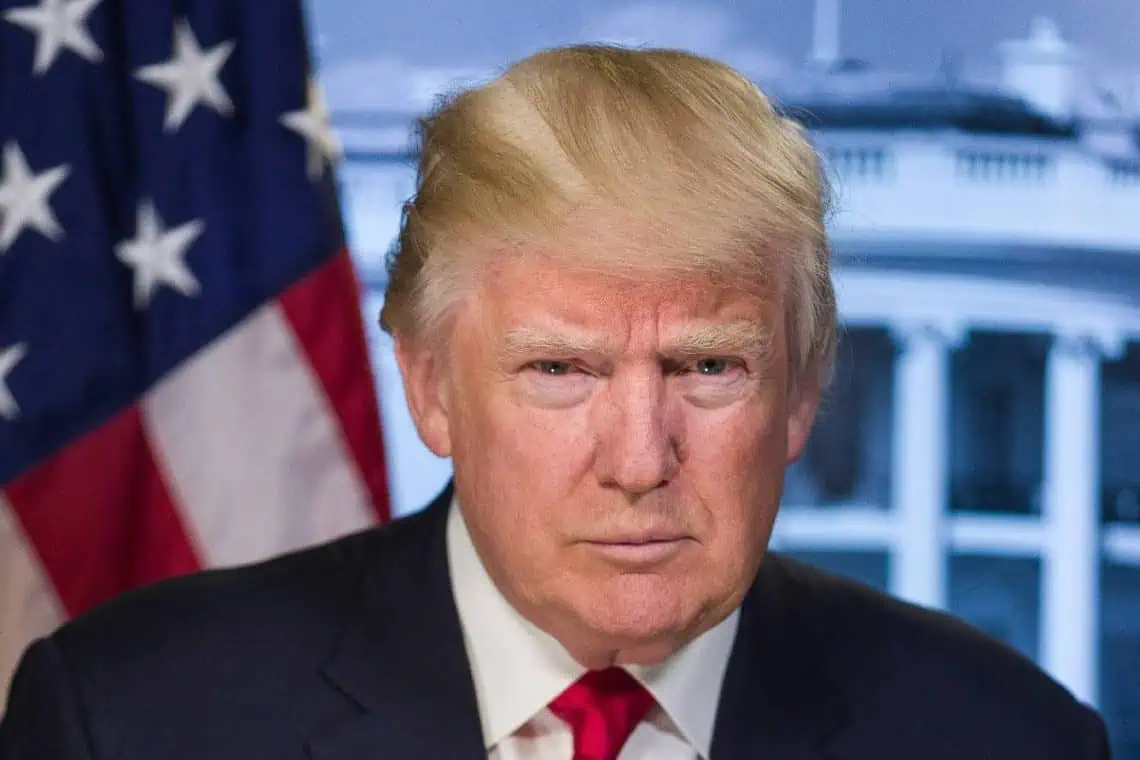

In the bustling heart of Johannesburg, where the echoes of history meet the pulse of progress, U.S. President Donald Trump’s recent declaration of a boycott against the 2025 G20 Summit has sent shockwaves through the nation. Citing unfounded allegations of targeted violence and land seizures against white farmers, Trump’s move has drawn sharp rebukes from South African leaders and civil society alike. While farm attacks remain
Trump’s SA Genocide Claim Ignites Fury
In the bustling heart of Johannesburg, where the echoes of history meet the pulse of progress, U.S. President Donald Trump’s explosive accusations against South Africa have sparked a national reckoning. His boycott of the 2025 G20 Summit over purported “genocide” against white Afrikaners has drawn sharp rebukes from all corners, exposing deep societal tensions. While farm attacks remain a harrowing reality amid the country’s rampant crime, the narrative of systematic racial extermination is a dangerous fabrication. As influential voices rally to debunk these claims, social media reveals a nation grappling with division, urging a return to unity and truth.
From White House Clash to G20 Standoff
President Trump’s fixation on South Africa’s white farmers dates back months. In May 2025, during a charged Oval Office encounter with President Cyril Ramaphosa, Trump dimmed the lights and screened a video featuring opposition leader Julius Malema’s provocative “Kill the Boer” chant. Brandishing photos of crosses from a 2020 protest—mistakenly presented as burial markers—he declared, “It’s a genocide.” Ramaphosa, accompanied by white South African icons like golfers Ernie Els and Retief Goosen, countered firmly: “If there was Afrikaner farmer genocide, I bet you these three gentlemen would not be here.”
By November, the rhetoric intensified. On Truth Social, Trump labeled the G20 in Johannesburg a “total disgrace” due to alleged “abuses” like violence and land seizures targeting Afrikaners. He pledged no U.S. delegation would attend, linking it to expedited refugee status for 59 white South Africans—a policy Ramaphosa called “baseless and misinformed.” Speculation abounds: Is this retaliation for South Africa’s ICJ case against Israel over Gaza, or fodder for Trump’s domestic supporters?
South African-born Elon Musk, a key Trump ally, fueled the fire earlier in 2025 by sharing those same misleading protest crosses as “proof.” Yet, as Afrikaner leaders voice dissent, the story unravels under examination, highlighting how external narratives can distort internal struggles.
The G20 boycott extends beyond Trump; China’s Xi Jinping and Argentina’s Javier Milei have also opted out, though for varied reasons. Ramaphosa dismissed the U.S. absence as “their loss,” emphasizing that boycott tactics rarely yield results and underscoring South Africa’s pivotal role in global forums. This standoff not only strains bilateral ties but also risks shifting African influence toward BRICS nations like China and Russia, as warned by local analysts.
De Klerk Foundation’s Bold Rebuttal
The FW de Klerk Foundation, honoring apartheid’s final president and Nobel Peace Prize recipient who co-architected democracy with Nelson Mandela, issued a vehement denial on November 10. Executive Director Christo van der Rheede declared: “It is now very important for all South African citizens to unite and refute the statements by President Donald Trump… that Afrikaners are being killed and slaughtered and their land and farms are being illegally confiscated. This is simply not true!”
Van der Rheede branded the assertions “untrue, dangerous and not supported by any credible data,” cautioning they undermine trust and bolster geopolitical rivals. The foundation champions constitutional principles, spotlighting South Africa’s true afflictions: rampant corruption, stark inequality, and crime that transcends racial lines. “South Africans are a peace-loving, forgiving people,” he affirmed, calling for adherence to the Government of National Unity’s (GNU) agenda for equitable growth and justice.
Solidarity’s Jaco Kleynhans echoed this, assuring U.S. envoys: “There’s no genocide and there’s no government seizures [of land].” A February 2025 Western Cape High Court decision reinforced the point, ruling “white genocide” claims “clearly imagined and not real.” In an open letter, Afrikaner scholars lamented being “pawns” in foreign political games, decrying the exploitation of their heritage for overseas agendas.
This unified front from Afrikaner institutions underscores a broader sentiment: While challenges persist, they demand collective solutions, not imported myths that exacerbate fractures.
Demystifying Farm Attacks: Crime’s Cruel Grip
Farm attacks are undeniably tragic, woven into South Africa’s fabric of over 27,000 murders in 2024 alone. Yet, they pale against the UN’s genocide definition: acts with “intent to destroy, in whole or in part, a national, ethnical, racial or religious group.” Experts concur: This is crime, not conspiracy.
| Year | Farm Murders (All Races) | % of Total Murders | Source |
| 2022 | 50 | <0.2% | AfriForum |
| 2023 | 49 | <0.2% | AfriForum / TAU SA |
| 2024 | 32 | <0.2% | TAU SA |
| Q1 2025 | 6 (5 Black, 1 White) | N/A | SAPS |
Figures from the Transvaal Agricultural Union (TAU SA) and AfriForum, advocates for white farmers, indicate an average of about 50 farm murders yearly—a fraction of national violence. In Q1 2025, SAPS noted six killings, five involving Black victims; AfriForum reported eight, mostly workers. A 2003 police probe and U.S. State Department analyses attribute motives to robbery and desperation, not ethnicity.
On land reform, the January 2025 Expropriation Act seeks to rectify apartheid’s legacy without a single instance of uncompensated seizure to date. White farmers retain 72% of arable land, per audits. Agriculture Minister John Steenhuisen (white, DA) affirmed to the Associated Press: “There is no mass expropriation… and no genocide.” These facts dismantle the alarmist tale, revealing a policy aimed at fairness, not vengeance.
Beyond numbers, the human toll demands action. Families shattered by violence—regardless of race—highlight the urgency for robust policing and socioeconomic reforms to stem poverty-driven crime.
Social Media’s Mirror: A Nation Divided Yet Resilient
Platforms like X pulse with raw emotion. DA MP Ian Cameron’s poll—”Should Trump sanction SA over farm attacks?”—split 62% yes (voicing crime fears) to 38% no (rejecting interference). AfriForum’s Ernst Roets queried: “Is Trump’s G20 boycott justified?”—55% said no, with comments scorning “fringe” tales.
AfriForum’s Kallie Kriel clarified: “More Blacks killed in farm attacks—10 to 2 whites last quarter.” Afrikaner historian Freddie Oos tweeted: “Embarrassing… Trump doesn’t care about our history.” Voices like EFF’s Veronica Mente retorted: “Workers killed by white farmers? Trump silent.” Semantic scans show a 60-40 divide: Urban dwellers decry “Yankee meddling,” while rural communities worry about amplified dangers.
Hashtags #NoWhiteGenocide and #FarmMurdersMatter coexist, mirroring a society confronting scars. Comedian Buddy Wells quipped: “Trump has 0 credibility in SA… What does [lobbyist] Jaco Kleynhans gain from losing ours?” These exchanges, though heated, foster dialogue, reminding all that shared humanity trumps imported discord.
Broader X trends reveal frustration with sensationalism. Users like @NewsroomZA shared the De Klerk Foundation’s plea for unity, while @AFRAPOD advocated: “Reputable data does not support genocide… Lean into EU-AU-BRICS coalitions.” This digital town square amplifies calls for evidence-based discourse over echo chambers.
Navigating Crime, Equity, and Global Ties
South Africa’s violence epidemic is indiscriminate: Q1 2025 saw five Black farm victims among six total. The Rural Safety Strategy, implemented in 99% of stations, enhances patrols and partnerships with groups like AgriSA and TAU SA. Malema’s chants, deemed non-hate speech yet inflammatory, underscore the need for responsible rhetoric.
Land initiatives target idle holdings for restitution, aligning with historical white-led equity proposals. With white South Africans boasting top living standards post-apartheid, as Ramaphosa notes, the GNU prioritizes inclusive prosperity. Trump’s interference, per De Klerk, endangers U.S. leverage in Africa, but it inadvertently spotlights urgent reforms: One life lost is intolerable.
A victim’s relative, speaking to NPR, captured the nuance: “No targeted genocide… but more must be done.” This sentiment drives initiatives like drone surveillance and community vigilance, transforming tragedy into targeted progress.
Economically, the G20 offers a platform to showcase South Africa’s resilience—hosting the first African-led summit on “Solidarity, Equality, Sustainability.” Despite absences, it advances trade pacts and climate action, reinforcing the nation’s global stature.
Forging Unity from the Flames
As polls and posts reveal rifts, the De Klerk Foundation’s unity appeal resonates: Counter falsehoods together. Bolster farm security with technology and collaboration, not illusions. South Africa’s tapestry—woven from diverse threads—endures through dialogue, not division.
Trump’s barbs may echo briefly, but they cannot eclipse Mzansi’s spirit. From townships to farmlands, citizens demand accountability: Tackle crime’s roots, pursue just reforms, and nurture the rainbow’s promise. In this crucible, truth emerges not as a weapon, but a bridge—guiding a nation toward healing and shared horizons.
The road ahead invites all to engage: Policymakers, communities, and global partners must prioritize data-driven solutions. By amplifying authentic voices and fostering inclusive growth, South Africa can turn global scrutiny into catalysts for change, proving that resilience defines its story.