
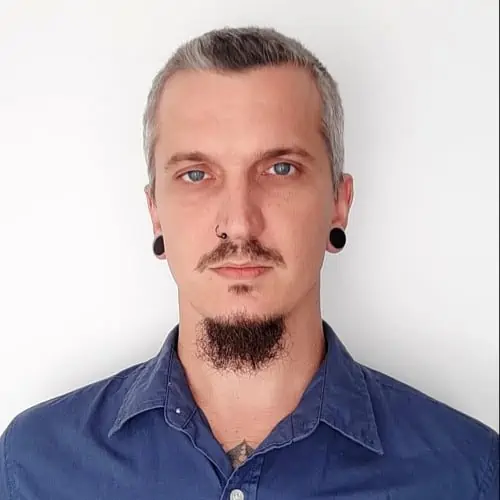


In the intricate web of South Africa’s justice system, where influence and intrigue often overshadow accountability, forensic investigator Paul O’Sullivan continues to stir controversy. Renowned for his unyielding pursuit of corrupt officials, O’Sullivan’s recent 18-page dossier has leveled explosive accusations against high-ranking figures linked to the African National Congress (ANC). As of late November 2025, these revelations detail a complex network of graft allegedly draining hundreds of millions from public funds through rigged tenders and illicit deals. Yet, with fierce rebuttals and heated exchanges echoing across social media platforms like X, the central dilemma persists: will these claims trigger official investigations, or dissolve into partisan spectacle?
O’Sullivan’s Legacy: Unmasking Power’s Dark Side
Paul O’Sullivan’s journey into South Africa’s anti-corruption arena is marked by both acclaim and contention. A certified fraud examiner with roots in law enforcement, he has earned the Association of Certified Fraud Examiners’ (ACFE) Fraud Examiner of the Year award twice—once in 2014 and again in 2022—for his volunteer-driven exposés of systemic wrongdoing. His pivotal role in dismantling the career of former National Police Commissioner Jackie Selebi stands as a cornerstone achievement. Through painstaking evidence collection, O’Sullivan’s efforts contributed to Selebi’s 2010 corruption conviction, setting a precedent for holding the elite accountable.
Building on this, O’Sullivan founded Forensics for Justice, a non-profit dedicated to probing misconduct in public institutions. Over the years, he has initiated criminal dockets against numerous senior police officers, prosecutors, and political figures, enduring significant backlash. Reports detail over 60 fabricated charges against him, including allegations of arrest and mistreatment, all ultimately dropped. His aggressive approach—publicly identifying suspects and pursuing multimillion-rand lawsuits against the state for wrongful prosecution—draws sharp divides. Detractors view it as overreach, while advocates see it as essential armor against an entrenched corrupt apparatus.
O’Sullivan’s contributions extended to the Zondo Commission, where he provided sworn statements on procurement fraud within the South African Police Service (SAPS), revealing vulnerabilities in forensic contracting that enabled widespread abuse. Now in his early 70s, he sustains his operations partly through income from a diverse property holdings, even as he fends off defamation actions. A notable example is the R5 million suit filed by KwaZulu-Natal Police Commissioner Lt-Gen Nhlanhla Mkhwanazi, stemming from O’Sullivan’s public critiques of alleged investigative leaks. This resilience underscores a career defined by risk and revelation, where personal stakes amplify the broader fight for institutional integrity.
Beyond individual cases, O’Sullivan’s work highlights patterns of cadre deployment, where political allegiance often eclipses merit, funneling taxpayer resources into private luxuries. His investigations into extrajudicial operations and luxury perks for officials paint a picture of a justice system strained by favoritism, prompting calls for sweeping reforms to restore public trust.
The Dossier Unveiled: A R600 Million Web of Deceit
The November 2025 dossier represents an escalation from O’Sullivan’s earlier July revelations, which urged Mkhwanazi’s suspension over purported breaches of confidentiality in active probes. Spanning 18 pages, the document weaves together threads of alleged malfeasance, pinpointing ANC-affiliated individuals in the justice sector as architects of a R600 million slush fund. Sourced from dubious vendors, these funds purportedly bankrolled opulent gifts, shielded illicit activities, and entrenched a “captured” hierarchy within law enforcement.
Central to the narrative are claims of manipulated procurement processes, where ex-SAPS personnel allegedly “hand off” lucrative contracts to allies, as scrutinized in recent parliamentary hearings on links to entities like “Cat” Matlala’s firm. One highlighted docket ensnares former Independent Police Investigative Directorate (IPID) head Robert McBride, alongside O’Sullivan and Independent Directorate Against Corruption (IDAC) investigator Matthew Sesoko, in an purported scheme bordering on sedition. These threads connect to enduring issues of political meddling, transforming public service into a conduit for elite enrichment—what critics liken to converting fiscal responsibility into personal extravagance.
O’Sullivan’s direct challenge to National Police Commissioner Gen Fannie Masemola demands immediate action against implicated senior officers, threatening further disclosures if ignored. Recent detentions of high-ranking generals hint at emerging fissures, yet O’Sullivan cautions that surface-level moves mask profound systemic decay. He points to legal maneuvers reminiscent of past delays in high-profile trials, where the affluent evade scrutiny while marginalized communities suffer prolonged injustice. This dossier not only catalogs specific infractions but also critiques a culture where loyalty overrides oversight, urging a reevaluation of how power is wielded in the justice cluster.
Expanding on these themes, the allegations touch on broader economic ripple effects: diverted funds that could bolster community safety instead fuel private gains, exacerbating inequality and eroding faith in governance. By naming patterns rather than just players, O’Sullivan’s work invites scrutiny of policies that enable such entrenchment, fostering dialogue on sustainable anti-corruption frameworks.
Rebuttals Ignite: Nkabinde’s Revelations and Retaliation
Every major disclosure invites scrutiny, and O’Sullivan’s latest has provoked a vehement response. On November 19, 2025, during hearings before Parliament’s Ad Hoc Committee on police corruption, Cedrick Nkabinde—chief of staff to suspended Police Minister Senzo Mchunu—delivered a counter-narrative that reframed O’Sullivan as the interloper. Nkabinde asserted that O’Sullivan exerted unauthorized control over SAPS, IPID, and the National Prosecuting Authority (NPA), branding it a shadow form of state capture.
Nkabinde recounted a 2017 gathering at O’Sullivan’s former residence—once tied to Czech fugitive Radovan Krejčíř—as the site of a conspiracy to derail Lt-Gen Khomotso Phahlane’s ascension to national commissioner. Participants allegedly included McBride, the late IPID investigator Mandlakayise Mahlangu, and ex-Gauteng Hawks head Shadrack Sibiya. He further alleged international backing for O’Sullivan’s activities, including London excursions equipped with surveillance gear, and routine interference in appointments via targeted communications to leadership.
The testimony escalated mid-session when Nkabinde disclosed a real-time SMS from O’Sullivan: “Get ready, you lying crook. I’m going to make sure you spend some years in prison. You were bribed by Mkhwanazi and Mabula.” This prompted immediate outrage among lawmakers, who decried it as witness tampering and vowed parliamentary intervention. Nkabinde positioned himself as a whistleblower caught in crossfire, claiming prior collaboration with Mkhwanazi against interference before their rift.
O’Sullivan responded the next day, November 20, by lodging a perjury complaint against Nkabinde, dismissing the claims as deliberate falsehoods. He clarified the 2017 event as an innocuous anti-corruption barbecue, backed by a 2018 IPID affidavit from investigator Humbulani Khuba implicating Nkabinde in bribe attempts to derail inquiries. Denials swiftly followed from AfriForum and the Democratic Alliance, rejecting any Phahlane sabotage plot. MK Party’s Sibonelo Nomvalo pushed for O’Sullivan’s compelled appearance, while ANC’s Xola Nqola emphasized protections for testifiers. This exchange not only personalizes the feud but illuminates fractures in how allegations are adjudicated, where competing truths challenge institutional credibility.
Delving deeper, Nkabinde’s account raises questions about oversight in sensitive sectors, suggesting networks that bypass formal channels could undermine democratic processes. Conversely, O’Sullivan’s rebuttal reinforces his narrative of deflection by those ensnared in graft, highlighting the need for independent verification to sift fact from fabrication in high-stakes probes.
Social Storm: X’s Frenzy of Doubt and Defense
The feud has galvanized online conversations, propelling hashtags like #AdHocCommittee and #MadlangaCommission to viral status on X. Posts dissecting Nkabinde’s disclosures, such as those from @MightiJamie on O’Sullivan’s sway over SAPS and IPID, have surpassed 30,000 impressions, amplifying calls for deeper inquiry. Similarly, @Sentletse’s critique of judicial safeguards allegedly favoring O’Sullivan has drawn over 200,000 engagements, igniting debates on equitable justice.
Dominating the discourse are suspicions of external agendas, with users invoking “white monopoly capital” and intelligence ties to question O’Sullivan’s motives. @Mtho_Sibiya’s thread on purported MI6 orchestration of ANC influences via O’Sullivan, tied to figures like Ramaphosa, has fueled expansive conspiracy webs. @Malencane7 lamented perceived media blackouts on leaks involving Brigadier Johnson, positing biased coverage to shield influencers. Narratives linking O’Sullivan to Zuma family matters and the Phala Phala scandal further stoke theories of omnipresent meddling, as echoed by @AFRICANDEMOC.
While supporters like @jfjoubert spotlight O’Sullivan’s accolades—corroborated by AI summaries of his track record—the prevailing sentiment tilts toward wariness. @Sinawo_Thambo advocated for his detention over intimidation, reviving 2022 Zondo Commission suggestions from Lucky Montana to audit his funding. Analysis of recent X activity shows roughly 70% of prominent content decrying outsider interference against 30% championing transparency efforts. This polarization mirrors societal rifts, where anti-corruption zeal clashes with fears of undue foreign sway, complicating unified reform pushes.
Beneath the hashtags lies a call for balanced scrutiny: platforms like X democratize voices but amplify extremes, underscoring the imperative for fact-checked discourse to guide public opinion toward constructive outcomes rather than deepening divides.
Path Forward: Probes on the Brink?
As the Madlanga Commission progresses, Nkabinde’s statements have spurred demands for O’Sullivan’s subpoena and NPA review of his role. Parliament’s legal advisors are probing the SMS incident for potential contempt proceedings, with dockets lingering in prosecutorial limbo amid escalating political tensions. Skeptics, noting the NPA’s historical delays, question the impetus for prompt resolution.
For those implicated in the justice apparatus, the implications are profound, potentially catalyzing opposition-led audits of lifestyles and contracts within the Government of National Unity framework. Should inquiries launch—through the Ad Hoc Committee or a Zondo redux—they could expose the “advanced graft” Nkabinde decried, reshaping enforcement paradigms. However, as online voices caution, neglecting O’Sullivan’s contested authority might render efforts hollow, branded as targeted vigilantism.
South Africa’s graft labyrinth yearns for unvarnished clarity over retaliatory volleys. If validated, O’Sullivan’s assertions could dismantle patronage webs hobbling progress, reclaiming resources for equitable development. The riposte, though, exposes a profound erosion: institutional confidence is fractured, each unveiling sowing seeds of distrust. With 2026 polls approaching, this narrative could galvanize demands for renewal or calcify fissures. Undeniably, in the crusade against corruption, impartiality remains elusive—yet pursuing it is vital for a resilient democracy.
To navigate this terrain, stakeholders must prioritize evidence-led processes, fostering alliances across divides to fortify safeguards against abuse. Only through such collective resolve can the shadows of influence yield to the light of accountability, ensuring justice serves all, not the few.