

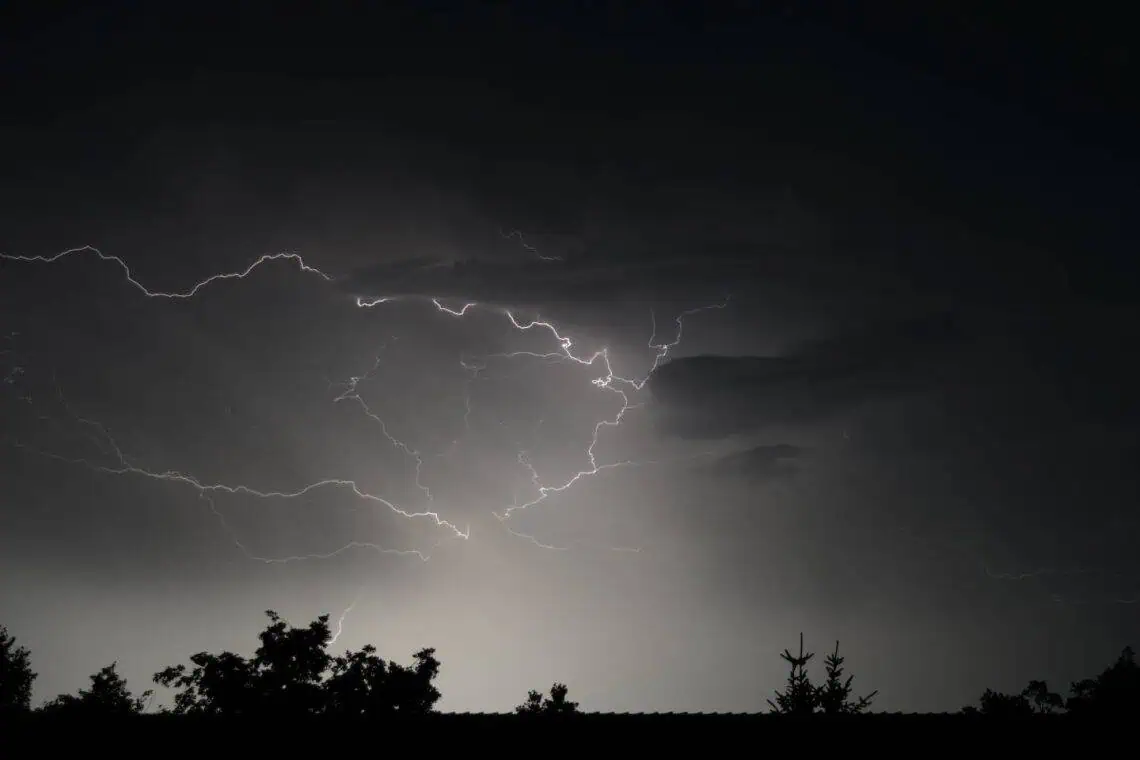

Heavy thunderstorms threaten flash floods; stay informed on road closures and home protection strategies amid escalating weather risks.
Storm Alert: SAWS Issues Yellow Level 4 Warning for Limpopo and KZN
As of November 25, 2025, the South African Weather Service (SAWS) has escalated its alert to a Yellow Level 4 warning for severe thunderstorms across Limpopo and parts of KwaZulu-Natal (KZN). This escalation follows a weekend of destructive weather that has already claimed lives and disrupted communities throughout these provinces. The warning indicates a high risk of heavy downpours, excessive lightning, hail, and damaging winds, with flash flooding emerging as the primary threat to low-lying areas and vulnerable infrastructure.
SAWS forecasts attribute the storms to a persistent cut-off low-pressure system over the eastern interior, which draws in moist air from the Indian Ocean. This meteorological setup fosters “thunder bombs”—intense, localized supercell thunderstorms that can deposit 50-100mm of rain in mere hours. In Limpopo, the southwestern bushveld and escarpment regions bear the highest risk, while in KZN, the northwestern interior, encompassing areas around Newcastle and Dundee, faces the most severe impacts. The urgency is amplified by recent tragedies: over the weekend, three individuals were swept away in KZN floods, with one body recovered and ongoing rescue operations in both provinces.
These events are not isolated; South Africa’s summer rainfall patterns have intensified, with climate models predicting a 20-30% increase in extreme precipitation events by mid-century. The cut-off low, a semi-permanent feature during this season, traps warm, humid air against the Drakensberg Mountains, forcing rapid upward motion and storm development. Residents in affected areas report skies darkening abruptly, accompanied by a sharp drop in temperature signaling the approach of these powerful systems. Historical data from SAWS shows that similar configurations have led to record-breaking rainfall, such as the 150mm deluge in Polokwane in 2023, which paralyzed the city for days.
Interpreting SAWS Weather Maps: Pinpointing the Risks
SAWS’s interactive weather maps, accessible via their official portal, offer real-time insights into the evolving crisis. Satellite imagery reveals clusters of towering cumulonimbus clouds forming over the Drakensberg escarpment, with radar data showing precipitation rates surpassing 30mm per hour in isolated cells. Lightning detection networks have logged thousands of strikes per hour, a clear indicator of the storms’ severity.
For those in Limpopo, the maps spotlight red zones along the Olifants River basin, where prior soil saturation heightens flood potential. In KZN, the Tugela River catchment stands out as a critical risk corridor, marked by blue shading for an 80% probability of disruptive rainfall. Users can layer these visualizations with elevation data to pinpoint flash flood-vulnerable valleys and urban drainage points. The SAWS mobile app delivers geo-targeted notifications, compelling residents in yellow-shaded zones to ready themselves for possible evacuation. As one seasoned meteorologist emphasized in a recent briefing, “These maps transcend mere visuals—they serve as essential tools for preempting disaster.”
Delving deeper into the technology, SAWS employs Doppler radar and geostationary satellites to update maps every 15 minutes, providing a granular view of storm tracks. For instance, current projections trace a line of instability from Tzaneen in Limpopo southward to Ladysmith in KZN, with embedded mesoscale convective systems capable of rotation and enhanced wind gusts up to 100 km/h. Community education on map interpretation has surged, with workshops in Vhembe and uMgungundlovu districts teaching locals to recognize color-coded intensity levels—from green for light rain to purple for extreme hazards.
Weekend Devastation: Lessons from Recent Storms
The present alert compounds the turmoil from a weekend dominated by Orange Level 5 warnings enveloping Gauteng, Mpumalanga, Limpopo, and KZN. Torrential rains sparked extensive flooding, submerging homes, triggering power outages for thousands, and overburdening emergency responders. In KZN’s Umshwathi Municipality, flash floods severed community access, demolishing bridges and roadways, while Limpopo’s Waterberg district endured hailstones comparable to golf balls, pummeling vehicles and rooftops.
The human cost is heartbreaking: In KZN, unyielding downpours resulted in three fatalities from swollen streams, mirroring the province’s chronic flood exposure—much like the 2022 Durban catastrophe that claimed over 400 lives. Limpopo experienced fewer losses but still mandated evacuations in Polokwane’s outskirts, where stormwater infrastructure buckled under the volume. These incidents underscore South Africa’s escalating vulnerability to extreme weather, a trend intensified by climate change. Attribution studies from the World Weather Attribution initiative reveal that global warming has at least doubled the probability of such deluges, with warmer oceans fueling moisture-laden atmospheres.
Beyond immediate losses, the economic ripple effects are profound. Preliminary assessments peg damages in the hundreds of millions of rands, encompassing agricultural devastation—maize and citrus crops in Limpopo’s Lowveld suffered 40% yield reductions—and infrastructure repairs. Smallholder farmers, often on the front lines, face compounded hardships without adequate crop insurance. Mental health impacts linger too; survivors recount trauma from midnight evacuations, with NGOs like Gift of the Givers reporting a spike in counseling requests post-event. This wake-up call demands not just recovery but systemic reforms in early warning dissemination and resilient building practices.
Navigating Real-Time Road Closures Amid the Chaos
As thunder bombs gear up for further onslaught, road closures proliferate rapidly. In KZN, sections of the N3 toll route between Mandeni and Balgowan persist in partial shutdown due to inundation at the Mooi River bridge, with officials recommending detours along the R103. The N2 southbound near Mzumbe remains impassable from flash flooding, leaving some motorists stranded overnight. SANRAL has documented over 20 secondary roads shuttered in the Ugu and iLembe districts, notably the R612 in Umshwathi, where a segment has collapsed.
Limpopo’s roadways fare no better: Debris obstructs the R510 linking Modimolle and Bela-Bela, and the N1 north of Polokwane endures sporadic closures for hazard inspections. Provincial officials endorse the Arrive Alive app for instantaneous updates, reiterating the mantra “Turn Around, Don’t Drown”—as little as 15cm of swift water can displace a vehicle. To alleviate backups, truck restrictions apply to the N3 and N2, and commuters are encouraged to opt for carpooling or e-hailing platforms featuring flood-adaptive navigation.
Logistically, these closures strain supply chains, delaying essential goods to rural clinics and markets. In response, the Department of Transport has mobilized additional tow trucks and drone surveillance for rapid assessments, while apps like i-Traffic integrate SAWS data for predictive alerts. Long-haul drivers, a backbone of the economy, must now factor in 2-3 hour delays, prompting calls for federal investment in elevated bypasses and permeable pavements to mitigate future disruptions.
Evacuation Essentials: A Step-by-Step Guide to Flash Flood Safety
Upon issuance of an SAWS evacuation directive, time is critical. Assemble your go-bag promptly: Include vital medications, identification papers, cash reserves, a battery-operated radio, and provisions for three days—non-perishables and water. Families should pack pet essentials and child-soothing items like favorite toys. Proceed without delay to elevated terrain, targeting at least 50 meters above the flood line, steering clear of canyons or arroyos where surges can materialize undetected.
Vigilantly track water levels; if they lap at your threshold, evacuate independently of mandates. Leverage the SAWS hotline at 0800 088 776 or nearby disaster hubs for directives. In flood-susceptible informal settlements, community heads are invaluable—numerous maintain WhatsApp networks for instant notifications. Following evacuation, report to relief hubs for support; KZN’s Provincial Disaster Management Centre has opened shelters in Pietermaritzburg and Richards Bay, complete with medical stations and family reunification services.
Preparation extends to drills: Monthly simulations in high-risk wards have proven to slash response times by 25%, per recent studies. Vulnerable groups—elderly, disabled, and single parents—benefit from buddy systems, where neighbors commit to mutual aid. Post-flood, hygiene kits combat waterborne illnesses like cholera, which spiked 15% after 2022’s events. Empowering locals through these protocols transforms potential panic into coordinated action, saving lives and fostering community bonds.
Fortifying Your Home: Defenses Against Flash Floods
Forward-thinking safeguards can fortify your residence against flood incursions. Elevate key items: Hoist appliances and electrical panels onto concrete blocks, and stash valuables in watertight bins on uppermost shelves. Retrofit sewer traps with check valves to thwart backflow, and meticulously clear gutters and downspouts to facilitate unimpeded drainage.
For acute dangers, deploy sandbags as primary bulwarks—arrange them in pyramids flanking doors and vents, with overlapped joints for impermeability. Explore flood barriers or pneumatic dams for garage perimeters. Mend foundation fissures using hydraulic cement, and contour your yard with gradients channeling water from edifices. On the insurance front, scrutinize your coverage for flood endorsements—conventional policies frequently omit them, necessitating add-ons from insurers such as Santam or Old Mutual.
Sustained efforts include indigenous plantings to anchor soil and sequester runoff, curbing erosion. Initiatives in Limpopo’s Vhembe region demonstrate that such verdant buffers have diminished flood severity by up to 30%, blending ecological restoration with hazard mitigation. Grants from the Department of Environmental Affairs incentivize these measures, enabling even modest households to invest in permeable driveways and rain gardens that recharge aquifers while diverting deluges.
Wider Ramifications: Climate Change and SA’s Flood Trajectory
This alert heralds a broader paradigm shift in a heating planet. La Niña influences, intertwined with El Niño’s residual warmth, have amplified South Africa’s monsoon deluges, rendering 2025 among the soddenest years documented. An Amnesty International analysis cautions that unchecked urban expansion in eThekwini and Johannesburg confines millions within peril zones, where deficient drainage exacerbates cataclysms.
Governmental countermeasures, including the R1.9 billion reallocation for KZN restoration, mark progress, yet specialists advocate for hazard-centric urban design: Rigorous construction norms, sustained stormwater upkeep, and augmented early alert networks. With floods annually uprooting thousands, cultivating resilience—via communal exercises to verdant infrastructure—emerges as an imperative national agenda. Projections from the IPCC suggest a 50% uptick in flood frequency by 2040 sans intervention, imperiling biodiversity hotspots like the iSimangaliso Wetland Park and coastal economies reliant on tourism.
Social equity demands attention too; low-income enclaves, comprising 60% of flood victims, endure disproportionate burdens due to subpar housing. Initiatives like the National Disaster Risk Reduction Framework aim to redress this through subsidized retrofits and inclusive planning, ensuring marginalized voices shape resilient futures. International partnerships, such as those with the UN’s Sendai Framework, bolster capacity-building, from AI-enhanced forecasting to cross-border data sharing on transboundary rivers like the Limpopo.
Proactive Steps: Essential Resources to Stay Storm-Ready
Arm yourself with vital assets: Secure the SAWS app for instant alerts, track @SAWeatherServic on X for dispatches, and consult FloodList.com for worldwide perspectives. Local councils furnish gratis hazard evaluations—reach out to Limpopo’s Department of Co-operative Governance or KZN COGTA forthwith.
Moreover, integrate personal weather stations into neighborhood networks for hyper-local data, and enroll in free online courses from SAWS on storm preparedness. By assimilating these resources, individuals evolve from passive recipients to active guardians, mitigating risks at the grassroots level.
Confronting these thunder bombs, informed vigilance stands as the ultimate safeguard. By consulting SAWS maps, honoring road advisories, and reinforcing dwellings, South Africans can navigate this tempest—and ensuing ones—with fortitude. Prioritize safety, embrace knowledge, and maintain dryness above all.