

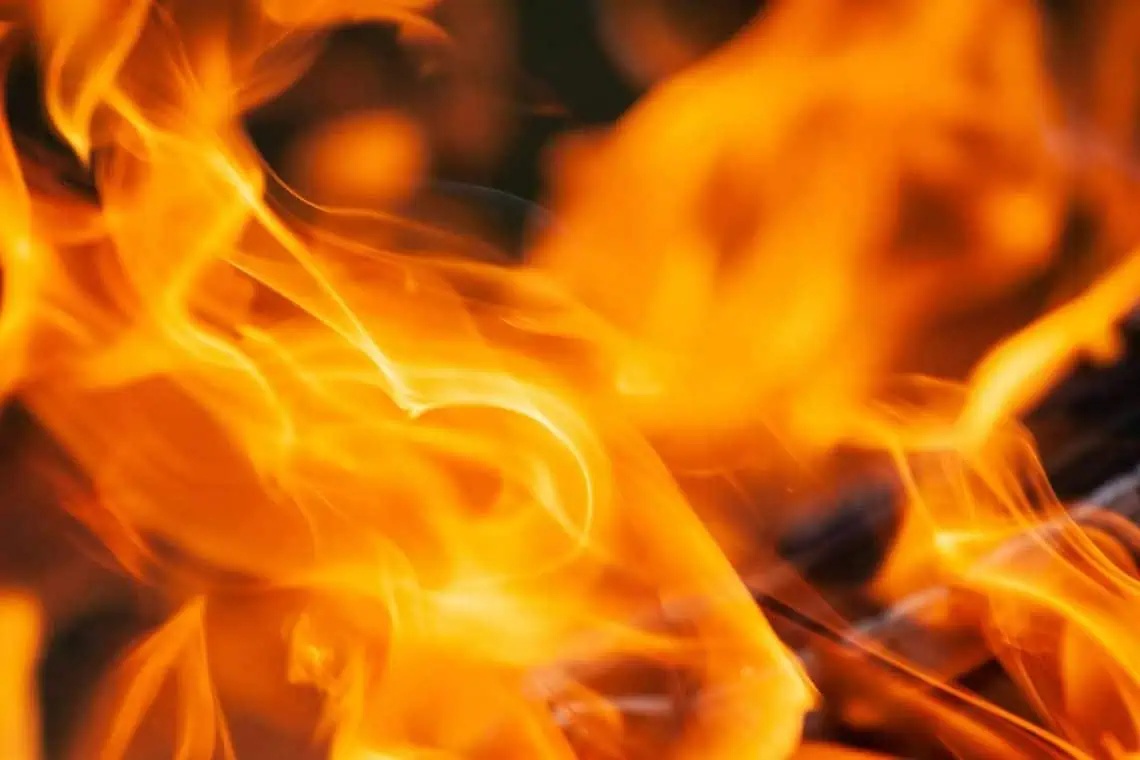

As scorching hot winds whip through the rugged peaks of the Matroosberg Mountains, a relentless wildfire rages across the Witzenberg region in South Africa’s Cape Winelands. Ignited by a lightning strike above Swaarmoed Pass, the blaze has forced evacuations in the nearby town of Ceres, casting a pall of smoke over idyllic vineyards and historic farmsteads. Firefighters from the Cape Winelands District Municipality (CWDM) are locked in a grueling battle, their efforts hampered by gusts exceeding 50 km/h and bone-dry fynbos vegetation primed for combustion. This isn’t just another seasonal flare-up—it’s a stark warning of how climate change is supercharging wildfires in one of the world’s most precious wine-growing heartlands.
The Blaze Ignites: A Lightning Strike Sparks Chaos
The fire erupted on November 18, 2025, amid a wave of extreme weather sweeping the Western Cape. What began as a localized spark high in the Matroosberg—South Africa’s second-highest mountain range—quickly escalated into a multi-front inferno. By December 3, CWDM fire services reported active flames on the Witzenberg side, burning in a scattered line above farms near Swaarmoed Pass. Ground crews, bolstered by aerial water bombers from CapeNature and the Winelands Fire Protection Association, have been working around the clock. Yet, the terrain’s steep slopes and dense alien invasive plants have turned the mountains into a tinderbox, with the fire burning briskly in veld and non-arable areas but posing no immediate danger to property as of early December.
In Ceres, a picturesque valley town nestled at the foot of these peaks, the threat feels all too real. On December 2, authorities ordered precautionary evacuations for residents in low-lying areas, citing the risk of embers carried by erratic winds jumping firebreaks. Families packed essentials into vehicles, fleeing under a sky choked with acrid smoke that blanketed the Boland region’s rolling hills. “We’ve seen smoke before, but this feels different—hungrier,” said local farmer Elena van der Merwe, whose orchard borders the evacuation zone. No lives have been lost, but the psychological toll is mounting, with schools closed and roads like the R303 restricted. The smoke has even drifted as far as Cape Town, 150 km south, exacerbating air quality issues and prompting health advisories for vulnerable populations.
This incident is part of a broader surge in wildfire activity across the Western Cape, with widespread blazes reported from November 18 to 27, driven by hot, dry, and windy conditions. The province’s 2024/25 fire season saw a significant increase in frequency, with 11,149 veld and wildland fires reported between November and February alone, though total area burned dropped to 32,187 hectares from 78,000 the previous year due to improved response efforts. These statistics underscore the growing challenge of managing fires in a region where vegetation is increasingly parched.
Heroes in the Heat: Firefighters’ Relentless Stand
Cape Winelands firefighters are the unsung guardians in this fiery saga. Over 200 personnel, including volunteers from Working on Fire and local landowners, have rotated shifts in blistering conditions exceeding 35°C. Dressed in fire-retardant gear, they wield hoses and chainsaws, carving containment lines through thorny protea thickets. Aerial support has been crucial: helicopters have dumped thousands of liters of water sourced from distant dams, while spotter planes guide teams to hotspots. Provincial aerial resources were deployed to 63 fires in the 2024/25 season, logging 245 flying hours and dropping over 2 million liters of water.
One crew leader, speaking anonymously amid the chaos, described the scene: “The wind shifts like a living thing—one moment it’s at your back, the next it’s driving flames toward your boots.” Injuries have been minor but telling: heat exhaustion and minor burns among the ranks. Community support has poured in, with Tulbagh residents delivering water and sandwiches to forward bases. MEC Anton Bredell, Western Cape’s Minister for Local Government, praised these efforts in a November 28 update, noting that similar blazes in Visgat and Rocklands were contained through sheer tenacity. As of December 4, the fire is 60% contained, but forecasters warn of another heatwave that could reignite flanks. The CWDM’s collaboration with partners like CapeNature and the Winelands FPA highlights the coordinated response that has kept losses minimal, with no civilian or firefighter casualties reported in the district’s recent incidents.
Vineyards Under Siege: Economic Heartbreak Looms
The Cape Winelands aren’t just scenic—they’re an economic powerhouse. This UNESCO-recognized region drives a significant portion of South Africa’s wine industry, which exported wines worth approximately R10 billion (over US$562 million) in 2024, with projections for steady growth into 2025 despite global market contractions. Vineyards in Ceres and surrounding valleys, famed for crisp Chenin Blanc and robust Shiraz, now teeter on the brink. Smoke taint, an insidious byproduct of wildfires, infiltrates grapes, imparting ashy flavors that render harvests unsellable—a risk that has plagued producers in recent seasons. Early estimates from the Witzenberg Valley Fruitgrowers’ Association peg potential losses at R200 million if the fire breaches lower slopes, compounding the R12 million already spent by CapeNature on fire suppression in the 2024/25 season.
Beyond wine, the inferno endangers fruit orchards—apples, pears, and stone fruits that feed global markets and contribute billions to agricultural exports, which reached $11.7 billion in the first three quarters of 2025. Alien vegetation, like dense stands of black wattle, exacerbates the spread, gobbling water and fueling hotter burns. Homes dot the landscape too: thatched farmhouses and eco-lodges risk total loss. In nearby Genadendal, a historic Moravian mission village, evacuees worry about irreplaceable heritage sites. The blaze’s proximity to the R46 highway disrupts tourism, stranding visitors en route to the Cederberg Wilderness and threatening the R9.3 billion annual contribution from wine tourism to the GDP.
The broader economic ripple effects are profound. The wine sector supports over 270,000 jobs nationwide, with nearly 86,000 in farms and cellars, and generates nearly 1% of South Africa’s GDP. Disruptions from fires like this one not only hit immediate yields but also long-term investor confidence, as climate risks increasingly factor into decisions. Smaller producers, already squeezed by rising input costs and port delays, face the steepest climb, while bulk exports—comprising 55-60% of volume—remain vulnerable to quality dips from smoke exposure.
Climate Change: The Hidden Arsonist
Make no mistake—this wildfire’s ferocity bears the fingerprints of climate change. The Western Cape’s Mediterranean climate, with wet winters and bone-dry summers, is shifting toward extremes: longer droughts, hotter temperatures, and fiercer winds. The 2025 SmartAgri Barometer report from the Western Cape Department of Agriculture documents a 40% spike in vegetation fires over the past decade, attributing it to “multiple simultaneous burns” driven by anthropogenic warming. This aligns with broader trends, as the 2024/25 season marked a record with 7,480 incidents in some areas, fueled by unseasonal dryness.
Attribution studies, like one on the 2021 Table Mountain fire, show extreme fire weather around Cape Town is now 90% more likely due to human-induced climate shifts. Hotter days evaporate soil moisture, turning fynbos—a fire-adapted shrubland—into explosive kindling. Winds, amplified by shifting jet streams, propel embers kilometers ahead, outpacing weary crews. The IPCC’s 2022 report warns that such patterns will intensify, with South Africa’s fire seasons extending by up to five months and frequency rising 30% at 4°C warming. In the Cape, where 80% of fires stem from human or lightning ignitions, these changes multiply risks exponentially, with projections of increased burned area in arid regions like the Karoo.
Ecologically, the toll is profound. Fynbos, a biodiversity hotspot with 9,000 plant species, relies on periodic fires for regeneration. But too-frequent or intense blazes disrupt this cycle, threatening endemics like the protea and erica. Alien invasives, thriving in warmer conditions, add fuel loads that burn hotter, releasing more CO2 and perpetuating the vicious loop. Smoke plumes from the Matroosberg have drifted to Cape Town, 150 km south, worsening air quality and respiratory issues in urban centers. Studies indicate that wildfires now contribute to 90% of fine particulate matter exposure in affected areas, heightening health risks for millions. As global warming pushes temperatures higher, the Western Cape—already experiencing rapid surface warming—faces a future where fire-prone conditions dominate, challenging conservation efforts in protected areas like the Swartberg, which alone saw over 15,500 hectares burned last season.
From Ashes to Resilience: Forging a Fire-Proof Future
As the flames subside, questions of prevention loom large. The Western Cape’s Climate Change Response Strategy, aiming for net-zero by 2050, emphasizes integrated action: prescribed burns to mimic natural cycles, invasive clearing via the Working for Water program, and community education on fire safety. Investing in early-warning systems, like drone surveillance and AI-driven wind modeling, could buy precious hours. Farmers are piloting drought-resistant rootstocks and shade netting to shield vines from heat stress, while diversifying varietals like Grenache to adapt to shifting conditions.
Globally, the Mediterranean Climate Action Partnership (MCAP)—co-chaired by the Western Cape—urges cross-border collaboration at COP29, sharing tactics from California to Chile. Locally, eco-tourism operators are retrofitting lodges with fire-resistant materials, while insurers push for “green premiums” that fund habitat restoration. Bredell stresses: “Climate impacts are local, but solutions must be collective.” Initiatives like the Wine Arc incubator support black-owned brands in accessing markets, enhancing resilience through diversity.
Yet, challenges persist. Budget constraints limit aerial fleets, and urban sprawl encroaches on wildlands, creating volatile interfaces. The 2024/25 fire season’s 7,480 incidents—a record—underscore the urgency. As Ceres residents return home, sifting through soot-streaked gardens, they embody resilience. This Matroosberg blaze, though contained, scorches a path toward adaptation. In the Cape Winelands, where vines have endured centuries, the real vintage will be measured not in bottles, but in bold steps against the gathering storm. By embracing innovation—from fire-smart designs to carbon removal technologies like those in the South Africa Carbon Removal Guide 2025—the region can turn peril into progress, ensuring its treasured landscapes flourish for generations to come.