
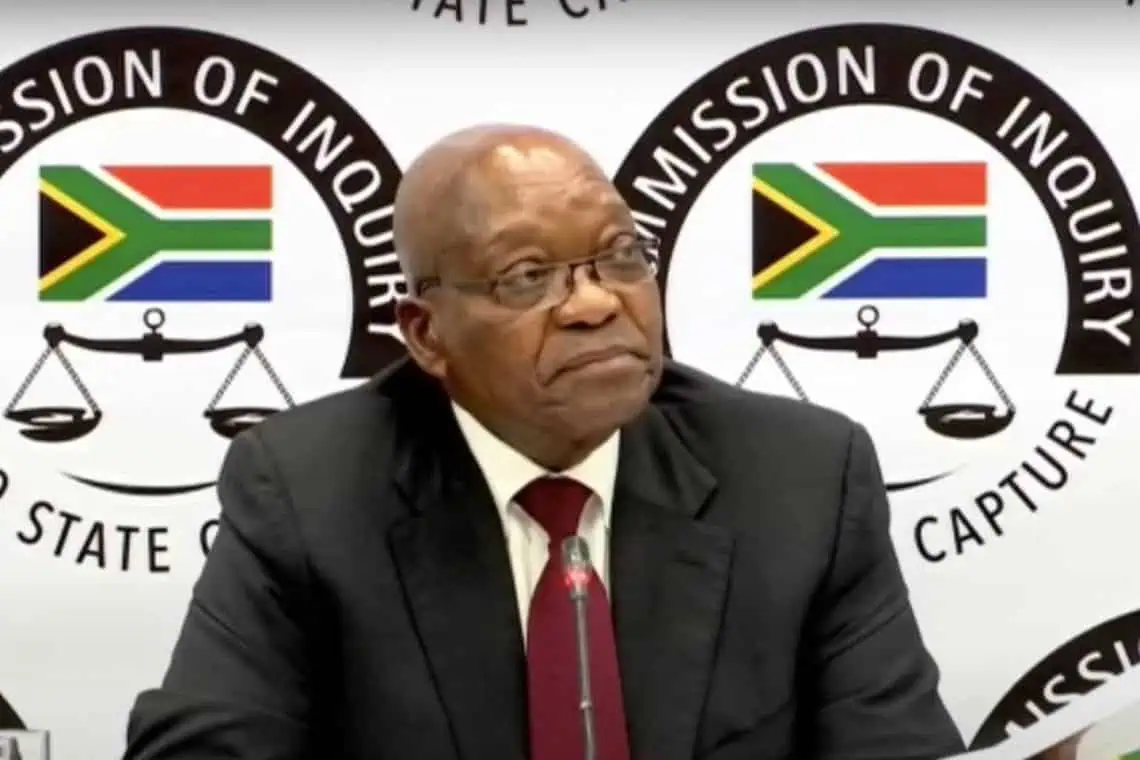

In a decisive blow to former South African President Jacob Zuma‘s ongoing legal saga, the Gauteng High Court in Pretoria has dismissed his application for leave to appeal a landmark order compelling him to repay R28.9 million in state-funded legal fees. Delivered on December 4, 2025, by Judge Anthony Millar, the ruling not only upholds the October 22, 2025, judgment but also slams the door on further appeals to a full bench or the Supreme Court of Appeal (SCA). This development marks the end of a protracted battle over taxpayer money used for Zuma’s private prosecutions in corruption cases, raising critical questions about state funding for such pursuits and accountability for public figures.
The Roots of the R28.9 Million Dispute
The controversy traces back to Zuma’s arms deal corruption charges, a scandal that has haunted South African politics for over two decades. Indicted in 2005 alongside his financial advisor Schabir Shaik, Zuma faced allegations of racketeering, fraud, corruption, and money laundering related to a R30 billion arms procurement deal in the late 1990s. The deal, signed shortly after Zuma became deputy president in 1999, involved contracts with international firms like French arms manufacturer Thales, and has been mired in claims of bribery and political interference ever since.
Shaik’s 2005 conviction for facilitating corrupt payments to Zuma, including an alleged annual R500,000 bribe from Thales, provided early substantiation to the rumors. Despite this, Zuma ascended to the presidency in 2009, where state resources were controversially allocated to fund his defense, including legal fees for ancillary litigation deemed personal rather than official. These payments continued even after charges were reinstated in 2017, totaling millions that the courts later deemed unlawful.
A pivotal moment came in 2018 when the Gauteng High Court’s Full Bench declared these payments unlawful, invalidating the state’s agreement to cover Zuma’s private legal costs and ordering recovery efforts. The SCA affirmed this in April 2021, emphasizing that public funds could not subsidize defenses in personal corruption trials. By 2023, the SCA further ruled that Zuma must repay over R25 million tied to his failed private prosecution of prosecutor Billy Downer and journalist Karyn Maughan—a bid accused of breaching the National Prosecuting Authority (NPA) Act by leaking his medical records.
These private prosecutions, launched in September 2022, exemplified Zuma’s “Stalingrad strategy”—a series of legal maneuvers to delay his corruption trial. The KwaZulu-Natal High Court in Pietermaritzburg set them aside in June 2023 as an abuse of process, a finding upheld by three full benches and the SCA in October 2023. The SCA described the actions as a “sustained attempt to obstruct, delay, and prevent his criminal trial,” underscoring their meritless and ulterior-motivated nature. Zuma even extended this tactic to privately prosecute his successor, President Cyril Ramaphosa, in December 2022, accusing him of being an accessory after the fact—a charge the Gauteng High Court declared unlawful and unconstitutional in July 2023.
The cumulative legal fees, totaling R28,960,774.34 plus interest, encompassed costs from these failed actions and Zuma’s broader defense strategy. The Presidency and State Attorney initiated recovery proceedings in January 2024, culminating in Judge Millar’s October order for repayment within 60 days, with the threat of asset attachment, including Zuma’s presidential pension. This order built on prior rulings, such as the 2016 Constitutional Court decision mandating Zuma repay R7.8 million for non-security upgrades at his Nkandla homestead, highlighting a pattern of judicial insistence on fiscal accountability.
Zuma’s Failed Appeal: Arguments and Rebuttals
In his bid for leave to appeal, heard on December 1, 2025, Zuma’s counsel, Advocate Thabani Masuku, argued that prior judgments from the Full Court and SCA did not explicitly hold Zuma personally liable, shifting blame to state officials who authorized the payments. Masuku portrayed Zuma as an “innocent party” and “easy target,” urging appeal to a full bench or SCA for a fresh perspective. He invoked defenses like estoppel, laches, and unjust enrichment, claiming the state’s delay in recovery violated Zuma’s rights. Masuku further contended that the 2018 and 2021 rulings focused on the unlawfulness of the funding agreement rather than pinpointing Zuma’s direct liability.
Judge Millar rejected these contentions outright. He clarified that the SCA’s 2021 order unambiguously required Zuma’s personal repayment, dismissing any ambiguity. Millar lambasted the litigation as “destructive” to equality before the law, perpetuating perceptions of a two-tiered justice system favoring the affluent. Finding “no reasonable prospect of success” and no compelling reasons for another court to differ, he denied leave, lifting the stay on enforcement. Millar emphasized that courts cannot remain “open indefinitely” for litigants refusing to accept rulings, a pointed rebuke to Zuma’s history of prolonged challenges.
The ruling aligns with broader judicial scrutiny of Zuma’s tactics. In a related October 2023 SCA decision, the court described his private prosecutions as a “sustained attempt to obstruct, delay, and prevent his criminal trial,” labeling them meritless and ulterior-motivated. This echoes the Constitutional Court’s 2021 contempt finding, which led to Zuma’s brief imprisonment for defying the State Capture Commission. The commission’s revelations of systemic corruption during Zuma’s tenure, including undue influence on state contracts, have further eroded public trust, making this repayment order a symbolic victory for anti-corruption efforts.
Financial Fallout: Pension at Risk and Broader Debts
The immediate financial sting is severe. Zuma must now repay the principal plus interest—accruing from January 25, 2024, on R18.9 million at the prescribed rate—within the original 60-day window, now reactivated. Non-compliance empowers the State Attorney to seize assets, explicitly including his presidential pension under the Remuneration of Public Office Bearers Act. This provision, unprotected by the Pension Funds Act for such recoveries, signals a new enforcement tool against errant officials, potentially setting a precedent for other high-profile figures.
Zuma’s fiscal woes extend beyond this sum. Court records reveal debts exceeding R500,000 to Nedbank for a home loan default, plus millions in costs from the State Capture inquiry and other failed suits. The uMkhonto weSizwe Party (MKP), which Zuma leads, vowed a national address on the ruling, hinting at potential damages claims against the state—though legal experts doubt their viability given the courts’ consistent rebukes. Analysts estimate Zuma’s total legal debts now surpass R50 million, compounded by ongoing appeals in his arms deal trial and related matters, straining his reliance on party donations and supporter contributions.
Enforcement could involve public auctions of assets or direct pension deductions, a humiliating prospect for the former leader. This comes amid Zuma’s recent political maneuvers, including his endorsement of the MKP in the May 2024 elections, where the party secured significant seats but faced internal strife. Financial pressure may force Zuma to pivot from legal battles to political fundraising, potentially reshaping his influence within the ANC splinter landscape.
Implications for State Funding of Private Prosecutions
Beyond Zuma, the verdict reverberates through South Africa’s legal landscape, particularly regarding state funding for private prosecutions in corruption cases. Section 7 of the Criminal Procedure Act allows private parties to prosecute if the NPA declines, but requires a nolle prosequi certificate and substantial personal interest—hurdles Zuma repeatedly failed to clear legitimately. The courts’ denouncement of his actions as abusive sets a precedent: public funds cannot bankroll vexatious litigation aimed at derailing accountability.
As the Democratic Alliance (DA) noted in 2023, allowing officials to “resist being held accountable by drawing on state resources” subverts public interest and the Constitution’s accountability pillar. This ruling reinforces fiscal prudence amid South Africa’s economic strains—high unemployment exceeding 32%, budget deficits, and a sovereign debt load nearing 75% of GDP—ensuring taxpayer money prioritizes public good over personal vendettas. It aligns with post-State Capture reforms, including the NPA’s Investigating Directorate, aimed at bolstering prosecutorial independence.
For future cases, it mandates stricter oversight: prosecutors must verify compliance with NPA Act provisions before issuing summonses, curbing SLAPP (Strategic Lawsuits Against Public Participation) suits that intimidate journalists and officials. In Zuma’s instance, the private prosecution against Maughan was flagged as a SLAPP tactic, undermining press freedom essential for transparent justice. Broader implications include bolstered NPA independence, as attacks on figures like Downer erode institutional trust. Legal scholars, such as those from the Helen Suzman Foundation, argue this fortifies democracy by protecting key actors from retaliatory litigation.
Moreover, the decision could influence international perceptions of South Africa’s judiciary, crucial for attracting foreign investment amid economic recovery efforts. By affirming that no one is above the law, it counters narratives of elite impunity that have plagued the post-apartheid era. Legal experts anticipate this could deter similar funding abuses by politicians, promoting a more equitable system where “there is far too much law for those who can afford it, and far too little for those who cannot,” as noted by constitutional law professor Pierre de Vos. It vindicates the rule of law, a constitutional cornerstone, by holding even former leaders accountable without endless appeals.
A Turning Point in Zuma’s Legacy
As enforcement looms, this denial caps a chapter of Zuma’s litigious resistance, redirecting focus to his arms deal trial, set to resume amid these financial pressures. The trial, delayed by appeals over prosecutorial recusal and witness availability—including the deaths of key Thales executives—faces renewed NPA urgency to prevent further postponements. For South Africa, grappling with corruption’s scars from state capture to the arms deal, the ruling is a reminder of judicial resolve: no one is above repayment for misused public trust.
While Zuma’s supporters decry it as persecution, framing it within broader ANC factionalism, the courts’ message is clear—accountability demands not just trials, but tangible restitution. This could embolden civil society calls for similar recoveries from other officials implicated in scandals like the VBS Mutual Bank heist or Eskom graft. Politically, it may strain Zuma’s MKP leadership, as fiscal constraints limit campaign resources ahead of local by-elections.
In the end, the Gauteng High Court’s stance transcends one man’s wallet; it fortifies the barriers against the erosion of democratic integrity, ensuring state resources serve justice, not evasion. As South Africa navigates its third decade of democracy, such rulings underscore the judiciary’s role as the ultimate guardian of public interest, fostering hope for a more transparent future.