
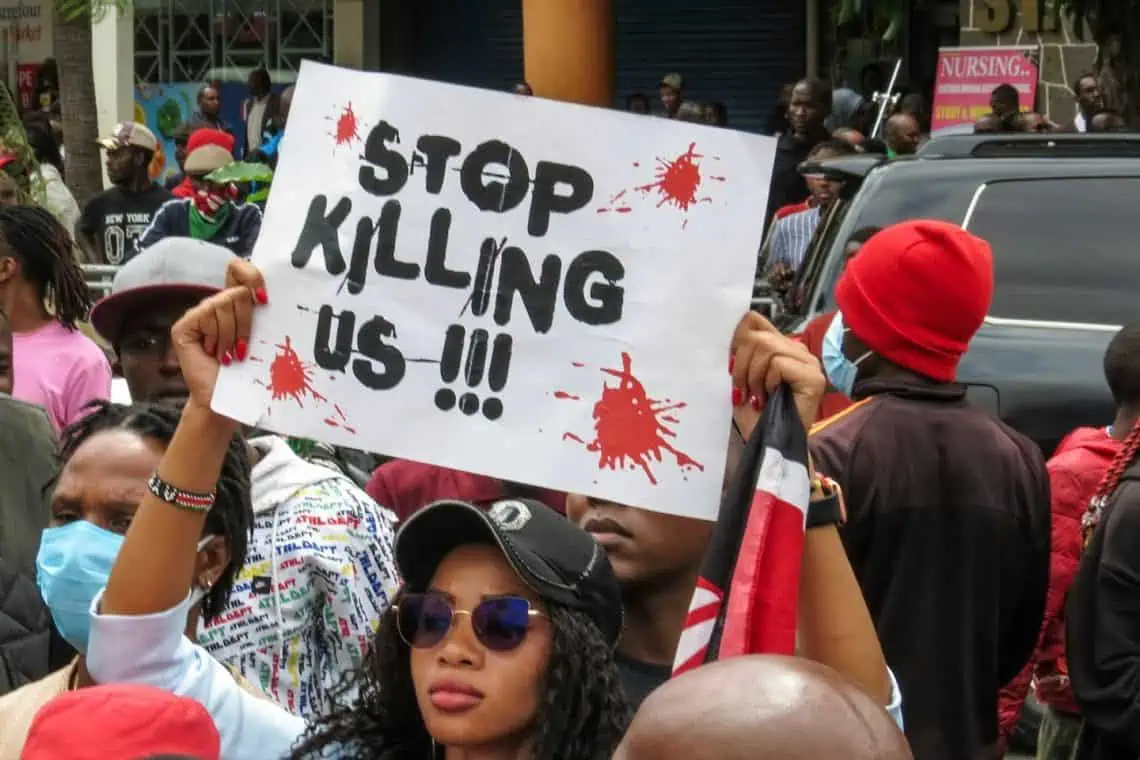

In the bustling heart of Johannesburg, where South Africa’s economic engine hums amid stark inequalities, a troubling wave of xenophobic protests has recently targeted public health services, turning essential clinics into sites of exclusion and fear. Since mid-2025, vigilante groups, including members affiliated with Operation Dudula—a movement that evolved from grassroots “pushback” efforts in 2021 into a registered political party gearing up for the 2026 elections—have stationed themselves at clinic entrances across Gauteng province. These groups have demanded identity checks, barring migrants and anyone without South African documentation from accessing care, even as pregnant women, HIV patients, and those with chronic illnesses queued in desperation.
However, on December 4, 2025, the Gauteng High Court issued a pivotal interim ruling that could mark the beginning of the end for these blockades. Responding to an urgent application by health rights organizations—the Treatment Action Campaign (TAC), Médecins Sans Frontières (MSF), and Kopanang Africa Against Xenophobia (KAAX), represented by SECTION27—Judge Stuart Wilson ordered the City of Johannesburg, Gauteng and national health departments, and the South African Police Service (SAPS) to take “all reasonable measures” to ensure safe and unhindered access to facilities like the Yeoville and Rosettenville clinics. The court mandated the deployment of trained security, removal of obstructors, and the posting of warning notices declaring such blockades a criminal offense. Within 10 days, officials must report on compliance, paving the way for a broader order covering all Gauteng clinics.
Roots of the Crisis: Escalating Blockades in Gauteng
The clinic blockades did not emerge in isolation; they represent a sharp escalation in a long-simmering pattern of xenophobic actions targeting migrants in Johannesburg’s overcrowded townships. MSF’s August 2025 assessment revealed that anti-migrant groups had disrupted access at over half of the 15 Gauteng facilities visited, affecting nearly 50 patients interviewed across 24 sites in Johannesburg, Durban, and Tshwane. These included late-term pregnant women denied antenatal scans and HIV patients unable to refill life-saving antiretrovirals, leading to heightened risks of transmission and maternal mortality. In one harrowing account shared with GroundUp, a Zimbabwean refugee in labor was physically shoved away from Rosettenville Clinic, her pleas met with chants of “Go back to your country,” nearly costing her baby’s life.
Operation Dudula, whose name translates to “push back” in Zulu, has framed these actions as a defense of scarce resources amid South Africa’s entrenched economic woes. With the official unemployment rate hovering at 31.9% in Q3 2025—the lowest since late 2024 but still among the world’s highest—the group’s rhetoric resonates with frustrated locals, particularly youth facing a staggering 58.5% joblessness rate. Protesters, often young and unemployed, argue that “foreigners are stealing our jobs and medicine,” a narrative amplified on social media and WhatsApp groups. Yet, this scapegoating ignores migrants’ vital roles: they comprise a significant portion of Johannesburg’s informal traders, nurses, and caregivers, contributing to the city’s vibrant economy without proportionally straining public services.
The blockades violate Section 27 of South Africa’s Constitution, which enshrines healthcare as a right for “everyone,” irrespective of nationality. Despite a November 4, 2025, ruling by Judge Leicester Adams—building on earlier interdicts—prohibiting Operation Dudula from harassing migrants at schools, hospitals, and clinics, sporadic defiance continued, prompting the December escalation. As Judge Wilson noted in his judgment, the state’s prior inaction, including unprosecuted reports to police, allowed these “well-organized attacks” to fester, endangering the most vulnerable in a province where public clinics serve millions annually.
A Painful Legacy: Xenophobia’s Deep Roots in Post-Apartheid South Africa
To grasp the intensity of 2025’s clinic crisis, one must confront South Africa’s fraught history with xenophobia, a scourge that has repeatedly erupted into violence since the dawn of democracy. The 2008 riots stand as a blood-soaked milestone: sparked in Johannesburg’s Alexandra township, they claimed 62 lives—mostly African migrants—displaced over 100,000, and razed foreign-owned shops and homes across the country. Mobs, fueled by rumors of resource competition, targeted black African nationals, beating, looting, and burning with impunity until the army intervened.
The flames reignited in 2015, when inflammatory remarks by Zulu King Goodwill Zwelithini in Durban ignited attacks that killed at least eight, injured hundreds, and forced 30,000 migrants to flee. Johannesburg’s townships, from Soweto to Hillbrow, became flashpoints once more, with spaza shops (informal convenience stores) looted and asylum seekers assaulted. By 2022, Operation Dudula formalized this unrest, launching “clean-up” campaigns in Soweto that evicted migrants from rentals and markets, evoking echoes of apartheid-era forced removals. The Xenowatch tracker at the University of the Witwatersrand documented 170 incidents that year alone, with 18 more by April 2024, many involving healthcare sabotage.
These outbreaks are not mere outbursts but symptoms of deeper systemic failures. Corruption in the Department of Home Affairs has ballooned asylum backlogs, leaving thousands undocumented and vulnerable—exacerbated by exorbitant fees for passports from countries like Zimbabwe, where economic collapse drives migration. As Sharon Ekambaram of Lawyers for Human Rights explains, “The system institutionalizes xenophobia, presuming migrants are liars while ignoring their tax contributions and labor in filling essential gaps.” In Johannesburg, where non-nationals make up about 3.9% of the 6.4 million residents—concentrated in inner-city areas like Yeoville and Rosettenville—the “invasion” myth persists, amplified by misinformation despite evidence showing migrants bolster rather than burden the economy.
Human Rights Watch has long warned that scapegoating foreigners for unemployment and service breakdowns “risks lethal violence,” a prophecy borne out in 2019’s Jeppestown riots, where five died in clashes over housing. Yet, xenophobia’s racial undertones cannot be overlooked: it disproportionately targets black African migrants, blending economic grievance with post-colonial prejudices. As the International Organization for Migration (IOM) reports, these “distress migrants”—fleeing poverty or conflict—form a sliver of clinic users but face outsized discrimination, undermining public health goals like HIV control and TB eradication.
The Verdict’s Force: Mandating Protection and Accountability
Judge Wilson’s December 4 ruling cuts through the inertia with unflinching clarity. Building on the November interdict, it rebukes the state’s “grave concern” over weak responses, declaring xenophobia “one of the greatest threats to democracy and human rights we presently face—merely another kind of racism.” The order compels immediate action: SAPS must enforce removals, health departments train staff against bias, and municipalities post multilingual warnings. For the first time, it ties enforcement to constitutional duties, with contempt risks for non-compliance.
The applicants hailed it as a “lifeline,” affirming clinics as “constitutional rights zones” rather than vigilante checkpoints. TAC’s Monwabisi Mbasa emphasized, “Denying care to one group dooms us all—TB and HIV know no borders.” MSF, documenting over 50 incidents since mid-2025, noted early post-ruling reductions in pickets, though Ekambaram cautions that “prejudice is institutionalized; one order isn’t enough.” The judgment also nods to global precedents, urging South Africa to implement its National Action Plan Against Racism, Xenophobia, and Related Intolerances.
The state’s duty is clear: Prevent xenophobic vigilantes from turning healthcare into a privilege for citizens only.
— Judge Stuart Wilson, Gauteng High Court
Human Cost: Stories from the Frontlines of Exclusion
Beneath the legal battles pulse raw testimonies of suffering. In Rosettenville, a Mozambican man with tuberculosis languished for days, his cough worsening as jeering crowds blocked his path; untreated, his illness risks community spread. MSF reports highlight how migrants, key to HIV cohorts, face interrupted treatments, with viral loads spiking and mother-to-child transmissions rising among refugee mothers entitled to free care under the National Health Act.
One anonymous Congolese asylum seeker told Daily Maverick, “I carried my feverish child for blocks, only to be told by a guard colluding with protesters that ‘foreigners don’t belong here.’ We can’t afford private doctors—where do we go?” Such collusion, witnessed at two clinics, amplifies the trauma, echoing Gauteng’s scrapped 2020 policy barring non-citizen maternal care. Economically, the irony stings: migrants staff these very clinics, yet expulsion threats loom, perverting ubuntu—the African philosophy of shared humanity—into exclusion.
The stakes extend beyond individuals. IOM data shows untreated conditions burden the system further, while denied emergency services contravene the Refugees Act. In a city where 3.9% of residents are non-nationals, these barriers erode trust, deterring even documented users and hampering vaccination drives or chronic disease management.
Reclaiming Ubuntu: National and Global Echoes
President Cyril Ramaphosa has decried the blockades as “un-South African,” invoking ubuntu amid pre-election tensions. Parties like the Patriotic Alliance and ActionSA have flirted with anti-migrant platforms, risking 2008-scale carnage as polls near. The ruling tests the state’s resolve: Will SAPS patrol entrances? Will interfaith dialogues in Hillbrow and Soweto youth forums counter Dudula’s online echo chambers? Xenowatch, bolstered by MSF data, equips activists with evidence for sustained advocacy.
Globally, South Africa’s struggle mirrors rising intolerance—from Europe’s fortified borders to U.S. policy debates—yet its progressive Constitution offers a counter-narrative. Success demands asylum reforms to slash backlogs, economic policies addressing 31.9% unemployment through inclusive growth, and education dismantling “othering.” As inter-community marches gain traction, hope flickers: migrants aren’t invaders but integral to the Rainbow Nation’s weave.
A Fragile Victory: Toward Lasting Access and Equity
As 2025 closes, Judge Wilson’s beacon illuminates Johannesburg’s shadowed queues, mandating not just access but systemic accountability. It shields migrant health while challenging vigilante populism, potentially curbing months of harassment. Yet, enforcement remains the crux: early compliance reports show dwindling pickets, but sustained patrols and bias training are vital.
True triumph requires bolder strokes—asylum streamlining, job programs bridging divides, and public campaigns reframing migrants as contributors. South Africa, born from anti-racism’s forge, must reclaim its moral mantle. As Wilson implored, “Wrest control from vigilantes’ hands.” If heeded, this decision could heal the siege, nurturing a society where health and humanity bridge borders, unmarred by fear. The question endures: Will authorities rise, or will xenophobia reclaim the clinics’ thresholds? In reclaiming access, South Africa reclaims its soul.
Ultimately, this ruling underscores a profound truth: xenophobia wounds not only migrants but the nation’s quest for justice, demanding collective vigilance to ensure clinics heal divisions, not deepen them.