

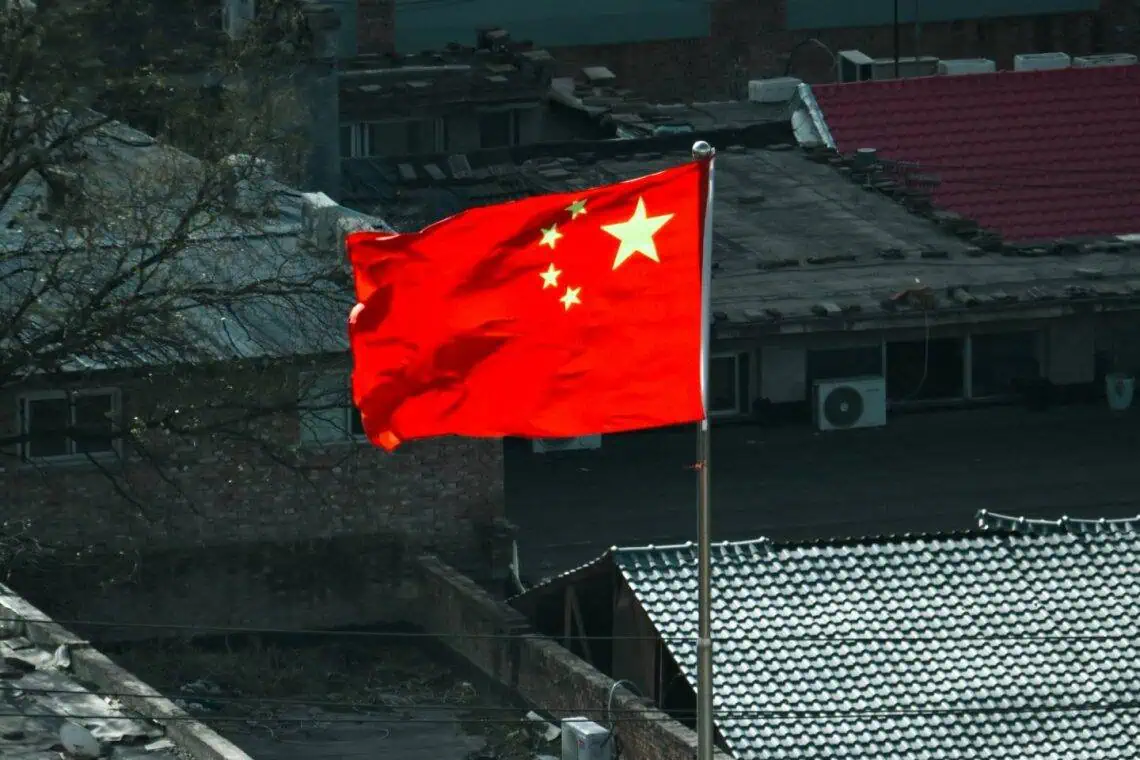

In the first eight months of 2025, China’s exports to Africa have exploded to $140.79 billion, marking a staggering 24.7% surge year-over-year. This surge, particularly pronounced in South Africa and across the continent, underscores deepening trade ties amid global economic turbulence. But is this influx of Chinese goods a vital economic boon fueling Africa’s growth, or a subtle dependency trap that widens imbalances and stifles local industries? As China-Africa trade in 2025 reshapes the global landscape, the answer hinges on how African nations navigate this pivotal relationship.
The Numbers Behind the Surge: China-Africa Trade 2025 in Focus
China-Africa trade has long been a cornerstone of bilateral relations, but 2025 has accelerated this partnership into overdrive. According to China’s General Administration of Customs, total bilateral trade reached $222.05 billion from January to August, a 15.4% increase from the previous year. Exports from China to the continent jumped 24.7% to $140.79 billion, while imports from Africa grew a modest 2.3% to $81.25 billion, resulting in a $59.55 billion trade surplus for Beijing—nearly matching the full-year 2024 figure of $61.93 billion.
This momentum builds on a strong foundation. In the first half of 2025, China’s exports to Africa surpassed $100 billion, boasting a 21.6% year-on-year growth. By the first five months, trade volume hit $134.16 billion, up 12.4%. Projections suggest full-year exports could exceed $200 billion for the first time, driven by redirected flows from tariff-hit markets like the U.S. Earlier in the year, through the first seven months, exports had already reached $122 billion, a 25% increase that outpaced growth to other regions. This redirection is partly fueled by U.S. President Trump’s tariffs, which slashed China’s exports to America by 33% in August 2025 while boosting African shipments by 26%. As global trade barriers rise, Africa has emerged as a critical alternative market, absorbing Chinese overcapacity in manufacturing and green technologies.
South Africa stands out as a key driver. As China’s largest African trading partner, SA accounted for 10% of the continent’s Chinese imports in the first seven months, trailing only Nigeria. Bilateral trade has ballooned from $1.34 billion in 2000 to $34.18 billion in 2023, with SA exports to China reaching $12.41 billion last year. In October 2025 alone, China’s exports to SA hit $2.19 billion, up 14.3% from the prior year. This growth reflects SA’s role as a gateway for Chinese goods into the Southern African Customs Union, though it exacerbates the country’s $9.71 billion trade deficit with China from 2023. Looking ahead, full-year 2025 bilateral trade could surpass $50 billion, underscoring the partnership’s resilience amid global shifts.
| Key China-Africa Trade Metrics (Jan-Aug 2025) | |
| Total Trade | $222.05 billion (+15.4% YoY) |
| China Exports to Africa | $140.79 billion (+24.7% YoY) |
| Africa Exports to China | $81.25 billion (+2.3% YoY) |
| Trade Surplus for China | $59.55 billion |
| Top SA Imports from China (Oct 2025) | Cars ($155M), Telephones ($128M), Batteries ($106M) |
Spotlight on South Africa: SA Imports Fuel the Fire
South Africa’s role in the China-Africa trade 2025 narrative cannot be overstated. As the continent’s most industrialized economy, SA has become a gateway for Chinese goods, importing everything from machinery to consumer electronics. In 2024, China’s exports to SA totaled $21.81 billion, a figure expected to climb higher this year amid the broader surge. This influx supports SA’s urbanization and infrastructure needs but raises concerns about local manufacturing erosion, as cheap imports undercut domestic producers in sectors like automotive and textiles.
Recent diplomatic overtures have deepened these ties. At the G20 Summit in November 2025, Chinese Premier Li Qiang pledged collaboration with SA President Cyril Ramaphosa to safeguard multilateral trade and implement zero-tariff treatment for SA goods. Business lobbies from both nations inked a pact in September to boost industrialization, agriculture, and market access. Yet, challenges persist: SA’s membership in the Southern African Customs Union (SACU) complicates access to China’s zero-tariff policy for 53 African nations, excluding eSwatini due to Taiwan ties. Despite these hurdles, the policy—announced post-FOCAC 2024—has already spurred a 15.2% rise in China’s imports from eligible African least-developed countries through March 2025.
SA’s exports to China—primarily gold ($683M), chromium ore ($463M), and iron ore ($448M) in October 2025—highlight the raw material focus. Meanwhile, imports of high-value items like cars and batteries underscore the imbalance, with SA’s trade deficit with China reaching $9.71 billion in 2023 and showing signs of widening in 2025. To address this, SA is pushing for greater value addition, such as processed minerals and agricultural products, aligning with Ramaphosa’s calls at FOCAC 2024 for diversified exports.
Driving the Boom: Key Goods in the China-Africa Trade Surge
The export surge is propelled by diverse, high-demand categories. Construction machinery led with a 63% year-on-year increase in the first seven months, fueled by $30.5 billion in African construction deals with China in H1 2025—five times the 2024 level. Steel shipments rose nearly 30%, agriculture and shipbuilding machinery over 40%, and electric motors/generators more than 50% in the first five months. These figures illustrate how Chinese firms are capitalizing on Africa’s infrastructure deficits, where less than half the population has reliable electricity access, creating urgent demand for affordable equipment.
Consumer and green tech sectors are booming too. Automobile exports surged 67%, doubling in May alone. Solar panel imports jumped 60% in the year to June, with Africa acquiring 15,032 megawatts of Chinese panels between July 2024 and June 2025. Over the first three quarters, overall exports rose 28%, shifting from infrastructure to consumer goods like electronics and apparel. This transition reflects China’s maturing export strategy, moving beyond raw infrastructure to everyday essentials that support Africa’s growing middle class and urbanization trends.
In SA, this translates to practical impacts: Chinese cars and telephones dominate imports, supporting urbanization while challenging local manufacturers. Across Africa, these goods address infrastructure gaps, but experts warn that without local content requirements, they could hollow out nascent industries. For instance, in Nigeria and Egypt—the second and third largest importers—Chinese electronics have flooded markets, boosting affordability but squeezing domestic assemblers. Similarly, in Kenya and Ethiopia, solar imports are accelerating green energy adoption, yet calls grow for joint ventures to build local capacity rather than mere importation.
Roots of the Surge: Global Tariffs and Strategic Shifts
U.S. President Trump’s tariffs have been a catalyst, slashing China’s exports to America by 33% in August 2025 while boosting African shipments by 26%. This redirection aligns with Beijing’s Belt and Road Initiative (BRI), encompassing 53 African countries since 2013. The Forum on China-Africa Cooperation (FOCAC), marking its 25th year in 2025, has fostered vitality, with trade indices hitting record highs. Beyond tariffs, a weaker yuan has made Chinese goods more competitive, with 14 of 18 major categories seeing price declines of up to 39% in the first seven months.
China’s zero-tariff policy for African goods, announced post-FOCAC 2024 and expanded in 2025 to all 53 diplomatic partners, aims to balance flows, though implementation hurdles remain for SACU members like SA. Geopolitical tensions, including U.S.-Africa frictions like the 30% tariff on South African goods, further tilt the scales toward Beijing. As the U.S. imposes duties up to 60% on African apparel under AGOA threats, China’s open-door policy contrasts sharply, drawing more African exports like coffee (up 70.4%) and cocoa (up 56.8%) in Q1 2025. This dynamic not only boosts trade volumes but also positions China as a reliable partner amid Western protectionism.
Boon or Trap? Weighing the Pros and Cons
The economic boon is evident: Chinese exports provide affordable machinery and tech, spurring Africa’s infrastructure boom and job creation. In SA, partnerships in renewable energy and manufacturing promise inclusive growth, with Chinese investments creating over 1.1 million jobs continent-wide in the past three years. Continent-wide, solar and EV imports advance green transitions, vital for a region with vast renewable potential and climate vulnerabilities. Moreover, the surge supports SMEs through e-commerce platforms, enabling African businesses to access Chinese supply chains for components and fostering digital trade under FOCAC initiatives.
Yet, the dependency trap looms large. Africa’s trade deficit with China, which stood at $63 billion in 2023, has ballooned in 2025 to nearly $60 billion through August alone. Raw exports (oil, minerals) versus manufactured imports perpetuate imbalances, with critics warning of “debt trap diplomacy” and local industry erosion from cheap imports. In SA, accumulated outflows hit $114.83 billion since 2001. Broader risks include environmental strains from resource extraction and geopolitical leverage, as seen in BRI projects tied to resource access. Experts like Peter Kagwanja urge structural shifts toward value-added exports and services trade, such as tourism—where Kenya’s Chinese visitor numbers doubled to 100,000 in 2025—to counter the one-way flow. Without these, the boom could entrench underdevelopment, mirroring historical colonial trade patterns.
Charting a Balanced Path Forward
To transform this surge into sustainable prosperity, African leaders must diversify exports—emphasizing agriculture and processed goods, as Ramaphosa advocated at FOCAC 2024. Initiatives like Standard Bank’s Africa China Trade Solutions facilitate SME access to Chinese markets, while the African Continental Free Trade Area (AfCFTA) could amplify intra-African value chains to reduce external dependency. China, too, must honor zero-tariff pledges and invest in local manufacturing, as pledged in the Changsha Declaration of June 2025, which commits to joint industrial parks and skills training for 20,000 Africans.
Additionally, leveraging services trade— from fintech collaborations to cultural exchanges—offers untapped potential. For example, expanding Chinese tourism to Africa could generate billions, while digital platforms enable African creators to export content directly. Economists like Jacques Nel emphasize “mutual beneficiation,” where China transfers technology for resource access, fostering co-development in sectors like battery recycling in the DRC or agro-processing in Ghana.
Ultimately, the China-Africa trade 2025 story is one of opportunity laced with caution. By fostering mutual beneficiation and strategic diversification, the continent can sidestep dependency and harness this boom for equitable growth. As ties deepen amid U.S. tariffs and global realignments, the question remains: Will Africa seize the lifeline, or fall into the snare? With proactive policies, the partnership could evolve into a model of South-South cooperation, driving shared prosperity for billions.