

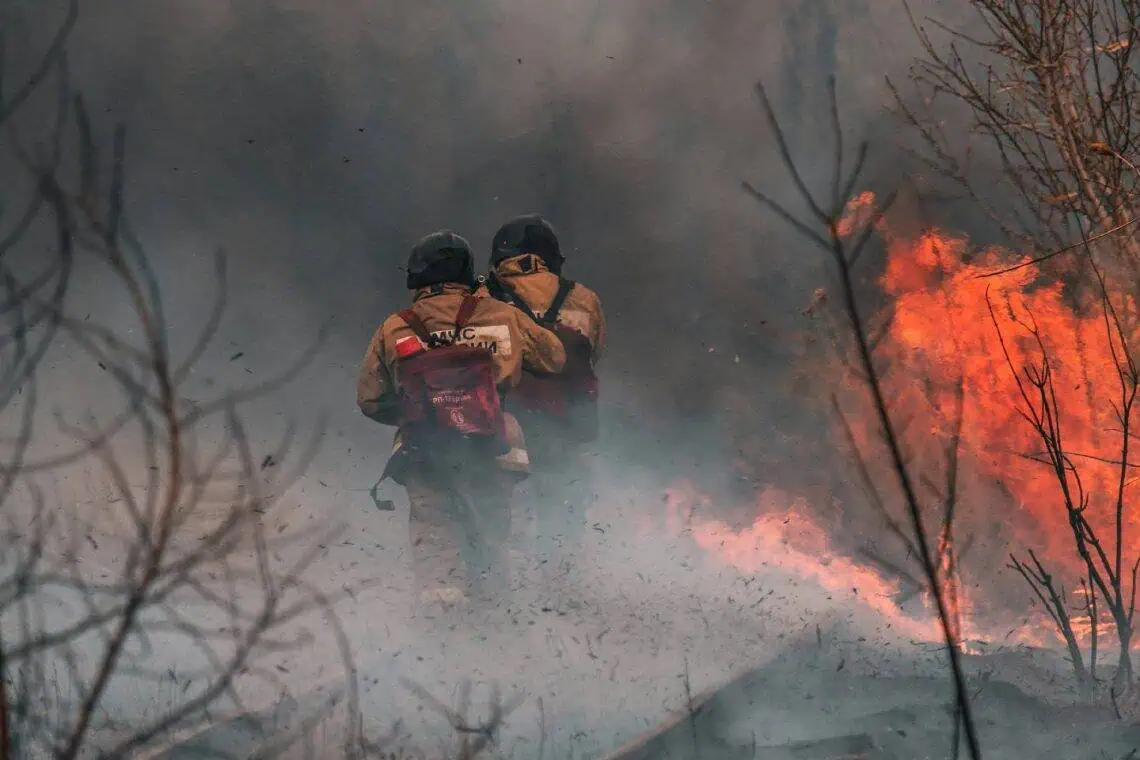

As December 2025 tightens its grip on the Western Cape during the peak of the dry season, a formidable force of 900 firefighters has been mobilized in a desperate bid to combat escalating wildfires. Fierce south-easterly winds are relentlessly driving flames toward Cape Town, evoking fears of widespread evacuations and endangering the legendary vineyards that form the backbone of South Africa’s renowned wine industry. In the midst of these WC wildfires December 2025, fire alerts across South Africa are sounding at unprecedented levels, with more than 600 vegetation fires igniting in Cape Town within just one week. This surge transcends typical seasonal disturbances; it represents a climate-amplified catastrophe that challenges both human endurance and the delicate balance of local ecosystems.
The magnitude of this firefighting operation highlights the dire situation at hand. Working on Fire (WoF), partnering with the Expanded Public Works Programme (EPWP), has assembled these highly skilled teams, bolstered by over 33 aircraft providing crucial aerial assistance. This timely deployment arrives as off-season fires had already reached 92 incidents from September to November, 46 of which ravaged the Western Cape. Linton Rensburg, spokesperson for WoF, cautions that wildfire dangers have transformed into a perpetual hazard, propelled by evolving climate dynamics that accelerate the desiccation of fynbos vegetation more rapidly than in previous years.
Gales of Peril: Infernos Creep Toward Cape Town
In the vicinity of Cape Town, unrelenting gales are metamorphosing small embers into colossal dangers. Enduring south-easterly winds, reaching velocities that propel flames over arid expanses, have propelled South African fire alerts to emergency thresholds. Within the Cape Winelands District Municipality (CWDM), firefighting units are engaged in an exhausting confrontation with fires erupting above De Doorns in the Hex River Valley. Ground personnel labored relentlessly through the night to redirect fire paths from residential ridges. A fresh outbreak in Boontjiesrivier, positioned between Wolseley and Ceres, was rapidly subdued, yet it strained the capacities of both aerial and terrestrial assets to their extremes.
The possibility of evacuations intensifies as fire hotspots proliferate. Recent escalations prompted preemptive relocations in locales such as Boyes Drive in Muizenberg and Franschhoek, where gale-force winds and challenging terrain hindered suppression efforts. The Provincial Disaster Management Centre (PDMC) has enacted its 2025/26 Wildfire Readiness Plan, uniting municipal agencies, Fire Protection Associations (FPAs), and community volunteers into a cohesive defense network. Since the onset of December, exceeding 837 wildfires have been documented throughout the province, devastating over 10,376 hectares—a figure certain to escalate as ongoing blazes persist.
“We’ve experienced an extremely busy fire season so far… The likelihood of more wildfires in the coming months is a real concern for us.”
— Anton Bredell, Western Cape Minister of Local Government, Environmental Affairs and Development Planning
This statement from Minister Bredell encapsulates the mounting anxiety among authorities, as the interplay of meteorological extremes and human-induced ignitions—accounting for 97% of incidents—exacerbates the crisis. The minister’s words, drawn from recent governmental briefings, underscore the urgency of sustained vigilance and resource allocation in the face of these unpredictable threats.
Vineyards in the Crosshairs: Endangering South Africa’s Oenological Heritage
At the heart of this unfolding disaster lie the expansive vineyards of the Cape Winelands, where encroaching flames pose an immediate peril to cherished estates. The WC wildfires December 2025 not only imperil these lush expanses through outright combustion but also through the covert menace of smoke taint, capable of condemning entire vintages to market rejection. Echoing international precedents, such as the California wildfires of 2020 that inflicted hundreds of millions in damages on ash-contaminated grapes, South African vintners are bracing for analogous repercussions. The volatile phenols from smoke penetrate grape skins, manifesting post-fermentation as unwelcome ashy or campfire undertones that compromise the wine’s integrity and market value.
Five principal fires that erupted mere days prior in the Cape Winelands—traversing Tulbagh, Wellington, Paarl, Pniel, and Ashton—have seared significant portions of farmland, compelling agriculturalists and their laborers to join professional responders in the defense. Although the majority of these fires have been corralled, the Western Cape Department of Agriculture’s 2025 SmartAgri Barometer delineates an “intensely active” season, wherein concurrent blazes magnify the devastation to arable territories. Vineyards, historically serving as organic barriers due to their hydrated foliage, now stand frail and susceptible amid extended droughts. In the Overberg region, infernos sweeping through Heuningberg and Soetmuisberg adjacent to Napier have uprooted communities and inched perilously close to viticultural enclaves, spurring fervent appeals for heightened awareness.
The financial repercussions are profound. South Africa’s wine sector, a multibillion-rand contributor to the gross domestic product, confronts prospective forfeitures reminiscent of California’s $600 million smoke-tainted calamity. Estate proprietors are hastening to assay grapes for contamination, but with the harvest horizon approaching, time is of the essence. Climate specialists attribute this intensification to increasingly arid and temperate summers, extending fire periods well beyond the conventional December-to-April window, thereby jeopardizing biodiversity-rich fynbos realms that are integral to the distinctive terroir of these vineyards. This not only affects immediate yields but also the long-term viability of varietals like Chenin Blanc and Pinotage, which rely on the region’s unique soil and microclimates for their signature profiles.
Moreover, the ecological ramifications extend far beyond the vines. Fynbos, the ancient shrubland that carpets the Cape Floral Kingdom—a UNESCO World Heritage site—faces accelerated degradation. These fires, while naturally regenerative in controlled cycles, now burn hotter and more frequently, releasing carbon stores and disrupting pollinator habitats essential for vineyard pollination. Conservationists warn that without intervention, species like the protea could see population declines, indirectly impacting wine quality through diminished ecosystem services.
Frontline Guardians: Dissecting the 900 Firefighters Deployment
The mobilization of 900 firefighters embodies a titanic endeavor, fusing veteran WoF contingents with EPWP inductees schooled in stringent methodologies. These terrestrial warriors, armed with chainsaws, drip torches, and fortified apparel, are augmented by an armada of helicopters and fixed-wing aircraft dispersing suppressants across remote summits. In the Cape Winelands, CWDM’s firefighting apparatus lauds a “resolute contingent” comprising personnel, agrarians, and ecological allies who have coalesced to safeguard dwellings and natural preserves.
Nevertheless, the human cost mounts inexorably. A single firefighter sustained injuries during a conflagration in Simon’s Town, while reinforcements from distant locales like the Garden Route have been summoned to reinforce Cape Town’s perimeters. The PDMC’s blueprint prioritizes expeditious aerial engagements—demonstrably efficacious in 31 recent conflagrations—while augmenting the wildfire fiscal allocation to R19 million for supplementary hours, apparatus, and inter-agency collaborations. Volunteer Wildfire Services (VWS) and FPAs furnish instantaneous reconnaissance, metamorphosing communal oversight into a pervasive early-detection lattice.
- Critical Metrics from WC Wildfires December 2025:
- Over 600 vegetation fires in Cape Town (one week)
- 92 off-season interventions (September-November)
- Exceeding 10,376 hectares incinerated province-wide
- More than 33 aircraft actively engaged
- R19 million earmarked for wildfire expenditures
These figures, corroborated by official reports, illustrate the operational intensity. The EPWP’s involvement not only amplifies manpower but also fosters skills development, empowering local youth with employable expertise in fire management—a silver lining amid the smoke.
Climate’s Relentless Grip: Unpacking the Severity of WC Wildfires December 2025
The escalation of fires in Cape Town from 2022 to 2025 paints a grim narrative: vegetation occurrences have soared from 8,462 in 2020 to surpassing 12,000 in 2024, accompanied by a 23% uptick in structural blazes. Anthropogenic elements—97% of fires trace back to carelessness or deliberate acts—intersect disastrously with climatic catalysts: elevated temperatures, capricious precipitation, and encroaching alien flora that propel accelerated propagation. The fynbos, evolutionarily attuned to intermittent infernos, now confronts saturation, liberating deleterious emissions that compromise atmospheric purity and public health through fine PM2.5 aerosols.
Evacuation episodes, including the displacement of 198 households in Noordhoek during a Table Mountain resurgence, expose frailties among vulnerable demographics such as the elderly and displaced persons. On the economic front, tourism wanes as acrid haze suffocates the Mother City’s magnetic charm, while environmental wounds may demand generations to mend. The Western Cape’s unique biodiversity, harboring over 9,000 plant species found nowhere else on Earth, hangs in precarious balance, with fires disrupting seed banks and wildlife corridors.
Furthermore, the socioeconomic layers deepen the crisis. Rural communities dependent on viticulture for livelihoods face immediate income shortfalls, compounded by rising insurance premiums that mirror global trends. In California, post-2020 fire policies have doubled for many growers; a similar trajectory looms here, potentially squeezing smaller estates out of viability and consolidating the industry into fewer hands.
Vineyards at Risk: Immediate Aid and Enduring Protection Strategies
With grapevines dangling on the precipice, decisive measures are paramount. Promptly notify authorities of any fires: Reach Cape Town via 107 or 021 480 7700 from cellular devices; Overberg through 028 425 1690; West Coast at 022 433 8700. Eschew exposed flames, properly extinguish tobacco products, and cultivate defensible spaces encircling estates. Bolster FPAs through their district portals with contributions or hands-on involvement—your participation with a tool could preserve a season’s bounty.
For oenological domains, preemptive tactics are pivotal: Implement nascent smoke surveillance, deploy kaolin clay coatings to armor berries, and cultivate diverse cultivars for fortified adaptability. CapeNature advocates for sustained attentiveness, acknowledging wildfires’ ambivalent essence—revitalizing fynbos while wreaking havoc when uncontrolled. For the horizon, afforestation employing flame-retardant flora and rigorous zoning edicts can temper climatic onslaughts.
Beyond these, innovative approaches are emerging. Researchers at Stellenbosch University are pioneering drought-resistant rootstocks and AI-driven fire prediction models tailored to the Cape’s topography. Collaborative initiatives, like the Wine Industry Strategic Exercise (WISE), are channeling funds into communal firebreaks and shared aerial patrols, fostering a networked resilience that individual estates could scarcely afford alone.
The WC wildfires December 2025 serve as an urgent summons: Amid the deployment of 900 firefighters and South African fire alerts at a crescendo, collective resolve emerges as our paramount suppressant. As tempests rage and blazes cavort proximate to Cape Town’s vineyards, the jeopardy has seldom been more acute. Yet, within this cauterized forge, South Africa’s ethos—tenacious, synergistic, indomitable—ignites optimism. The strife endures, yet so does the determination to preserve the Western Cape’s unparalleled splendor.
In the broader context, this crisis illuminates the imperative for policy evolution. National dialogues on climate adaptation must prioritize fire-prone regions, integrating indigenous knowledge from Khoisan fire stewardship practices with modern tech. International partnerships, such as those with Australian fire experts, could import proven tactics like prescribed burns, calibrated to fynbos rhythms. Ultimately, mitigating global emissions remains the linchpin; until then, the Western Cape’s guardians— from firefighters to farmers—stand as sentinels against an encroaching inferno.