

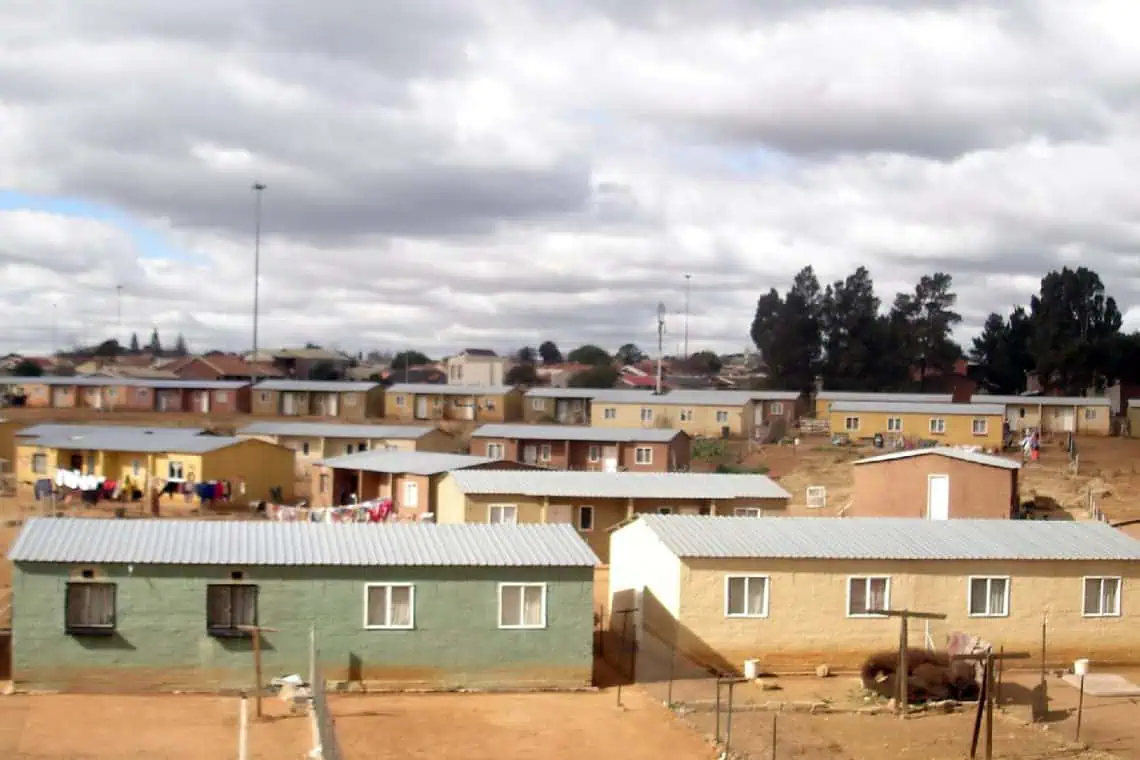

In the vibrant yet strained townships of Gauteng, where aspirations for stable homes clash with economic realities, a troubling rise in RDP housing scams is preying on families’ hopes. As the 2025 festive season draws near, the Gauteng Department of Human Settlements has sounded a critical Human Settlements alert, highlighting a criminal syndicate that exploits desperate residents with false promises of affordable housing. Posing as legitimate officials, these fraudsters are capitalizing on the province’s deep-seated housing challenges, resulting in widespread financial devastation and broken dreams. Yet, empowerment lies in awareness—learn to identify and combat these housing fraud 2025 schemes to safeguard your future.
The Surge: Why RDP Scams Are Exploding in Gauteng This Festive Season
As South Africa’s economic epicenter, Gauteng battles a verified housing backlog of approximately 293,000 approved beneficiaries, a figure clarified by the Department of Human Settlements to counter inflated estimates from the broader National Housing Needs Register. Launched in 1994, the Reconstruction and Development Programme (RDP) aimed to dismantle apartheid’s legacy by delivering free subsidised homes to low-income households. Fast-forward to 2025, and this vital initiative has morphed into a prime target for opportunists. Departmental reports and recent alerts point to a marked escalation in fraudulent activities, especially during December, when end-of-year financial strains amplify vulnerabilities and families seek respite from instability.
The latest warnings detail a coordinated syndicate spanning the province, reaching out through WhatsApp, social media platforms, and unsolicited calls while masquerading as departmental representatives. Their lures are tantalizing: “immediate occupancy” RDP units for a modest upfront payment, priority placements to bypass lengthy queues, or cut-rate land in sought-after locales such as Soweto and Ekurhuleni. Consider the harrowing account of a Soweto-based mother of three, who in June 2025 was approached by a fraudster identifying as “Thapelo” via a counterfeit departmental profile. He solicited R15,000 to expedite her decade-old application, backing it with fabricated approval documents mimicking the MEC’s endorsement. She averted disaster only by detecting anomalies, including erratic contact numbers tied to the supposed official.
Such incidents are far from anomalies. In May 2025, authorities arrested a woman who confessed to amassing over R100,000 by peddling fictitious BNG (Breaking New Ground) homes—the enhanced iteration of RDP structures—to eager applicants. By mid-year, the deluge intensified as scammers inundated community WhatsApp groups with polished images of pristine RDP developments, spinning narratives of “exclusive holiday-season distributions.” Officials link this spike to heightened seasonal distress: with Gauteng’s unemployment rate lingering around 33%, countless households teeter on the brink of eviction or endure cramped, informal living conditions, rendering them ripe for housing fraud 2025 exploitation. This economic pressure, compounded by rapid urbanization and limited land availability, sustains the housing deficit, inadvertently fueling the fraudsters’ trade.
Moreover, the syndicate’s operations reveal a deeper systemic strain. Despite delivering over 7,200 units in the 2024/25 financial year—surpassing targets amid budgetary constraints—the department grapples with fiscal shortfalls, including a R450 million cut earlier in 2025 due to perceived underspending. These challenges, while not excusing the criminals, underscore the desperation that scammers exploit. Families, many of whom qualify under RDP criteria—South African citizens earning less than R3,500 monthly, first-time buyers, or informal settlement dwellers—find their pathways to dignity obstructed not just by backlog but by these predatory schemes.
Unmasking the Tricks: Common Tactics in Gauteng RDP Scams
The fraudsters’ strategies are meticulously crafted, merging psychological manipulation with deceptive authenticity to ensnare victims swiftly. Delving into their methods reveals a pattern designed to overwhelm and isolate:
- Impersonation Mastery: Culprits deploy official-looking logos, audio clips aping MEC Lebogang Maile’s voice, and even rudimentary deepfake videos to foster credibility. A widely shared post from the verified @GP_DHS account debunked a forged recording touting “complimentary RDP access keys for a nominal beverage fee,” highlighting how these tactics erode public trust.
- Fee Fantasies: Insistent requests for “administrative charges” between R5,000 and R100,000 underpin their cons for phantom offerings. Crucially, RDP entitlements are entirely gratis—no costs attach to applications, site allocations, or endorsements, as reiterated in every official advisory.
- Urgency Ploys: Phrases like “Festive slots filling fast—remit now to claim yours!” or “Act immediately or forfeit your turn!” induce frenzy, prompting hasty EFTs or in-person cash exchanges before rational scrutiny kicks in.
- Document Deception: Counterfeit correspondence, complete with pilfered seals and signatures, pledge allocations in prime spots like Lufhereng or Chief Luthuli Park. Authentic verifications demand the National Housing Subsidy Portal; deviations signal deceit.
- Digital Deceit: Sham profiles on Facebook and X imitate @GP_DHS, hawking “RDP bargains at R50,000.” The genuine entity neither markets nor monetizes housing—services remain unencumbered by fees.
These ploys thrive on the RDP’s inherent allure while preying on informational asymmetries. As losses mount into the millions yearly—not just in Gauteng but nationwide—the ripple effects exacerbate poverty cycles, deter legitimate applications, and strain departmental resources diverted to investigations. Awareness campaigns, bolstered by social media exposés from @GP_DHS, aim to dismantle this facade, but individual diligence remains paramount.
Real Stories: The Heartbreak of Falling for Gauteng RDP Scams
Statistics paint a grim picture, but personal narratives cut deeper, exposing the profound toll on lives upended by betrayal. Nomvula*, a 45-year-old domestic worker from Tembisa, embodies this tragedy. In July 2025, after relentless outreach from a scammer vowing a “secured RDP site,” she liquidated R20,000 in painstakingly saved funds. The envisioned home evaporated; instead, mounting rental debts precipitated her family’s eviction from a dilapidated shack. “It was supposed to be our salvation,” she confided to reporters, voice cracking with regret. “Now, my children huddle on cold floors, and I’ve lost faith in promises altogether.”
Echoes of Nomvula’s ordeal resound across Gauteng. A Benoni household surrendered R50,000 in January 2025 for a bogus “land transaction,” unearthing later that the site was a safeguarded wetland impervious to development. August brought a torrent of user-shared screenshots on X, where @GP_DHS amplified clarion calls: “Refuse payments for queue-jumping—it’s invariably a snare!” These vignettes illuminate the syndicate’s malice: beyond pecuniary theft, they inflict psychological scars, fracturing communal bonds and skepticism toward institutions designed for upliftment. In one stark case from Ekurhuleni, a partial syndicate takedown in late 2025 recovered modest sums, but for victims like a young couple left homeless post-scam, restitution feels hollow against irreparable harm.
Compounding these tales is the broader context of vulnerability. With youth unemployment exceeding 45% in Gauteng, many scam targets are breadwinners juggling precarious gigs, their scant resources funneled into fraudulent hopes. Community forums buzz with post-festive laments, underscoring how these frauds not only drain wallets but dismantle family units, pushing survivors deeper into informal economies or despair.
Red Flags and Safeguards: Spotting Housing Fraud 2025 Before It’s Too Late
Forewarned is forearmed—recognizing telltale signs can avert catastrophe. Watch for unprompted propositions, cash solicitations, coercive timelines, and unverifiable origins. Authentic departmental outreach adheres strictly to formal protocols.
To fortify your defenses, adopt these proven measures, drawn from the department’s comprehensive festive Human Settlements alert:
- Apply Legitimately: Head to your local municipal hub or register via the Gauteng Housing Demand Database. Shun third-party facilitators or digital shortcuts.
- Check Status: Inquire at 0800 146 873 or access the Online Housing Subsidy Portal using your ID number for transparent updates.
- Reject Fees: RDP benefits incur zero charges—flag any “facilitation” or “reservation” demands as fraud.
- Secure Info: Withhold sensitive data like ID scans, banking credentials, or access codes from unsolicited sources.
- Research: Validate propositions against resources at www.gauteng.gov.za/human-settlements, ensuring alignment with official guidelines.
Implementing these protocols, as endorsed by spokesperson Tahir Sema, neutralizes the majority of threats. Beyond personal vigilance, engaging in neighborhood discussions or following @GP_DHS on X equips communities collectively, transforming potential victims into proactive guardians.
Take Action: Reporting Gauteng RDP Scams to Shut Down the Syndicate
Silence empowers perpetrators—reporting fortifies justice. Upon detecting irregularities, alert the Gauteng Department hotline at 0800 701 701 or dispatch details to EthicsDHS@gauteng.gov.za without delay. For escalated cases, invoke the national fraud line at 0800 146 873 or SAPS emergency services at 10111. In 2025, prompt notifications facilitated a key operation in Ekurhuleni, culminating in arrests and partial fund recoveries that spared additional families from ruin. Your testimony, including forwarded messages or documents, serves as vital ammunition in dismantling these rings.
Grassroots networks on X and Facebook further galvanize responses, evolving survivors into advocates. Track @GP_DHS for timely dispatches, such as their November 2025 video unmasking operative “Lindiwe Khonjelwayo,” whose exposure spurred a wave of corroborative reports. By channeling outrage into action, communities not only reclaim agency but accelerate the syndicate’s downfall, fostering a safer landscape for all.
A Hopeful Horizon: Legitimate Paths to RDP Housing in Gauteng
Amid the gloom of Gauteng RDP scams, beacons of progress shine through. The department’s 2024/25 tally exceeded 15,000 units province-wide, with ambitious blueprints for 20,000 more in 2025/26 via trailblazing efforts like the People’s Housing Process, empowering beneficiaries to co-construct resilient abodes. Eligible applicants—shack dwellers, low-wage earners sans prior subsidies—can enroll at outposts in Johannesburg, Tshwane, or Ekurhuleni, navigating transparent queues informed by the NHNR database.
Though wait times fluctuate by locale, equity governs allocations, prioritizing the most acute needs. As Tahir Sema asserts, “Housing embodies a fundamental right, not a marketplace good.” Innovations, including serviced site expansions and title deed registrations surpassing 6,200 in recent months, signal commitment. Sidestepping scams unlocks these avenues, enabling families to anchor in Gauteng’s evolving tapestry of opportunity and equity.
Looking ahead, collaborative ventures with mining firms for land releases in areas like the West Rand promise accelerated delivery, while budget reallocations—despite hurdles—bolster informal settlement upgrades. These strides, coupled with public education drives, herald a trajectory where legitimate access eclipses fraudulent shadows, restoring RDP’s promise as a cornerstone of social justice.
Conclusion: Reclaim Your Dream Home This Festive Season
The 2025 holiday illuminations ought to herald warmth and unity, unmarred by duplicity. As housing fraud 2025 looms over Gauteng’s horizons, wield knowledge as your bulwark, scrutinize every overture, and denounce anomalies with fervor. The RDP endures as a lighthouse for multitudes—refuse to let marauders extinguish its glow. Cultivate information, nurture security, and advance boldly toward the sanctuary you merit. This season, bestow vigilance as the ultimate boon to kin and collective resilience.