

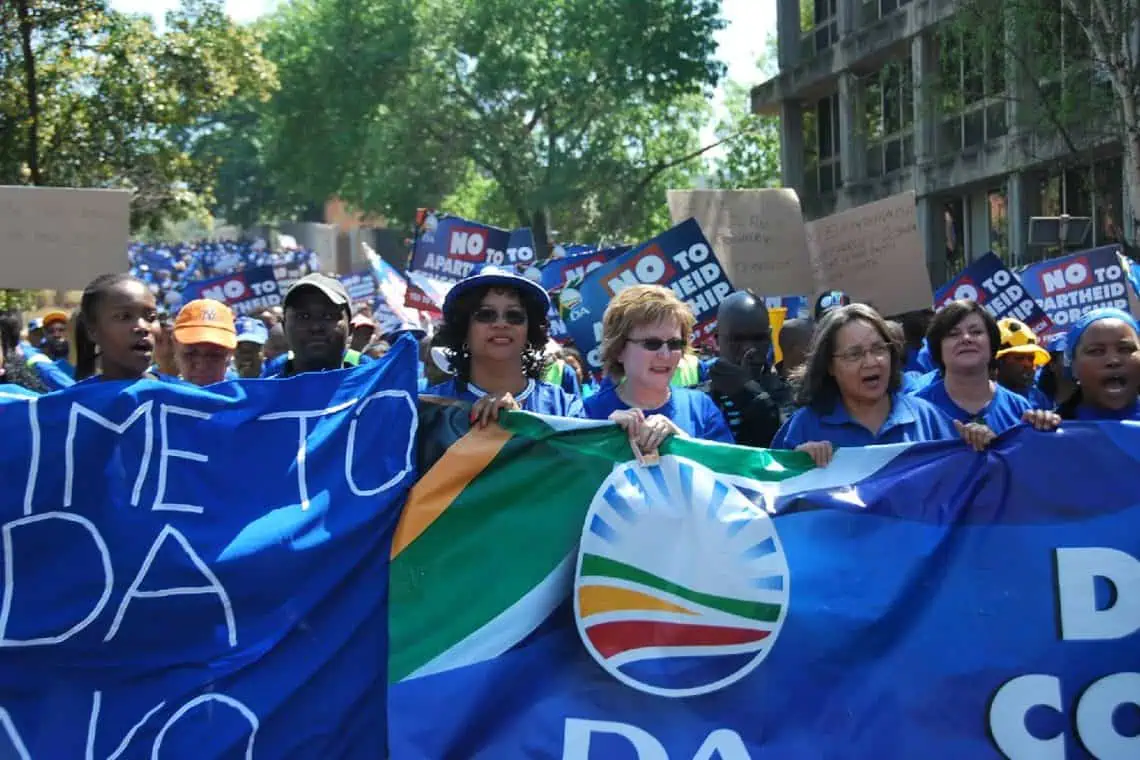

In a dramatic escalation within South Africa’s Government of National Unity (GNU), the Democratic Alliance (DA) has issued an ultimatum threatening to abandon the coalition unless the African National Congress (ANC) reverses its latest economic reform proposals. The confrontation, which erupted during a tense parliamentary session in Cape Town on October 24, 2025, has triggered emergency talks and renewed fears of political instability ahead of next year’s local elections.
The GNU was formed after the ANC lost its outright majority in the May 2024 general elections, uniting former rivals under a banner of stability and reform. But ideological differences — the DA’s pro-business stance versus the ANC’s social equity agenda — have continued to strain the partnership. Disputes over budgets, corruption, and now the overhaul of Black Economic Empowerment (BEE) policies have pushed the alliance to breaking point.
The October 24 Flashpoint: A Battle Over BEE
The latest crisis was sparked by the ANC’s move to amend the BEE Act, broadening criteria to include additional historically disadvantaged groups. DA leader John Steenhuisen denounced the proposal as “a regressive step that prioritizes patronage over inclusion,” accusing the ANC of betraying the GNU’s founding principles. “If the ANC insists on this divisive path, the DA will walk — effective immediately,” he declared in Parliament.
ANC Secretary-General Fikile Mbalula responded sharply, calling the DA’s threat “political grandstanding” and warning that a withdrawal would be tantamount to “a unilateral divorce.” The heated exchange nearly descended into chaos as MPs shouted over one another, forcing parliamentary officials to mute microphones to restore order.
It is not the first time the DA has threatened to quit the GNU. Earlier this year, it boycotted the National Dialogue over corruption allegations and opposed several departmental budgets. Political analysts say these recurring clashes expose deep ideological divides that could soon make the coalition untenable.
Crisis Talks at the Union Buildings
By Friday evening, President Cyril Ramaphosa had called an emergency meeting at the Union Buildings in Pretoria, attended by Steenhuisen, Mbalula, and coalition partners from the Inkatha Freedom Party (IFP) and Patriotic Alliance (PA). Insiders described the atmosphere as “tense but pragmatic,” with Ramaphosa urging a 48-hour cooling-off period to review the BEE amendments.
“The GNU was never meant to be easy, but it remains vital to our democracy,” Ramaphosa said in a televised address. Political analyst Dr. Somadoda Fikeni cautioned that repeated ultimatums could erode trust and invite instability, warning that opposition parties such as the Economic Freedom Fighters (EFF) and uMkhonto weSizwe (MK) Party may exploit the rift.
Behind closed doors, negotiators are grappling with deeper challenges — from persistent load-shedding and fiscal strain to debates over land expropriation without compensation. Should the DA walk away, the coalition’s parliamentary majority could collapse, forcing the ANC to seek support from smaller, more radical partners.
Public Anxiety Rises in Pretoria
In Pretoria, where government decisions ripple fastest, residents have reacted with growing frustration. “We’ve barely recovered from the last election chaos,” said Thabo Mokoena, a 42-year-old public servant. “Another coalition collapse means more service delivery delays and higher costs of living.”
Recent polls show that over 60% of Pretoria residents now prioritize stability over ideology. Social media has echoed this sentiment, with hashtags like #SaveTheGNU and #DABetrayal trending overnight. Many citizens accused both parties of “playing politics with livelihoods,” while some DA supporters praised Steenhuisen for “taking a principled stand.”
Not all reactions are negative. Some view the DA’s ultimatum as a wake-up call that could force greater accountability. “Better a short-term shake-up than long-term decay,” one voter commented online. ActionSA has already hinted it may reassess its own GNU participation if the DA departs, suggesting potential shifts in future municipal alliances.
South Africa’s Political Future at a Crossroads
The October 24 confrontation underscores the fragility of South Africa’s experiment in coalition governance. The rand slipped 1.2% against the dollar following the clash, while the Johannesburg Stock Exchange saw a brief spike in volatility. International observers, including the IMF and European Union, are reportedly monitoring developments closely.
For the ANC, the stakes could not be higher. Losing the DA would weaken its centrist image and risk further voter defections to MK and the EFF. The DA, meanwhile, faces a difficult balance between asserting independence and preserving influence within government.
As the crisis talks continue, South Africans are left wondering whether their leaders can preserve the fragile cooperation that has kept the GNU intact since 2024. The coalition’s survival may depend less on ideology and more on the willingness to prioritize dialogue over division.
October 24 may ultimately mark not just another political standoff, but a pivotal test of South Africa’s democracy — a moment to decide whether unity can still prevail in a time of deepening polarization.