

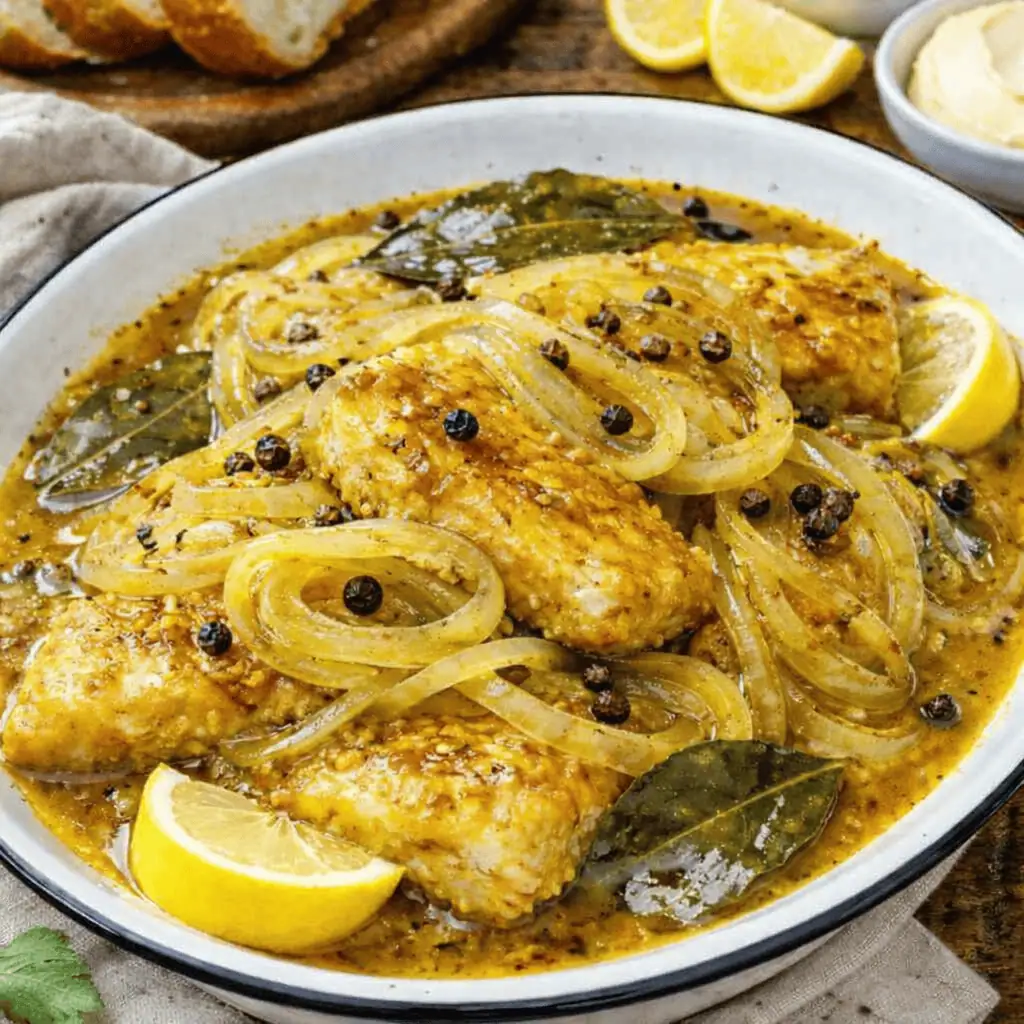

Difference Between Pickled Fish and Curry Fish
Cape Malay Pickled Fish
- Has a sweet and sour sauce (vinegar + sugar)
- Contains onions, bay leaves, peppercorns, turmeric, curry spices
- The fish is usually fried first, then covered in hot sauce
- Often baked or just marinated
- Left to rest 1–3 days before eating
- Served cold or at room temperature
- Traditionally eaten at Easter in South Africa
- Texture: saucy, pickled, onion-rich
Key flavour: Sweet, sour, gently curried
South African Curry Fish
- Usually a hot curry sauce
- No vinegar (or very little)
- Not sweet
- Fish is cooked directly in the curry sauce
- Eaten hot with rice
- More like a Durban-style curry
Key flavour: Spicy, savoury curry
Spiced Fish Oven-baked in the Cape Malay Style
A true South African classic, Cape Malay Pickled Fish Curry is a beautifully balanced dish of lightly fried fish layered in a fragrant, sweet-and-sour spiced sauce. Infused with warming curry spices, vinegar tang, and a gentle sweetness, this dish is traditionally enjoyed during Easter — but is just as perfect any time you’re craving bold, comforting flavours. Best made ahead, the flavours deepen and develop over time, making it even more delicious a day or two later.
Cape Malay Food
Cape Malay is a food cuisine that developed within the Western Cape of South Africa. Its origins are said to lie with recipes introduced by 16th-century slaves and exiles brought from Asia and other areas of Africa. A food known for its sweet and sour spiciness. Mixing flavours from various sweet dried fruits with aromatic, full-bodied spices such as coriander, cumin, ginger and mustard seed.
Is Pickled Fish Curry Healthy?
Yes, yes and yes again! Fish, in general, boosts the human body with vitamins and minerals such as iron, zinc, magnesium and potassium. It is also a great source of protein and Omega-3 fatty acids. The American Heart Association recommends eating fish twice per week. Then we have a surplus of health benefits presented by the various spices added. To name a few, turmeric is a potent anti-inflammatory, coriander seed that promotes good cholesterol and ginger whose anti-bacterial properties help the body fight germs.
To opitmise on health benefits, you can leave out the little bit of flour used and (yes, you know what is coming), dont add the sugar.
Ingredients
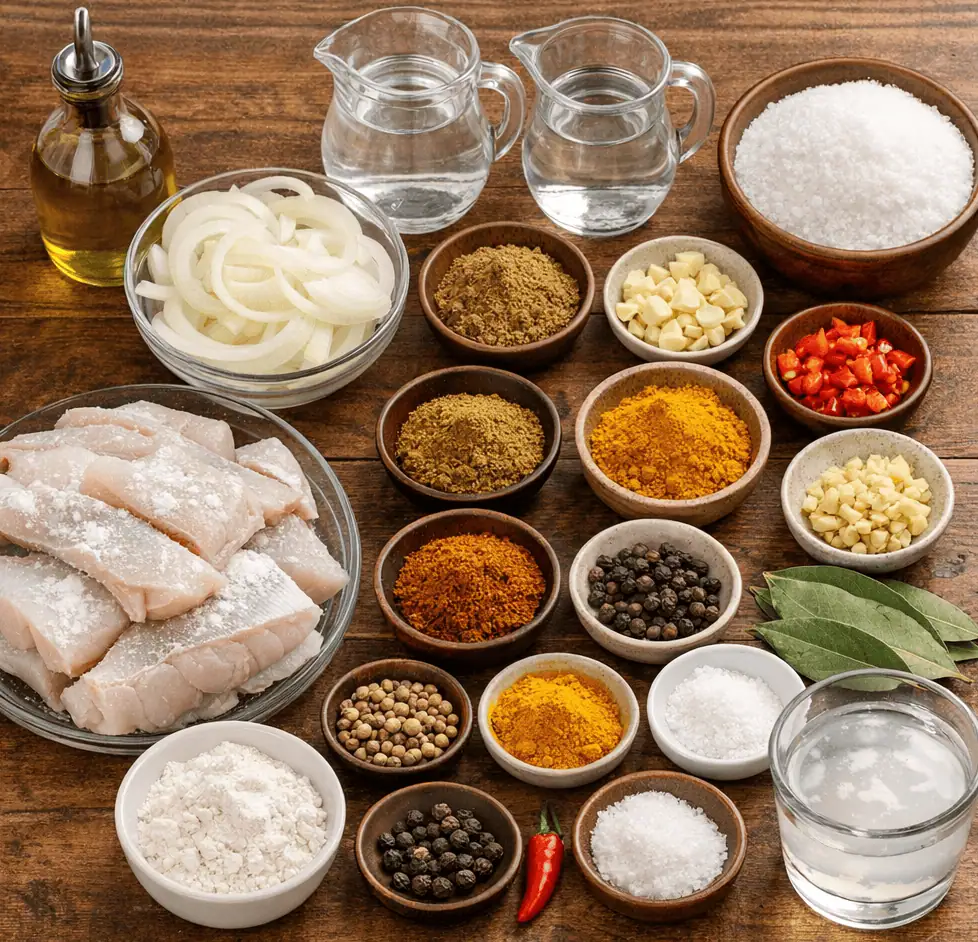
- 1 kg Fresh Hake or Yellowtail (any firm fish will do)
- 2 large Onions sliced in to rings
- 5 cloves Garlic chopped
- 375 ml White Vinegar
- 250 ml Water
- 375 g Sugar (sweetener to taste, optional)
- 10 whole Coriander seeds
- 2 tsp Ground Cumin
- 1 tbsp Masala (use Fish Masala if you can)
- 5 ml Turnmeric
- 4 whole Bay Leaves
- 8 whole Peppercorns
- 5 ml Salt
- 1-4 tbsp Flour for sprinkling on the fish before you fry it lightly
- 2 ml Fine Ginger (fresh Ginger finely chopped if possible)
- 1 whole Chili chopped (optional)
- 30 ml Cornflour
- 15 ml Curry Powder (add more if you like it hot and you can experiment with different curry mixes)
- 30 ml Water to make a paste with the flour
- Olive Oil
Method
- Preheat oven to 180–190 °C (350–375 °F). Dust fish with flour, fry in oil until golden, then place in an ovenproof glass dish.
- In a saucepan, sauté onions in olive oil until soft. Add garlic, ginger, and chilli; cook until fragrant.
- Stir in curry powder, masala, turmeric, cumin, coriander seeds, peppercorns, and bay leaves. Cook briefly to release aromas.
- Add vinegar, water, sugar, and salt. Simmer 8–10 minutes. Thicken with cornflour paste, adjust seasoning.
- Pour hot sauce over fish, bake 30 minutes. Cool, refrigerate, and allow flavours to develop.
- Best served after 1–2 days with fresh bread and butter.
Authentic Cape Malay Pickled Fish with Onions and Spices
Ingredients
- 1 kg Fresh Hake or Yellowtail (any firm fish will do)
- 2 large Onions sliced in to rings
- 5 cloves Garlic chopped
- 375 ml White Vinegar
- 250 ml Water
- 375 g Sugar (sweetener to taste, optional)
- 10 whole Coriander seeds
- 2 tsp Ground Cumin
- 1 tbsp Masala (use Fish Masala if you can)
- 5 ml Turnmeric
- 4 whole Bay Leaves
- 8 whole Peppercorns
- 5 ml Salt
- 1-4 tbsp Flour for sprinkling on the fish before you fry it lightly
- 2 ml Fine Ginger (fresh Ginger finely chopped if possible)
- 1 whole Chili chopped (optional)
- 30 ml Cornflour
- 15 ml Curry Powder (add more if you like it hot and you can experiment with different curry mixes)
- 30 ml Water to make a paste with the flour
- Olive Oil
Instructions
- Start by filleting the fish and sprinkling lightly with salt and pepper and fish spice, (fish rub, optional)

- Preheat the oven to 180 to 190 C (350–375 F)
- Lightly dust the fish with flour, shake off excess, then fry in a little oil until just golden. Transfer to an ovenproof glass dish.
- In a large saucepan, heat a little olive oil and sauté the onions until soft and translucent. Add the garlic, ginger and chilli (if using) and cook until fragrant.
- Stir in the curry powder, masala, turmeric, ground cumin, coriander seeds, peppercorns and bay leaves. Cook for 1–2 minutes to release the spices.
- Pour in the vinegar and water, add the sugar and salt, and bring to a gentle simmer. Simmer for 8–10 minutes.
- Mix the corn flour with 30 ml water to form a smooth paste, stir into the sauce and bring to a gentle boil until slightly thickened. Taste and adjust seasoning if needed.
- Pour the hot sauce over the fish. Bake for 30 minutes.
- Allow to cool, then refrigerate. For best flavour, serve after 1–2 days with fresh bread and butter.
- Note: Pickled fish is best served a day or two after its made.
- Serve with fresh bread and butter.