

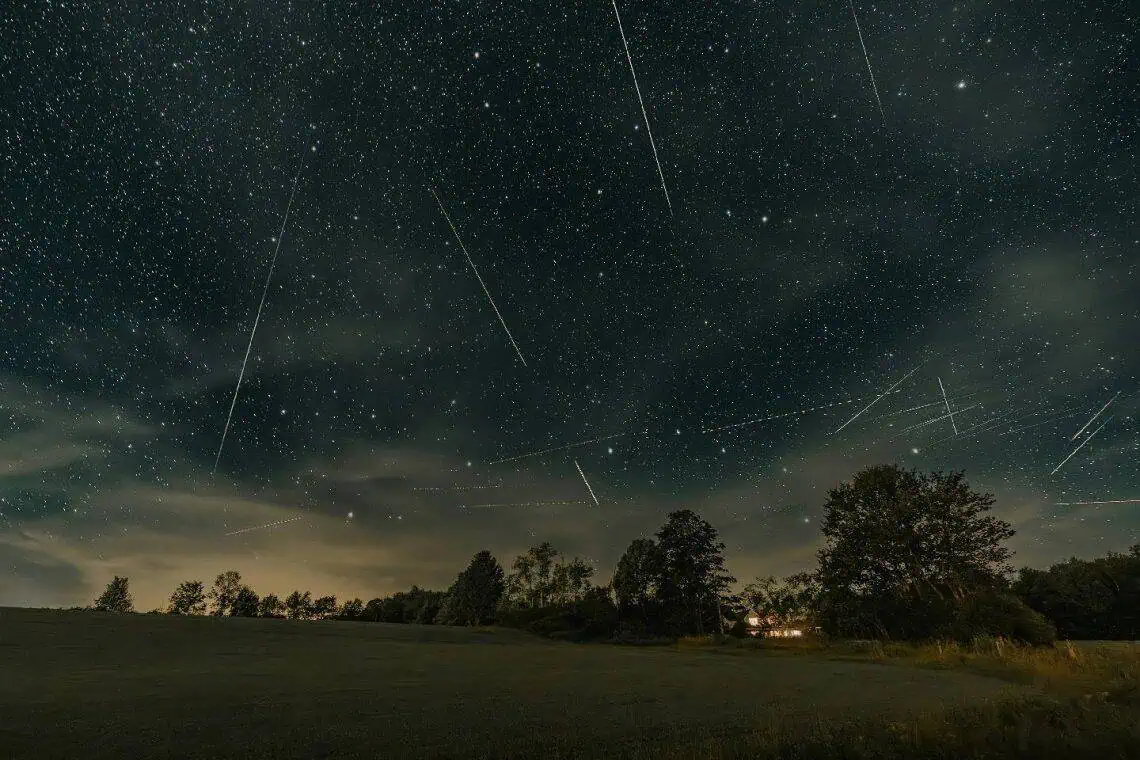

Discover Karoo deserts to Durban shores—expert tips for witnessing 100+ blazing meteors in the year’s swiftest cosmic display.
The Thrill of the Leonids: Nature’s Fiery Spectacle
The night sky has long enchanted humanity, yet few phenomena match the fierce energy of a meteor shower. Tonight, on November 17, 2025, the Leonid meteor shower hits its annual peak, delivering South African stargazers a mesmerizing cascade of shooting stars slicing through the cosmos at astonishing velocities. Renowned as one of the quickest meteor events, the Leonids propel fragments into Earth’s atmosphere at up to 71 kilometers per second—exceeding 255,000 kilometers per hour—crafting luminous streaks that briefly set the darkness ablaze like ephemeral fireworks.
Running from November 3 to December 2, the Leonids stem from remnants shed by Comet 55P/Tempel-Tuttle, which circles the sun every 33 years. In prime conditions—skies unmarred by moonlight or urban glow—expect 10 to 15 meteors hourly, including sporadic fireballs bursting in vivid greens, blues, and reds. Though not rivaling the epic 1833 storm that unleashed roughly 100,000 meteors per hour, this year’s event enjoys a thin waning crescent moon, enhancing visibility from midnight onward. The new moon arrives just days later on November 20, further minimizing interference for late-night observers.
Beyond mere light trails, the Leonids for South Africans evoke our world’s eternal voyage through primordial comet dust. Chronicles of Leonid tempests date to 902 AD, but the 1966 surge—thousands streaking per minute—lingers vividly in collective recall. As the radiant emerges in Leo constellation near midnight, orient eastward post-moonset for the fullest immersion in this stellar performance. These meteors’ speed not only heightens their brilliance but also their rarity; each one a fleeting testament to the universe’s dynamic chaos.
Historically, the Leonids have sparked scientific leaps, from linking comets to showers in the 19th century to modern forecasts tracking orbital debris. This year’s peak, aligning with clear seasonal patterns, invites both novices and veterans to ponder the cosmos’s vast scale. Whether contemplating ancient skies or the comet’s next perihelion in 2031, the Leonids bridge personal wonder with astronomical heritage.
Why South Africa is a Stargazer’s Paradise
South Africa’s expansive terrains and sparse settlements position it as a premier global astronomy haven. Many areas suffer scant light pollution, yielding some of Earth’s darkest skies, endorsed by the International Dark Sky Association. The Southern Hemisphere’s perspective unveils exclusives like the Southern Cross, Magellanic Clouds, and the Milky Way’s luminous arc—ideal canvases for the Leonids’ rapid glimmers.
Spanning bone-dry deserts to jagged peaks, SA’s varied topography guarantees reachable observation sites. Fleeing Cape Town’s vibrancy or Durban’s warmth, these venues merge scenic splendor with astronomical sharpness, alluring hobbyists, families, and solo explorers. In 2025, favorable weather projections across inland zones time perfectly with tonight’s zenith, priming an indelible nocturnal quest. The nation’s commitment to dark sky preservation, through reserves and policies, ensures these spectacles endure for generations, fostering eco-tourism that balances access with conservation.
Moreover, South Africa’s astronomical legacy—from ancient indigenous star lore to cutting-edge observatories—enriches the experience. Communities here view the sky not just as spectacle but as cultural tapestry, where stories of ancestors mingle with scientific inquiry. This holistic allure transforms Leonid viewing into a profound, multifaceted adventure.
Top Dark Sky Hotspots: Where to Catch the Leonids
South Africa’s certified dark sky havens and secluded escapes are tailored for Leonid pursuits. This guide spotlights elite locales, fusing Karoo isolation with seaside allure, each vetted for minimal interference and maximal celestial drama.
Sutherland and the Karoo: The Astronomer’s Mecca
Tucked in the Northern Cape, Sutherland dominates as SA’s stargazing epicenter, hosting the Southern African Large Telescope (SALT), the Southern Hemisphere’s largest optical instrument. Perched at 1,837 meters elevation in a nature reserve, it delivers over 300 cloudless nights yearly, with skies measuring 21.9 on the Sky Quality Meter—virtually flawless obscurity. Here, the Leonids’ radiant soars overhead, framing meteors against the southern Milky Way’s glow.
Venues like Sterland Karoo Observatory offer led sessions, scopes, and snug lodgings. Roughly 5-6 hours from Cape Town, it’s a breeze for quick getaways. Brace for frosty evenings—temps may plummet below zero—but the payoff is a firmament brimming with potential. Sutherland’s remoteness, 370 km northeast of Cape Town, amplifies its purity, making it a pilgrimage site where the Karoo’s silence amplifies every streak.
Visitors often pair daytime telescope tours with evening meteor hunts, blending education and exhilaration. The site’s dry air curtails scintillation, ensuring crisp views that reveal even subtle trains trailing brighter fireballs.
Cederberg Wilderness: Mountains Under the Stars
Merely two hours northeast of Cape Town, the Cederberg Mountains reveal a diorama of rock art by daylight and a stellar coliseum after dusk. Integrated into the Cape’s Dark Sky Corridor, sites like Algeria Campsite or Mount Ceder proffer boundless vistas amid boulder fields. Arid upland breezes curb turbulence, honing Leonid paths to incisive flashes.
Ascend to elevated perches by day, then unwind by firelight as Leo ascends. Outposts like Cederberg Oasis lodges curate star parties with astronomers illuminating Crux, Carina, and beyond. This fusion of exertion and enchantment echoes ancient San narratives etched in stone, beheld beneath identical firmaments tonight. The Cederberg Observatory further elevates options, boasting telescopes amid pollution-free heights for deeper dives into the display.
The region’s fynbos flora and San heritage add layers, turning a meteor vigil into cultural communion. Trails wind through ochre formations, offering secluded nooks where the sky feels intimately close, unspoiled by distant glows.
Kgalagadi Transfrontier Park: Desert Drama
Wildlife aficionados find the Kgalagadi’s crimson dunes and amber flats a theatrical contrast to overhead splendor. This parched realm, abutting Botswana, harbors Africa’s sole International Dark Sky Sanctuary in the !Ae!Hai Kalahari Heritage Park, guaranteeing inky voids. At !Xaus Lodge, sparse guests foster tranquility, where Leonids may sync with black-maned lions’ distant roars.
Traverse park trails daylight for cheetah chases, then halt beneath constellations. Its seclusion—a 4-hour flight or extended drive from hubs—intensifies solitude, rendering each meteor intimate. Boasting 80% clear nights, yet demand permits; reserve promptly. The sanctuary’s ethos, co-managed by ǂKhomani San and Mier peoples, underscores sustainable viewing, with retrofitted lights preserving the pristine dark that defines this 120,000-acre expanse.
Here, the Kalahari’s thirst-quenched riverbeds—Auob and Nossob—frame horizons where 264 bird species join the nocturnal chorus, enriching the multisensory symphony of streaking lights and savanna whispers.
Durban Beaches: Coastal Cosmic Escape
Stargazing needn’t shun ocean zephyrs. Durban’s waterfront, though citified, conceals dimmer enclaves suiting eastern KwaZulu-Natal seekers. Seek the Bluff Nature Reserve or Umhlanga’s subdued sands south of the pier, where the Indian Ocean caresses shores as Leo climbs. Urban haze hugs the horizon low, freeing the overhead dome for Leonids.
Proximate to Durban’s resorts—a swift jaunt—these strands boast temperate airs over inland chills. Unfurl a mat post-sunset, acclimate your gaze, and sweep eastward. Surf’s cadence provides a calming refrain, elevating meteor gazing to sensory poetry. For profounder dark, probe Ballito Beach northward, where sprawl ebbs. Though light pollution lingers from city cores, these coastal pockets—framed by dune grasses and tidal rhythms—offer accessible gateways to the heavens, blending urban proximity with natural respite.
Local lore ties these shores to ancient seafaring tales, where early navigators charted by stars much like tonight’s vigilant watchers, merging maritime history with celestial theater.
Bonus: Golden Gate Highlands and Beyond
Free State’s Golden Gate Highlands National Park’s sandstone ramparts encase a light-free vault. Three to four hours from Johannesburg, it’s central SA’s gem. Nearby, Northern Cape’s Quiver Tree Forest casts eerie aloe shadows against stellar backdrops, enhancing the otherworldly vibe.
Golden Gate’s minimal pollution and elevated plateaus yield superb clarity, with trails leading to overlooks where the park’s 49 km² canvas unfolds. Pair with Clarens town’s artisanal charm for a rounded itinerary, or extend to nearby reserves like Lapalala Wilderness, SA’s newest Dark Sky certified haven, for varied terrains under shared skies.
Essential Gear and Pro Tips for Leonid Success
Capturing the Leonids demands little gear, yet savvy choices amplify delight. Skip telescopes—these bold meteors favor unaided eyes—though 7×50 binoculars unveil dimmer paths and stellar patterns.
Layer attire: November dusks chill swiftly, notably in Karoo climes. Haul a lounge chair or plush rug for supine comfort—sparing your neck. A crimson-lensed torch safeguards dark adaptation; shun stark beams. Provisions, warm brews, and a flask sustain vigor through zenith (2-5 a.m.). Hydration matters too, countering dry air’s toll.
Prioritize secure, permitted locales—reserves mandate reservations. Apps like SkySafari map radiants live. Endurance reigns: Streaks arrive unpredictably, so unwind and welcome surprises. Clouds loom? Consult SA Weather Service tools.
Snapshots seekers: Mount a DSLR on tripod with broad lens (14mm, f/2.8), extended shutters (15-30s) at ISO 1600-3200. Frame the Milky Way cradling a Leonid for shareable masterpieces. Experiment with time-lapses to chronicle the shower’s ebb, or wide-angles capturing horizon silhouettes against streaking trails.
For families, incorporate kid-friendly twists: Mythologize constellations or tally meteors for fun counts. Eco-tips abound—tread lightly, douse fires fully—to honor these fragile skies. Advanced viewers might log sightings via the American Meteor Society, aiding global data on this comet’s legacy.
Embrace the Magic: A Night to Remember
As Leonids crest tonight, South Africa’s shadowy sanctuaries summon with vows of marvel. Be it enveloped in Karoo hush or ocean-kissed on Durban dunes, this outpouring recalls our speck amid boundless expanse. Venture forth, gaze upward, and permit stars—and their shooting kin—to rekindle astonishment. In ceaseless whirl, these transient gleams implore halt, bond, and envision beneath eternity’s ebony veil.
This comprehensive blueprint, delving deep into locales, lore, and logistics, equips you for the Leonids’ hasty transit. Traverse safely amid stars—may your firmament blaze with flame.