

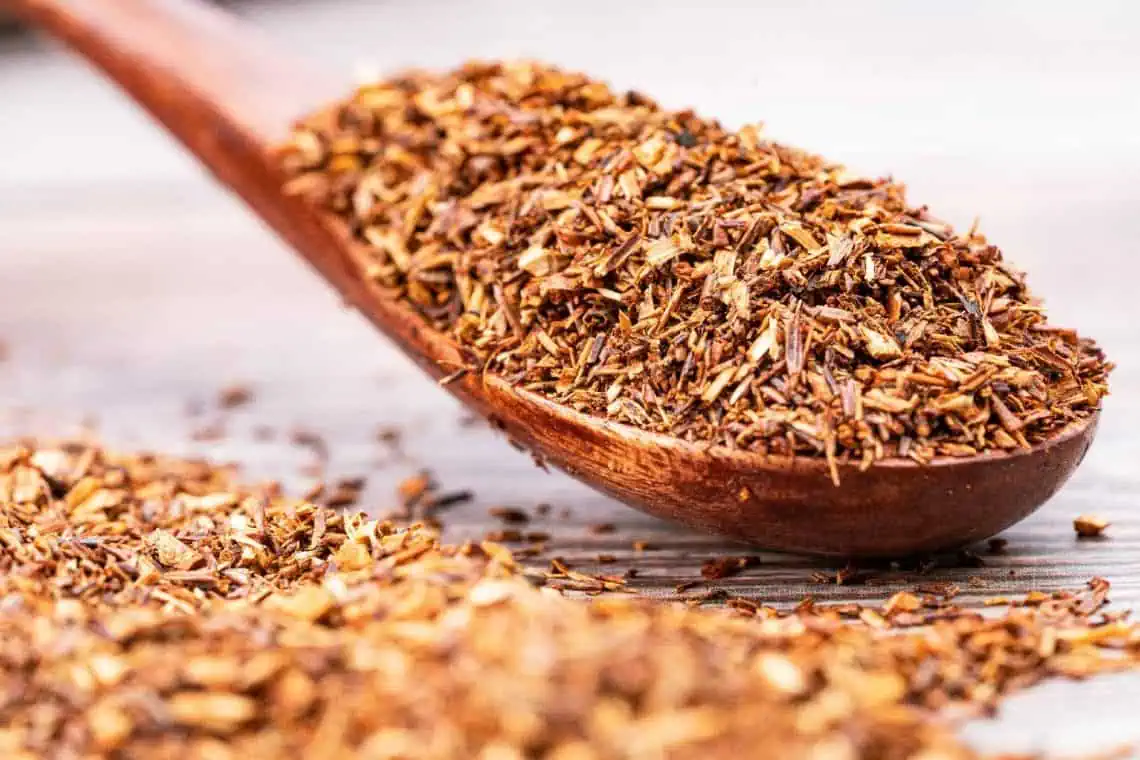

In the sun-scorched Cederberg mountains of South Africa’s Western Cape, a crimson tide is transforming dusty plains into a golden bounty. For the first time in 17 years, rooibos production has rocketed to 18,000 tons in 2025, smashing records and quenching a worldwide thirst for this naturally caffeine-free elixir. From sleek Tokyo tea lounges to trendy London wellness hubs, rooibos—celebrated for its velvety sweetness and potent antioxidants—has evolved from a regional treasure into a global sensation. This surge is reshaping communities in Clanwilliam and surrounding areas, where farmers are thriving on lucrative export contracts and creative new blends. As summer braais fire up, celebrate the triumph with an effortless three-ingredient iced rooibos cocktail that captures the spirit of the harvest. Discover how South Africa’s red gold is conquering palates everywhere.
The Rooibos Renaissance: From Ancient Remedy to Worldwide Obsession
Rooted in the Aspalathus linearis shrub native to the fynbos biome, rooibos has been brewed by indigenous Khoisan communities for centuries as a calming, health-boosting tonic. Today, it anchors a multi-billion-rand industry. The 2025 harvest represents a landmark rebound: after slumping to around 14,000 tons in 2024 amid severe droughts and market volatility, output soared to 18,000 tons—the highest since 2008’s 20,000-ton peak.1 This follows steady growth from 17,000 tons in 2023, enough to produce more than 10 billion cups annually worldwide.
The catalyst? Skyrocketing international demand. Exports hit 9,760 tons in 2024—a 49% leap from 2013—reaching over 60 countries.2 Japan dominates with 30% (2,909 tons), followed by Germany (17%), the Netherlands (10%), the United Kingdom (7%), and France (6%). The United States, navigating recent trade tariffs, still claims 4% of exports. Health enthusiasts are drawn to its high antioxidant content (including aspalathin and nothofagin), minimal tannins, and adaptability—from classic hot infusions to flavored variants, concentrated “red espresso” shots, and even skincare extracts.
Domestic consumption remains robust at approximately 7,500 tons per year, but exports drive the economy, generating over R600 million in revenue in 2024 alone.3 This influx stabilizes rural livelihoods in the Western Cape. Strategic branding has fueled the boom: the 2014 European Union geographical indication (GI) protection—similar to Champagne or Parma ham—safeguards “rooibos” as exclusively South African, preventing imitation and elevating premium pricing.4 Online searches for rooibos surged 28% in early 2025, reflecting growing curiosity in its science-backed benefits, including potential anti-inflammatory and cardiovascular support.5
Farmers Reap Rewards: Export Surge and Premium Prices Transform Lives
For the roughly 510 rooibos producers—300 commercial farms and 210 small-scale operations in regions like Wupperthal, Heiveld, and Citrusdal—the 2025 bonanza means tangible prosperity. The sector employs around 8,000 people across harvesting, processing, packing, and distribution.6 Export markets command 20–30% premiums: Japanese buyers prize the tea’s subtle nutty undertones, while European demand for certified organic and fair-trade lots drives even higher returns.
Climate hurdles loom large—erratic rainfall and rising temperatures could cut yields by up to 20% by 2030 without intervention.7 Yet innovation prevails. The South African Rooibos Council (SARC) promotes regenerative agriculture, biodiversity corridors, and fair-trade certifications that add 10–15% to smallholder earnings. In 2025, the newly launched Rooibos Resilience Fund—financed by major exporters—allocated R50 million for drip irrigation, drought-resistant cultivars, and seed banks, enabling farmers to mitigate dry cycles and capitalize on demand.
Farmgate prices climbed 12% year-on-year to an average of R45 per kilogram, with premium organic batches reaching R60+.8 For a typical 50-hectare operation yielding 2–3 tons per hectare, this translates to an additional R200,000–R300,000 in revenue—funds reinvested in machinery, worker housing, or plot expansion. As one veteran producer puts it, “Rooibos is more than a crop; it’s our community’s lifeline in an unpredictable climate.”
Clanwilliam Chronicles: Grit, Growth, and Generational Triumph
Clanwilliam, the historic hub of commercial rooibos since botanist Dr. Pieter le Fras Nortier domesticated wild plants in the 1930s, pulses with harvest-season vitality. This tight-knit town of 8,000 residents nestled against the Cederberg peaks is where legacy meets opportunity.
Anna Brandt, 57, embodies resilience at Elandsfontein Farm near Citrusdal. Harvesting up to a ton of needle-like leaves daily for 23 years, she funded her son’s university education through sheer dedication. When tuition shortfalls arose, farm owner Jacques Burger and his father covered residence fees without hesitation. Now a supervisor, Brandt mentors the next generation: “This land gave me a future; I’m passing it on.”
Burger, who leased then purchased the 450-hectare Elandsfontein in 2018, employs 35 locals year-round. The 2025 bumper crop delivered a 15% revenue spike, translated into staff bonuses and infrastructure upgrades. At nearby Bergendal Farm—headquarters of Carmién Tea—line manager Wilfred Booise ascended from picker to overseer despite lacking formal secondary education. Overseeing cycles from February seeding to 18-month first cuts, he stresses discipline: “Consistency turns labor into leadership.”
Indigenous entrepreneur Niklaas Jakobus Slinger, after 14 years as a laborer, now farms his own plot through the Heiveld Co-operative. Smallholder representation has grown from 2% to 7% of total production, bolstered by fair-trade premiums funding community schools, clinics, and training. These narratives from Clanwilliam and beyond illustrate rooibos as a catalyst for social mobility, preserving cultural heritage while forging economic independence.
Sip the Harvest: Zesty 3-Ingredient Rooibos Sunset Spritz
Elevate your summer braai with the Rooibos Sunset Spritz—a refreshing, low-calorie cocktail blending the tea’s malty richness with honeyed warmth and sparkling lift. Gluten-free and antioxidant-packed, it pairs perfectly with grilled meats and fresh salads.
Ingredients (serves 4):
- 4 cups strong-brewed rooibos tea, chilled (steep 6 tea bags in 1 liter boiling water for 10 minutes, then cool completely)
- ¾ cup Drambuie (or honey-whisky liqueur for authentic South African nuance)
- 3 cups chilled soda water
Instructions:
- Prepare and refrigerate the rooibos brew for at least 2 hours until ice-cold.
- In a large pitcher, gently combine the chilled tea and Drambuie.
- Add soda water just before serving; pour over ice and garnish with lemon zest or mint sprigs.
At under 150 calories per glass, this vibrant sipper scales easily for crowds and showcases rooibos versatility. Batch-prep ahead, and let the Cederberg’s essence shine at your next gathering.
Future Flows: Sustainable Growth for a Global Thirst
With 2025’s 18,000-ton milestone, the rooibos market is projected to exceed $750 million globally by year-end.9 Producers are innovating: ready-to-drink cans, cosmetic infusions, flavored craft beers, and functional wellness shots. Sustainability remains paramount—SARC’s partnerships with conservation bodies protect endangered fynbos species while enhancing soil health and water efficiency through agroecological methods.
International buyers gain access to ethically sourced, GI-protected rooibos that supports biodiversity and fair wages. Whether enjoyed traditionally or in a chilled spritz, this red tea embodies resilience and renewal. Raise your next cup to the Cederberg farmers converting humble shrubs into liquid gold—the revolution is brewing stronger than ever.
Sources:
1. South African Rooibos Council (SARC) 2025 Harvest Report.
2. SARC Export Statistics, 2024.
3. Department of Agriculture, Land Reform and Rural Development, 2024.
4. EU Geographical Indications Register, 2014.
5. Joubert, E. & de Beer, D. (2011). Rooibos (Aspalathus linearis)—a functional food. South African Journal of Botany.
6. SARC Industry Overview, 2025.
7. Archer, E. et al. (2023). Climate Change Impacts on Rooibos. Agricultural Systems.
8. SARC Price Index, Q1 2025.
9. Market research projection, Global Tea Insights 2025.