

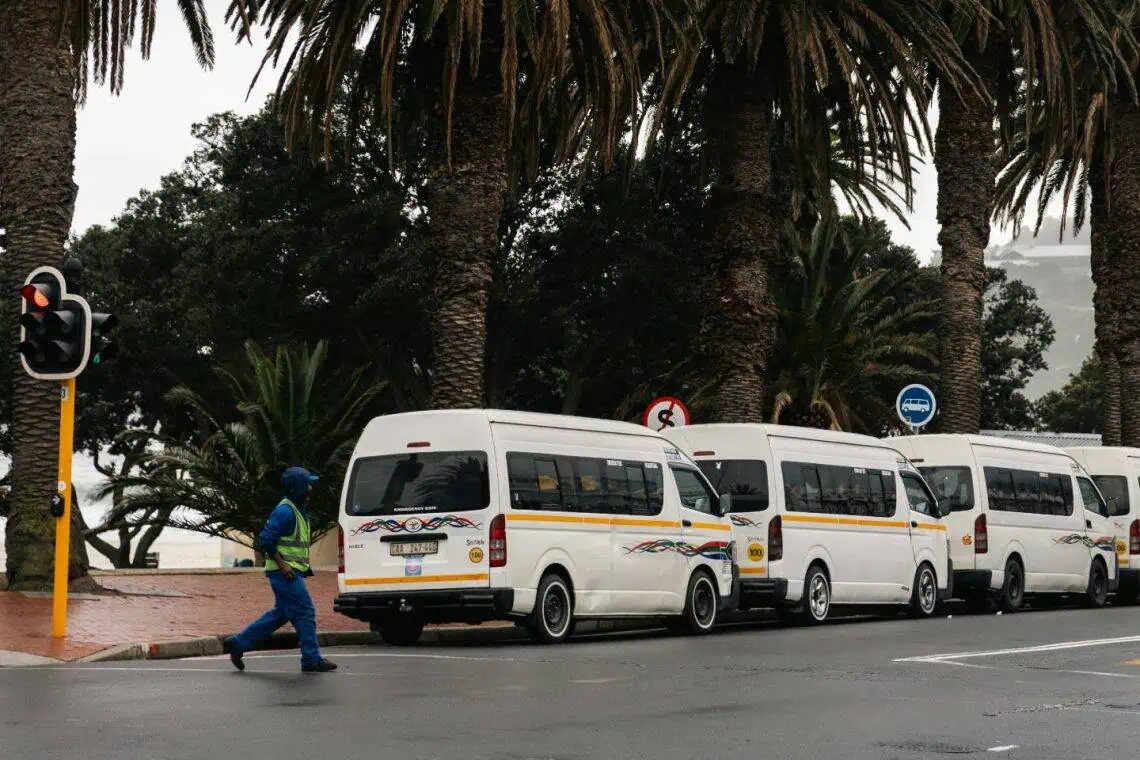

Behind the scenes of the all-night drama and why MyCiTi buses keep Cape Town moving smoothly.
In the early hours of November 20, 2025, Cape Town breathed a collective sigh of relief as news spread of a dramatic breakthrough in the city’s ongoing taxi strike. After days of mounting chaos, road blockades, and countless stranded commuters, representatives from the South African National Taxi Council (SANTACO) and Western Cape government officials finalized a landmark R250 million agreement just after 4 AM. By midday, taxis were back on the roads, restoring rhythm to the city’s bustling arteries. Yet, beneath the surface of this swift resolution lies a gripping story of intense negotiations, longstanding industry frustrations, and a compelling case for why reliable public transport options like the MyCiTi bus service continue to shine as a dependable lifeline in times of crisis.
The Flashpoint: Roots of the 2025 Taxi Unrest
Cape Town’s minibus taxi sector serves as an indispensable artery for more than a million daily passengers, ferrying workers, students, and families across the sprawling urban landscape. However, this vital industry has simmered with unresolved conflicts for years, making it prone to explosive disruptions. The November 2025 strike, which ignited on the 15th, bore striking similarities to the devastating 2023 impasse that inflicted R5 billion in economic damage on the Western Cape and resulted in five tragic fatalities. At the heart of the matter were grievances over stringent vehicle impoundments enforced under updated municipal bylaws designed to uphold road safety standards and route adherence.
Taxi operators, united under SANTACO’s banner, labeled the enforcement tactics as overly aggressive, arguing that they disproportionately penalized small oversights—such as lapsed seatbelt checks—while overlooking entrenched structural challenges like aging infrastructure and limited access to maintenance facilities. What started as formal warnings of service interruptions rapidly escalated into widespread blockades along critical thoroughfares, including the N2 highway. Eyewitness accounts poured in from townships like Khayelitsha and Philippi, where taxis ground to a halt at major ranks, abandoning schoolchildren, essential workers, and market vendors to fend for themselves.
As the standoff intensified, opportunistic looting surged in vulnerable neighborhoods, with local stores facing bare shelves and depleted stocks. Emergency responders, already overburdened, struggled to navigate the clogged routes. Within three days, the financial hemorrhage was undeniable, clocking in at approximately R9 million per day in forfeited productivity and commerce. Desperate commuters crammed into makeshift alternatives, while ride-hailing platforms like Uber experienced fare spikes of up to 200% during rush hours, pricing out many who could least afford it.
The digital sphere erupted in real time, with platforms like X lighting up under trending tags such as #CapeTownTaxiStrike and #StrandedInCT. Heart-wrenching updates from everyday Capetonians captured the raw human toll: parents trudging kilometers to retrieve children from school, delivery personnel dodging improvised barriers erected by frustrated crowds, and small enterprises closing doors prematurely to evade escalating risks. A particularly resonant narrative emerged from a Philippi resident, whose online chronicle underscored how such upheavals deepen the scars of historical spatial divides, compelling under-resourced households to cover expansive commutes that echo lingering inequalities from bygone eras.
Dawn of Diplomacy: The All-Night Negotiation Marathon
As midnight gave way to the early hours of November 19, a high-stakes, off-the-record gathering convened in a discreet conference room at the Western Cape Provincial Legislature. At the table sat pivotal figures: SANTACO Provincial Chairperson Mandla Hermans, Cape Town Mayor Geordin Hill-Lewis, Western Cape Premier Alan Winde, and Mobility MEC Ricardo Mackenzie. Supported by teams of legal experts and labor representatives, the discussions dragged on through the night, sustained by rounds of steaming coffee and urgent appeals from influential business coalitions demanding swift intervention.
Insiders privy to the proceedings described an electric tension in the air, with voices rising over core demands including the prompt liberation of 150 seized vehicles and a temporary halt to additional compliance sweeps. The provincial side pushed back with proposals for a gradual rollout of regulatory adjustments, but it was the introduction of a substantial R250 million support package that ultimately bridged the divide. Drawing inspiration from a successful 2022 program aimed at sector formalization, the funding earmarks resources for fleet modernizations, enhanced driver education, and the rollout of digital route management systems—initiatives poised to revitalize an industry that pumps R100 billion into the national economy each year.
“The stakes couldn’t have been higher—it felt like a make-or-break moment,” shared one participant under conditions of anonymity. “We refined every detail until the first light of dawn, striking a balance that shields operators from undue hardship while prioritizing the uninterrupted flow of commuter services.” At precisely 4:07 AM, the documents were sealed with signatures, and a unified press release cascaded across news wires: the strike was officially paused, with full operations slated to recommence by noon. This timely intervention forestalled a potential multi-week shutdown, evoking memories of the 2023 eight-day saga that led to 120 detentions and R18 million in property losses.
Unpacking the R250 Million Pact: Transformation or Temporary Relief?
Central to the accord is a three-year infusion of R250 million designed to fortify the taxi network’s foundations. Fully half of this sum targets subsidies for transitioning to sustainable, low-emission vehicles, directly tackling operator complaints that outdated models are systematically sidelined in roadworthiness evaluations due to their age rather than inherent defects. An additional R100 million establishes the “Taxi Compliance Academy,” a no-cost training hub for operators and technicians, which could dramatically curb the high incidence of collisions that have long shadowed the industry.
Skeptics, though, caution that this infusion addresses symptoms rather than root causes. “Impoundments are merely the tip of the iceberg; the real battle is over meaningful inclusion in shaping urban transport policies,” contends noted mobility expert Dr. Lindiwe Zulu. The agreement incorporates forward-looking elements, such as mandatory quarterly dialogue sessions between SANTACO and municipal leaders, alongside a provision requiring 36 hours’ advance notice for any future labor actions—a direct nod to safeguards implemented post-2023. On the economic front, projections suggest digitized routing could slash traffic bottlenecks by as much as 15%, according to provincial modeling, while spawning around 500 new positions in specialized repair and upgrade centers.
Barely hours after the deal’s announcement, debates ignited across online forums. Will authorities ease their regulatory grip, or does this funding conceal strings attached to even stricter oversight? Initial buzz on X reflected a spectrum of sentiments—taxi veterans celebrating it as “a hard-fought win for everyday hustlers,” contrasted by riders voicing pent-up demands for compensation over repeated inconveniences endured.
Street-Level Turmoil: The Human and Financial Price Paid
The strike’s repercussions rippled outward with brutal immediacy, etching deep into community fabrics. Educational institutions in areas like Nyanga activated emergency protocols, shuttling students via rented minibuses while bracing against echoes of 2023’s brutality, including the fatal shooting of a law enforcement officer. Commercial hubs flanking the N2—from industrial outfits in Philippi to boutique shops in the Central Business District—registered precipitous 40% declines in customer traffic, as snarled logistics left shelves stocked with wilting produce and halted deliveries.
The most vulnerable demographics—particularly women and young people—shouldered disproportionate loads, enduring multi-hour hikes beneath the unyielding African sun, a poignant emblem of entrenched disparities in mobility access. Research following the 2023 disruption revealed that 70% of impacted students forfeited instructional time, further entrenching opportunity chasms in marginalized enclaves. Conversely, the crisis thrust alternative providers into the spotlight: Golden Arrow Bus Services expanded its schedules to absorb overflow demand, though threats of sabotage persisted, recalling the arson attacks on nine vehicles during previous flare-ups.
Beyond the immediate hardships, the event served as a clarion call for holistic reforms. Community advocates highlighted how recurrent strikes not only disrupt livelihoods but also strain social cohesion, urging investments in diversified transport corridors that mitigate overreliance on any single mode. Small business owners, many operating on razor-thin margins, recounted tales of inventory spoilage and client attrition that could take months to rebound from. In parallel, healthcare access faltered as routine clinic visits were deferred amid the unpredictability, underscoring the strike’s cascade into public wellness metrics.
MyCiTi Buses: Cape Town’s Reliable Anchor in the Storm
In the midst of this maelstrom, the MyCiTi bus rapid transit system stood resolute as Cape Town’s unyielding champion for seamless mobility. Debuting in 2010 to coincide with the FIFA World Cup, this expansive network threads through 42 dedicated stations and close to 1,000 access points, transporting upwards of 80,000 individuals each day with an impressive 73% on-time performance rate. Insulated by exclusive travel lanes and a user-friendly tracking application, MyCiTi evaded the strike’s clutches entirely, positioning it as the premier refuge for displaced travelers seeking certainty.
Security features elevate MyCiTi beyond mere conveyance: Fully enclosed terminals equipped with surveillance cameras, dedicated patrols, and complimentary wireless connectivity foster an environment of assured protection. Accessibility shines through in thoughtful designs like low-entry boarding for ease with mobility aids and strollers. Pricing remains equitable, with distance-scaled tickets ranging from R10 to R30 during quieter periods—often a fraction of inflated app-based alternatives—with fluid interline connections on corridors such as the N2 Express, which whisks riders from Mitchells Plain straight to the vibrant V&A Waterfront.
Strike-period usage ballooned by 35%, affirming MyCiTi’s prowess in crisis navigation; schedules held firm even as rival services faltered. Looking ahead, a robust R5.2 billion commitment over the next biennium promises to electrify portions of the fleet and extend Phase 2A tendrils into long-neglected peripheral communities, broadening equitable reach. Whether navigating the majestic ascent to Table Mountain or routine errands, MyCiTi delivers air-conditioned respite and inclusive design that resonates with diverse users. Enthusiastic endorsements abound online, with one forum contributor declaring, “It’s the epitome of secure, predictable travel—far superior to the unpredictability elsewhere.”
Delving deeper, MyCiTi’s operational blueprint offers lessons in resilience. By prioritizing integrated planning—from smartcard payments to synchronized timetables—it minimizes friction points that plague fragmented systems. Environmental advocates praise its push toward greener propulsion, projecting a 20% emissions dip upon full rollout. For burgeoning entrepreneurs and shift workers alike, the system’s predictability translates to amplified productivity, unburdened by the specter of sudden halts. As Cape Town evolves, MyCiTi embodies a blueprint for transport equity, harmonizing efficiency with empathy in a city defined by contrasts.
Back in Motion: Charting Cape Town’s Transport Horizon
Come noon on the 20th, the resonant chorus of taxi horns signaled a jubilant resurgence, as vehicles surged back into depots stretching from Kraaifontein to Atlantis. Eager queues formed under skies heavy with tentative hope, marking a return to normalcy that felt both fragile and fervent. Still, this accord represents no outright cure; simmering animosities—such as turf skirmishes between competing syndicates like CATA and CODETA—lurk just below the surface, threatening future flare-ups.
The pact’s longevity will turn on faithful execution: Can the R250 million catalyze genuine advancements, or will it dissipate amid red tape and competing priorities? Premier Winde has pledged to internalize “hard-won insights from 2023,” advocating for symbiotic frameworks that weave taxis into broader BRT tapestries. Concurrently, momentum builds for federal oversight, with Transport Minister Sindisiwe Chikunga advocating for bylaws that distribute benefits equitably across stakeholders.
In the interim, Cape Town savors a hard-earned respite. This predawn compact not only cleared thoroughfares but also reaffirmed the taxi realm’s stature as the metropolis’s economic powerhouse, propelling livelihoods and commerce. Coupled with MyCiTi’s unwavering cadence, it sketches an aspirational trajectory for durable, inclusive transit. As wheels turn anew along familiar paths, the narrative crystallizes: In the Mother City’s intricate mobility mosaic, unity invariably outshines discord, paving the way for a more connected tomorrow.