

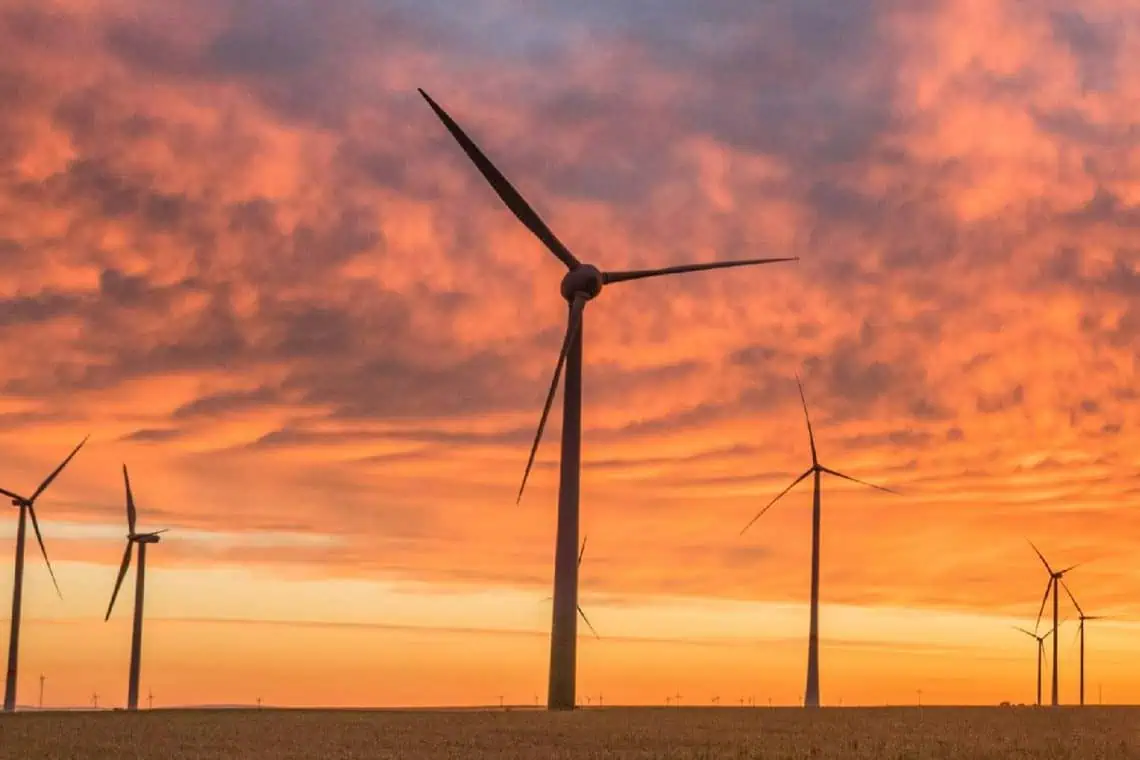

From vast solar farms to innovative battery breakthroughs, private investments are set to illuminate homes and businesses by 2026.
South Africa’s energy sector is experiencing a profound transformation. For over a decade, Eskom’s reliance on aging coal infrastructure has led to persistent load shedding, disrupting daily life and economic growth. However, the 2025 South African Renewable Energy Grid Survey (SAREGS) highlights a dramatic expansion in the renewables pipeline, reaching 220GW of contracted capacity—more than quadruple Eskom’s existing generation fleet. Fueled predominantly by private sector initiatives, this growth points toward the potential eradication of power interruptions that have long affected communities nationwide. As solar installations proliferate across sun-baked landscapes and advanced battery systems ensure continuous supply, the coming year could usher in a reliable, sustainable power era for households and industries alike.
Igniting the Renewables Boom
Compiled jointly by Eskom, the South African Photovoltaic Industry Association (SAPVIA), and the South African Wind Energy Association (SAWEA), the SAREGS underscores remarkable progress. The pipeline has surged from 63GW in 2022 to 220GW in 2025, supported by 673 active projects, of which just 20 stem from Eskom. The overwhelming majority represent a robust influx of private capital into solar, wind, and energy storage technologies. This collaborative survey not only tracks development but also informs critical grid enhancements to integrate these resources efficiently.
The timing is ideal, given South Africa’s exceptional solar irradiance and wind velocities—ranking among the globe’s top endowments—coupled with sharp declines in renewable technology costs. Recent auctions have seen solar photovoltaic (PV) rates fall below 37c/kWh, now cheaper than Eskom’s coal-based production, while wind tariffs hover around 34c/kWh. According to MyBroadband, private entities are on track to surpass Eskom’s total output, with projections for 283GW of additional capacity over the next ten years. These investments are not merely additive; they are reshaping the energy market by introducing competition and innovation.
This momentum dovetails with the Integrated Resource Plan (IRP) 2025, which commits R2.2 trillion—equivalent to about 30% of GDP—to overhaul the energy framework. Emphasizing renewables and natural gas, the IRP outlines 71.7GW of wind and solar additions by 2041. Remarkably, the SAREGS identifies 117GW in advanced development phases, exceeding these targets and revealing the private sector’s eagerness to bridge gaps in Eskom’s outdated systems. This private-driven acceleration could accelerate timelines, bringing more clean power online sooner than anticipated.
Beyond immediate capacity gains, the IRP integrates broader economic imperatives, such as job creation in green industries and enhanced energy security. By diversifying sources, South Africa reduces vulnerability to coal supply disruptions and volatile fossil fuel prices, fostering a more resilient economy. Stakeholders, including international financiers, view this plan as a blueprint for sustainable development, potentially attracting further global partnerships.
Solar Power: Harnessing Endless Sunshine
Solar PV leads the charge within the 220GW pipeline, claiming the majority of planned capacity. Expansive fields of panels are converting vast, sun-soaked terrains into prolific energy hubs, generating clean electricity at scale. A prime example is the Kathu Solar Park in the Northern Cape, a 100MW concentrated solar power (CSP) facility that energizes 179,000 households annually. Over its 20-year lifespan, it is projected to avert six million tonnes of CO2 emissions, demonstrating the environmental impact of such initiatives while providing a model for replication across arid regions.
Private developers are propelling this expansion through competitive bidding. In the Renewable Energy Independent Power Producer Procurement Programme (REIPPPP) Bid Window 7, companies like Red Rocket clinched 590MW of solar projects, slated for operation by 2026. Complementing this, Eskom’s Renewable Energy Offtake Programme opens 291MW of solar PV to major consumers via flexible power purchase agreements (PPAs) spanning 5 to 25 years. These agreements leverage Eskom sites near retiring coal facilities, targeting full delivery by late 2027, though accelerated private efforts may compress this schedule significantly.
Forecasts indicate over 5.6GW of fresh private solar capacity will join the grid by 2026, augmented by widespread rooftop systems pushing the cumulative to more than 8GW. This distributed approach alleviates transmission pressures, empowers local economies through community-owned projects, and complies with international climate commitments. For businesses, it enhances supply chain sustainability; for residents, it promises lower energy costs and reduced pollution. In provinces like the Free State and Northern Cape, where solar potential peaks, these farms are already stimulating rural revitalization, from job training programs to infrastructure upgrades.
Moreover, integrating solar with agricultural lands—known as agrivoltaics—allows dual land use, preserving food security while maximizing energy yield. This innovative synergy addresses land scarcity concerns, ensuring broad-based benefits as the sector scales.
Battery Storage: Unlocking Reliability
One persistent challenge with solar generation is its variability—abundant during daylight but absent at night. Battery energy storage systems (BESS) are emerging as the vital solution, bridging these gaps to deliver consistent power. The SAREGS spotlights BESS projects that match Eskom’s 2025 output, with large-scale installations poised for rapid deployment.
Eskom is at the forefront with its ambitious 343MW/1,440MWh BESS initiative, the continent’s most extensive to date. Phase one, in progress, installs 199MW/833MWh across eight substations, integrated with 2MW of solar PV. Phase two contributes 144MW/616MWh and 58MW PV. The pioneering Hex BESS in Worcester, Western Cape—a 100MW/400MWh system operational since 2023—stores excess energy during low-demand periods for release during peaks, thereby preventing outages and optimizing grid performance.
Private ventures enhance this ecosystem. For instance, Scatec’s 75MW Kalkbult Solar Plant incorporates storage for on-demand dispatch. By 2026, widespread BESS adoption will facilitate “peak shaving,” capturing midday surpluses for evening use when consumption spikes. As Ronald Marais, Eskom NTCSA’s strategic grid planning manager, emphasizes, such flexibility is indispensable for absorbing high volumes of intermittent renewables without compromising stability. This technology not only bolsters reliability but also enables ancillary services like frequency regulation, further fortifying the grid against fluctuations.
Looking ahead, advancements in battery chemistry—such as longer-duration flow batteries—promise even greater efficiencies. Coupled with smart grid software, these systems could dynamically balance supply and demand, paving the way for a fully renewable-dominant future.
Private Investments: Driving the 2026 Pivot
Private players are not idling; they are aggressively advancing. REIPPPP Bid Window 5 allocated 2,600MW in 2023—1,200MW solar and 1,400MW wind—across 25 initiatives at tariffs dipping to 34c/kWh. Bid Window 6, initiated in 2024, builds on this success. Firms like Infinity Power and JUWI are delivering 340MW of private solar in 2025, while Scatec advances hybrid projects blending renewables with storage.
Eskom’s strategic response includes appointing Rivoningo Mnisi from Exxaro as renewables executive, targeting a 2GW ready-to-build pipeline by 2026 and expanding to 32GW by 2040, encompassing green hydrogen production. Repurposing five GW from coal sites with solar-plus-storage hybrids begins with 2GW under construction next year. This blend of public oversight and private execution, facilitated by special purpose vehicles and tailored PPAs, aligns with SAWEA’s vision for 30GW of wind additions over the next decade, leveraging complementary wind-solar pairings for round-the-clock generation.
Transmission infrastructure forms the backbone of this expansion. Eskom’s Transmission Development Plan aims for 14,200km of new lines by 2032 to integrate 53GW of renewables. Bolstered by $8.5 billion from the Just Energy Transition (JET) Partnership, recent achievements include 326km completed in FY2023. This funding, from multilateral institutions, not only finances lines but also supports skills development and environmental safeguards, ensuring equitable progress.
Challenges like permitting delays and supply chain hurdles persist, yet regulatory reforms—such as streamlined approvals—are mitigating these. The result? A grid capable of handling diverse, decentralized inputs, from utility-scale farms to urban microgrids.
Eradicating Power Interruptions
Load shedding, a scourge that defined recent years, is receding into memory. Eskom’s Generation Recovery Plan achieved a 70% Energy Availability Factor by March 2025, with renewables now comprising 10% of the energy mix. Of the pipeline, 18GW stands at shovel-ready status, primed for connection within three years, heralding uninterrupted supply by mid-2026.
Regional constraints, particularly in high-renewable zones like the Northern Cape, require targeted upgrades, but the trajectory is positive: the pipeline leaped from 133GW to 220GW in one year alone. As bids proliferate, reliable power will reach urban centers and remote villages alike, from bustling Johannesburg to coastal eThekwini, fostering inclusive growth.
This stability extends beyond homes; industries can plan expansions without outage fears, while small enterprises thrive on affordable tariffs. The ripple effects include bolstered tourism, agriculture, and manufacturing, all underpinned by a dependable grid.
Embracing a Sustainable Legacy
The 220GW renewables wave is more than metrics—it’s a catalyst for prosperity and planetary health. Solar and battery sectors could generate thousands of green jobs, from panel assembly to system maintenance, prioritizing local hiring and skills transfer. Coal’s share, currently 85%, is slated to halve by 2040, slashing emissions and improving air quality in coal-dependent regions.
Eskom’s net-zero ambition by 2050 gains traction through these shifts, supported by carbon credits and green bonds. For consumers, renewables’ economic edge stabilizes tariffs post-2026, curbing inflation. The 8GW rooftop solar boom, paired with neighborhood microgrids, builds community resilience against extreme weather.
This evolution positions South Africa as an African green energy leader, exporting expertise and excess power via regional interconnectors. International acclaim for JET-backed projects draws further investment, closing the circle on a virtuous growth loop.
In essence, the renewables renaissance empowers a nation to flourish. The SAREGS is no mere report—it’s a manifesto for enduring energy independence. With private ingenuity fueling solar expanses and battery innovations, 2026 emerges as the pivotal year when South Africa fully energizes its potential, illuminating paths to innovation, equity, and environmental stewardship.