

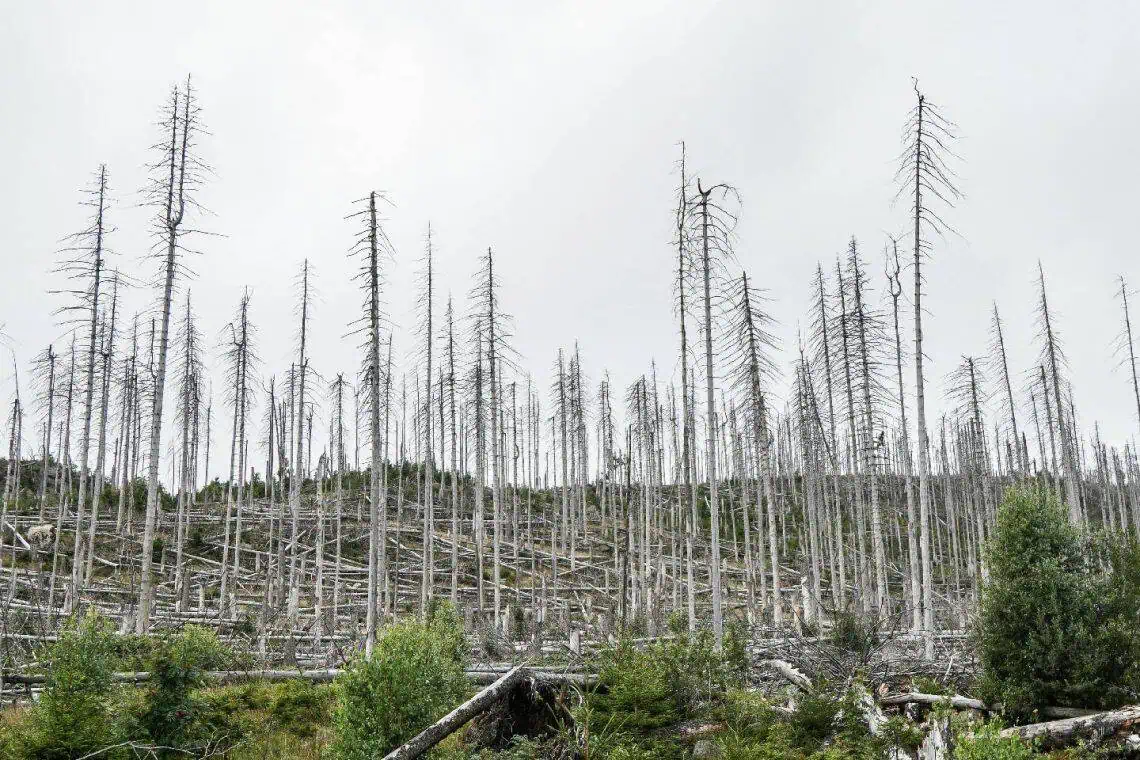

In a world racing toward climate catastrophe, the latest data on global forest loss hits like a thunderclap. The Forest Declaration Assessment 2025, released this October, paints a grim picture: 8.1 million hectares of pristine forest vanished in 2024 alone—a staggering 63% above the threshold needed to curb deforestation by 2030. Despite high-profile pledges at COP26 and beyond, humanity’s green lung is wheezing, with biodiversity hotspots teetering on the brink. This isn’t just an environmental alarm; it’s a clarion call for renewed action, spotlighting successes like South Africa’s Kruger National Park while scrutinizing laggards in climate diplomacy, including powerhouses China and the United States.
Forests cover about 32% of Earth’s land surface, absorbing a quarter of human-caused carbon emissions annually. Yet, as the United Nations’ Food and Agriculture Organization (FAO) Global Forest Resources Assessment 2025 underscores, net forest loss has stabilized at around 10.9 million hectares per year—a 38% drop from 1990 peaks, but still a net loss exceeding gains from reforestation. “We’re treading water in a rising sea,” warns the report, highlighting how commodity-driven clearing in the tropics outpaces restoration efforts worldwide.
The Unyielding Grip of Deforestation: Key Drivers and Data
Delving deeper into the 2025 metrics, the numbers are unforgiving. Global Forest Watch (GFW), a powerhouse in satellite monitoring, reports that from 2001 to 2024, 34% of tree cover loss stemmed directly from deforestation—fueled by agriculture, mining, and infrastructure. In 2024, tropical regions bore the brunt: Brazil’s Amazon lost over 1.5 million hectares, while Indonesia’s peatlands shed another 800,000. These aren’t abstract figures; they translate to 420 million tons of CO2 released, equivalent to the annual emissions of 90 million cars.
What makes this stagnation so alarming? Pledges like the New York Declaration on Forests, signed by over 200 entities in 2014, aimed for zero net deforestation by 2030. Yet, the 2025 assessment reveals we’re off track by a factor of three. Commodity booms—soy, palm oil, beef—drive 80% of tropical losses, per GFW data. In Africa, where forests store 17% of global carbon, illegal logging and urban sprawl compound the crisis. The FAO notes a silver lining: net loss has halved since 1990, thanks to aggressive planting in China and Europe. But in biodiversity-rich tropics, gains are illusory; degraded lands rarely rebound to full ecological vigor.
SEO-optimized searches for “global deforestation rates 2025” surge as awareness grows, yet action lags. Experts at the World Resources Institute (WRI) argue that without tripling annual investments to $300 billion by 2030, as urged in a recent UN report, these trends will accelerate under a warming climate.
Biodiversity Hotspots: The Silent Casualties of Forest Loss
Forests aren’t mere carbon sinks; they’re cradles of life. The 2025 report flags acute threats to biodiversity hotspots—regions harboring 50% of the world’s plant species and 42% of vertebrates in just 2.5% of land area. The Atlantic Forest in Brazil, Indo-Burma ecoregion, and Congo Basin top the danger list, with deforestation rates 2-3 times the global average.
Consider the Congo: Home to 10,000 plant species and 400 mammals, it lost 500,000 hectares in 2024, per GFW alerts. Iconic species like the okapi and forest elephant face extinction as habitat fragments into isolated patches, crippling genetic diversity. In the Amazon, jaguars and pink river dolphins navigate a shrinking mosaic, where 20% of the rainforest has already succumbed since 1970.
The ripple effects are profound. Deforestation amplifies zoonotic diseases—think Ebola emerging from bushmeat trade—and erodes soil, triggering landslides that displace millions. A WWF analysis ties 30% of recent biodiversity declines to forest clearance, underscoring how these hotspots, if lost, could unravel entire ecosystems. “Biodiversity hotspots are canaries in the coal mine,” says Dr. Maria Silva, a WRI ecologist. “Their collapse signals systemic failure.”
South Africa’s Beacon: Kruger’s Conservation Triumphs Amid Turmoil
Amid global despair, South Africa’s Kruger National Park emerges as a resilient bastion. Spanning 19,485 square kilometers, this savanna jewel—part of the Greater Limpopo Transfrontier Park (GLTP)—anchors conservation in a deforestation hotspot. The GLTP, a 37,572-square-kilometer cross-border haven with Mozambique and Zimbabwe, exemplifies transboundary efforts to restore corridors shattered by historical fragmentation.
The South African National Parks (SANParks) Strategic Plan 2025/2026–2029/2030 charts a bold course: integrating climate resilience with anti-poaching tech and community-led fire management. In 2025, Kruger hosted the G20 Environment and Climate Sustainability Working Group, convening global leaders on biodiversity and land degradation. Discussions zeroed in on drought mitigation and waste management, yielding commitments to expand protected areas by 10%.
Yet challenges loom. Climate models predict up to two-thirds of Kruger’s species—lions, rhinos, elephants—could vanish if temperatures rise unchecked. Recent floods and fires, as noted in SANParks reports, underscore vulnerability. On a brighter note, the 22nd Annual Savanna Science Network Meeting in February 2025 drew 300 scientists to Kruger, fostering innovations like AI-driven wildlife monitoring. Community ranger programs have slashed poaching by 40% since 2020, blending indigenous knowledge with modern tools.
Kruger’s story ties directly to global forest loss: As a miombo woodland sentinel, its conservation buffers regional carbon stocks and migratory routes. “Kruger isn’t just a park; it’s a model for Africa-wide resilience,” affirms SANParks CEO Jake Krishnamurti. Searches for “Kruger National Park conservation 2025” reflect rising interest in these triumphs, inspiring replicable strategies worldwide.
International Pledges Under Scrutiny: China and the US Step Up—or Stumble?
Global vows ring hollow without enforcement, and 2025 spotlights uneven progress from emitters China and the US. China, the world’s top CO2 polluter, unveiled a landmark pledge in September: slashing economy-wide emissions 7-10% below peak levels by 2035, per President Xi Jinping at a UN summit. This includes 10 low-carbon industrial parks and support for developing nations’ adaptation. Domestically, China’s reforestation has added 100 million hectares since 2000, offsetting some tropical imports’ deforestation footprint.
Critics, however, decry the pledge’s modesty—falling short of 1.5°C pathways, as Carbon Brief analysis reveals. China’s steel and cement sectors, energy hogs, target only 2-3% efficiency gains by 2025. Yet, as the Guardian notes, with US retrenchment under shifting policies, Beijing’s solar dominance and EV push position it as a reluctant climate leader.
Across the Pacific, the US recommits via the Land and Forest Tenure Pledge 2.0, expanding a $1.7 billion COP26 fund to secure indigenous land rights—vital for 80% of intact forests. Biden-era investments hit $3 billion for conservation, but 2025 congressional gridlock threatens rollbacks. WRI emphasizes that US agribusiness, driving 40% of Amazon soy demand, must pivot to sustainable sourcing.
Bilateral ties offer hope: US-China climate envoys met in 2025 to align on forest finance, pledging $50 billion jointly for tropical protection. Still, the UN warns spending must triple to honor Paris goals. “Pledges are promises; delivery is proof,” quips climate diplomat Elena Torres.
Charting a Greener Horizon: Urgent Calls for Cohesive Action
The 2025 forest loss report isn’t a eulogy but a roadmap. Tripling finance, enforcing supply chain transparency, and empowering indigenous stewards could halve losses by 2030. Kruger’s playbook—community integration, tech innovation—scales globally, while China-US synergy could mobilize trillions.
As biodiversity hotspots flicker, the stakes are existential. Forests don’t just sustain life; they define it. In 2025’s shadow, let Kruger’s roar echo: Conservation isn’t optional—it’s our survival pact. With concerted will, we can bend the arc toward regeneration, ensuring verdant legacies for generations unborn.