

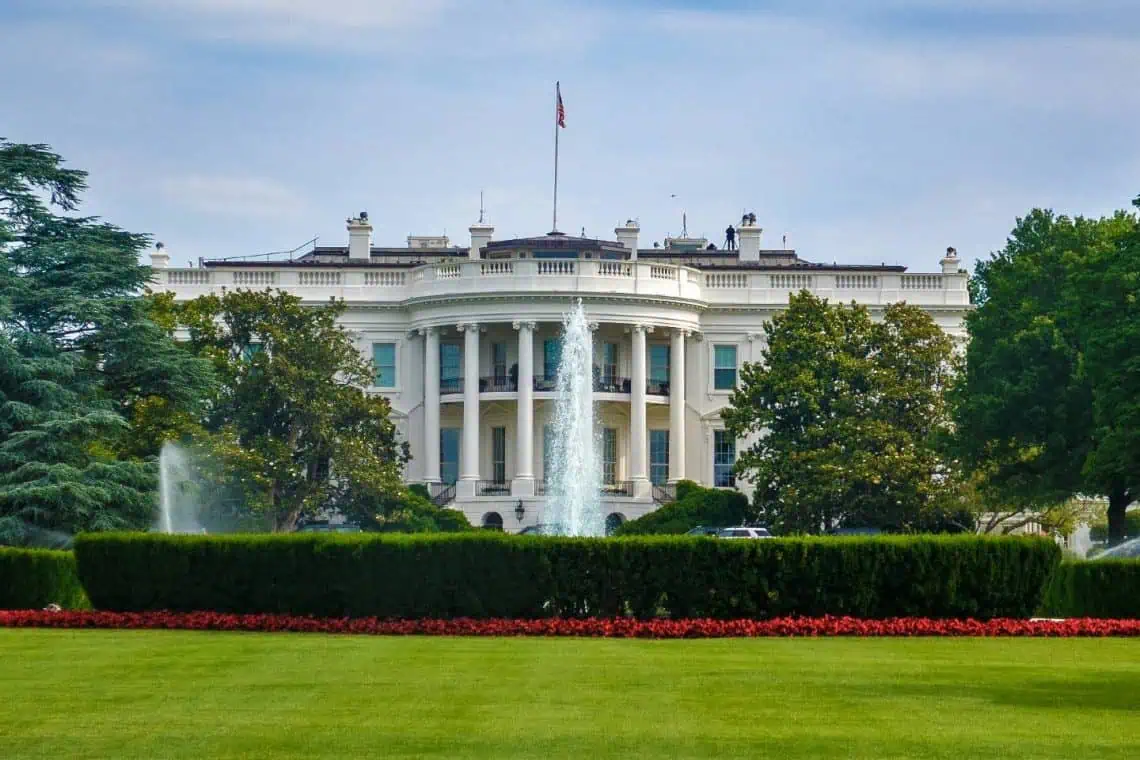

In a dramatic escalation of tensions ahead of the first-ever G20 summit on African soil, the White House has branded South African President Cyril Ramaphosa’s claims of a U.S. policy reversal as “fake news.” As Johannesburg gears up for the November 22-23 gathering, the “empty chair” controversy—symbolizing America’s boycott—looms large over handover preparations. This diplomatic dust-up not only exposes deep rifts between Washington and Pretoria but also raises questions about the future of global economic cooperation. With leaders from nearly 20 nations converging on the City of Gold, the standoff could redefine the G20’s role in an increasingly fractured world order.
The Spark: Trump’s Boycott and Ramaphosa’s Rebuttal
The controversy traces back to early November 2025, when U.S. President Donald Trump announced his administration’s boycott of the Johannesburg summit. Citing longstanding grievances, Trump accused South Africa’s post-apartheid government of “violently persecuting” white Afrikaner farmers—a narrative rooted in debunked claims of a “white genocide.” These allegations, amplified during a tense May 2025 White House meeting between Trump and Ramaphosa, have strained bilateral ties to breaking point. The U.S. has slashed aid, expelled South Africa’s ambassador, and blocked Starlink’s market entry, framing Pretoria’s affirmative action policies as discriminatory.
Ramaphosa, undeterred, has positioned South Africa’s G20 presidency as a beacon for the Global South. Under the theme “Solidarity, Equality, and Sustainability,” the agenda spotlights debt relief for developing nations, climate adaptation funding, and equitable clean energy transitions—priorities Trump has derided as overly focused on “diversity, equity, and inclusion.” In a Soweto briefing on November 14, Ramaphosa quipped, “I don’t want to hand over to an empty chair, but the empty chair will be there,” signaling a symbolic transfer of the presidency to the U.S. on December 1. This “empty chair” gesture, evoking historical protests against absent powers, has become a viral emblem of defiance. The symbolism draws from past diplomatic protests, such as those during the United Nations’ early years when absent colonial powers were mocked with unoccupied seats, underscoring how such absences can amplify the voices of those present rather than silence them.
“Boycott politics never work. In a way, we see this as a positive sign because, as I’ve often said, boycott politics never work.”
— President Cyril Ramaphosa, November 20, 2025
Ramaphosa’s response highlights a broader strategy of resilience. By framing the boycott not as a defeat but as an opportunity, South Africa aims to rally other G20 members around its priorities. This approach resonates deeply in regions long sidelined by global forums, where economic policies often favor established powers. The empty chair, far from diminishing the summit, could elevate discussions on inclusive growth, turning potential embarrassment into a powerful narrative of self-determination.
Fact-Checking the ‘Flip-Flop’: What Really Happened?
At the heart of the latest flare-up is Ramaphosa’s November 20 announcement during a joint press conference with European Commission President Ursula von der Leyen and European Council President António Costa. He revealed receiving a U.S. notice hinting at a “change of mind” on participation, adding, “This comes in the days before the summit. And so therefore we need to engage in those types of discussions to see how practical it is.” Ramaphosa framed it as a “pleasing change of approach,” emphasizing America’s role as the world’s largest economy.
The White House swiftly rebutted, with Press Secretary Karoline Leavitt declaring the claims “fake news” during a briefing. “The United States is not participating in official talks at the G20 in South Africa,” she stated, confirming only a chargé d’affaires from the Pretoria embassy would attend the ceremonial handover. Leavitt didn’t mince words: “I saw the South African president running his mouth a little bit against the United States and the president of the United States earlier today, and that language is not appreciated.” South African spokesperson Vincent Magwenya fired back on X, insisting Ramaphosa “will not hand over to a chargé d’affaires.”
Fact-check: No full U.S. delegation reversal occurred. The embassy’s limited attendance aligns with protocol for the presidency transfer, not substantive engagement. Ramaphosa’s optimism appears rooted in an eleventh-hour diplomatic note requesting eight diplomats for the closing session—a request Pretoria rejected as insufficient. This miscommunication, amplified by media, fueled the “fake news” label, but underlying motives point to broader coercion tactics. The exchange underscores how diplomatic notes can be interpreted differently, with South Africa viewing the request as a softening and the U.S. insisting on minimal involvement. Independent analyses suggest the U.S. strategy aims to undermine the summit’s outcomes without full disengagement, a tactic seen in previous international forums.
| Claim | Source | Verdict |
| U.S. to fully participate in G20 talks | Ramaphosa, Nov. 20 | False – Only ceremonial attendance confirmed |
| South Africa discriminates against whites | Trump admin | Misleading – Affirmative action policies aim to redress apartheid legacies; no evidence of systematic persecution |
| G20 will issue joint declaration | Ramaphosa | Likely – Supported by EU, Brazil; U.S. absence doesn’t veto consensus among attendees |
The table above distills the core disputes, drawing from verified reports and official statements. Such fact-checks are crucial in an era of rapid information flow, where initial reports can shape public perception before full context emerges. For instance, the discrimination claim has been repeatedly debunked by organizations like Africa Check, which analyzed farm attack data showing no racial targeting pattern. This context is vital for understanding the boycott’s roots beyond surface rhetoric.
Deeper Fault Lines: From Farm Attacks to Global Agendas
Beyond the rhetoric, the standoff reveals entrenched divides. Trump’s boycott stems from a May 2025 Oval Office ambush, where he played videos alleging Afrikaner persecution—claims fact-checkers like Africa Check have repeatedly debunked as exaggerated. South Africa’s land reform and Black Economic Empowerment policies, designed to correct apartheid-era inequalities, are recast by critics as reverse discrimination. Yet, Pretoria views the U.S. pressure as hypocritical, given America’s own affirmative action debates. These policies, enacted post-1994, have redistributed opportunities in education and employment, fostering a more diverse economy while facing ongoing legal challenges domestically and abroad.
Geopolitically, Washington opposes South Africa’s G20 priorities, which echo BRICS+ calls for debt forgiveness and climate finance—issues clashing with U.S. interests in fossil fuels and unilateral trade. A November 15 U.S. diplomatic note warned against any “consensus” declaration without American input, threatening to frame outcomes as mere “chair’s statements.” Foreign Ministry spokesperson Chrispin Phiri decried this as “coercion by absentia,” a tactic risking “institutional paralysis.” This “absentee veto” strategy echoes historical U.S. approaches in multilateral bodies, where non-participation is leveraged to dilute agreements on trade barriers or environmental standards.
Social media buzz underscores the drama. X users rally behind Ramaphosa’s stance, with one post garnering thousands of views: “Ramaphosa’s refusal to hand the G20 presidency to an ‘empty chair’ is bold and smart.” Another quips, “An empty chair is doing more geopolitical damage than half the leaders actually attending.” The hashtag #G20EmptyChair trends, blending memes with serious calls for African agency. Platforms like X have amplified these voices, turning diplomatic theater into a global conversation on equity in international relations. Users from emerging markets share stories of how such boycotts perpetuate imbalances, while supporters of the U.S. position argue it protects national interests against perceived overreach.
Delving deeper, the farm attacks narrative—central to Trump’s grievances—requires nuance. While violent crimes on farms are a tragic reality in South Africa, affecting all racial groups, statistics from the Transvaal Agricultural Union indicate that in 2024, 23 white and nine black individuals were killed in such incidents, with 2025 figures showing a similar non-targeted pattern. Government initiatives, including rural safety programs, aim to address this holistically, but sensationalized media has fueled international misconceptions. This disconnect highlights how domestic issues can become flashpoints in global diplomacy, often overshadowing collaborative potential on shared challenges like food security.
Handover Chaos: Preps Under Shadow
As delegates arrive at Johannesburg’s Nasrec Expo Centre, handover logistics teeter on the brink. Tradition dictates a ceremonial gavel pass, but with no high-level U.S. representative, Ramaphosa faces an unprecedented dilemma. His team insists on symbolism over substance: the presidency rotates automatically, rendering the event “purely ceremonial.” Yet, rejecting the chargé d’affaires risks further alienation, especially with U.S.-South Africa trade topping $20 billion annually. Bilateral trade volumes, dominated by minerals, vehicles, and machinery exports from South Africa, underscore the economic stakes, making de-escalation imperative despite rhetorical barbs.
Preparations buzz with contingency plans. Over 120 ministerial meetings have paved the way, but absentees like Argentina’s Javier Milei and China’s Xi Jinping (sending Premier Li Qiang) compound uncertainties. European allies, including von der Leyen, back a full declaration, bolstering Ramaphosa’s hand. “We will have a declaration,” he affirmed, vowing no capitulation to “bullying.” The Nasrec venue, a sprawling expo center with capacity for thousands, has hosted prior G20 events flawlessly, from finance tracks in January to foreign ministers’ gatherings in February, ensuring logistical readiness amid political turbulence. Security measures, involving international cooperation, further demonstrate South Africa’s capability as a host, turning potential chaos into a showcase of organizational prowess.
Behind the scenes, South African officials have coordinated with G20 sherpas to adapt agendas flexibly. Side events on artificial intelligence ethics and critical minerals—key to green transitions—proceed undeterred, attracting private sector interest from tech giants and mining firms. This adaptability not only mitigates the boycott’s impact but positions Johannesburg as a hub for forward-looking dialogue, potentially yielding bilateral deals that bypass formal U.S. involvement.
Global Ripples: What the Standoff Means for 2026 and Beyond
This imbroglio foreshadows Trump’s 2026 G20 in Miami, potentially a fortress of protectionism. Analysts warn of a bifurcated forum: one for Global South solidarity, another for Western realpolitik. For South Africa, the boycott amplifies its BRICS pivot, drawing investment from Beijing and Brasília amid U.S. tariffs. China’s commitment to the “AI for Africa” initiative, announced during foreign ministers’ meetings, exemplifies this shift, promising tech transfers that could leapfrog traditional dependencies.
Yet, opportunities emerge. The empty chair cedes floor space for African voices on critical minerals and AI ethics—sectors where Johannesburg seeks leadership. As Ramaphosa noted, “It cannot be that a country’s geographical location or income level… determines who has a voice.” With nearly 40 heads of state attending, the summit promises breakthroughs on debt and disaster resilience, proving multilateralism’s resilience. Debt sustainability talks, for instance, could unlock billions in relief for low-income nations, modeled on successful IMF frameworks but tailored to African contexts like commodity price volatility.
Looking ahead, this episode may catalyze reforms in G20 protocols, such as virtual participation options or weighted voting adjustments for absentees. It also invigorates youth engagement; South African universities are hosting parallel forums, debating how digital economies can bridge North-South divides. Economists project that successful outcomes could boost intra-African trade by 15% over five years, leveraging AfCFTA synergies discussed at the summit.
The broader implications extend to climate finance, where the absence of U.S. veto power might accelerate commitments to the $100 billion annual pledge for adaptation in vulnerable regions. Initiatives like the task force on AI governance, endorsed by China and the EU, could set precedents for equitable tech distribution, ensuring that innovations in machine learning benefit smallholder farmers rather than just Silicon Valley elites.
In the end, the G20’s Johannesburg chapter may be remembered not for absences, but for audacity. As the empty chair gleams under summit lights, it symbolizes more than snub—it’s a stark reminder that global tables are big enough for bold ideas, even when seats go unfilled. Whether this thaws U.S.-South Africa frost or deepens the chill, one thing is clear: Africa’s debut as G20 host has arrived with a bang, reshaping conversations on equality and equity for years to come. The summit’s legacy will likely be measured not in handshakes missed, but in partnerships forged, proving that diplomacy thrives on presence, not perfection.