

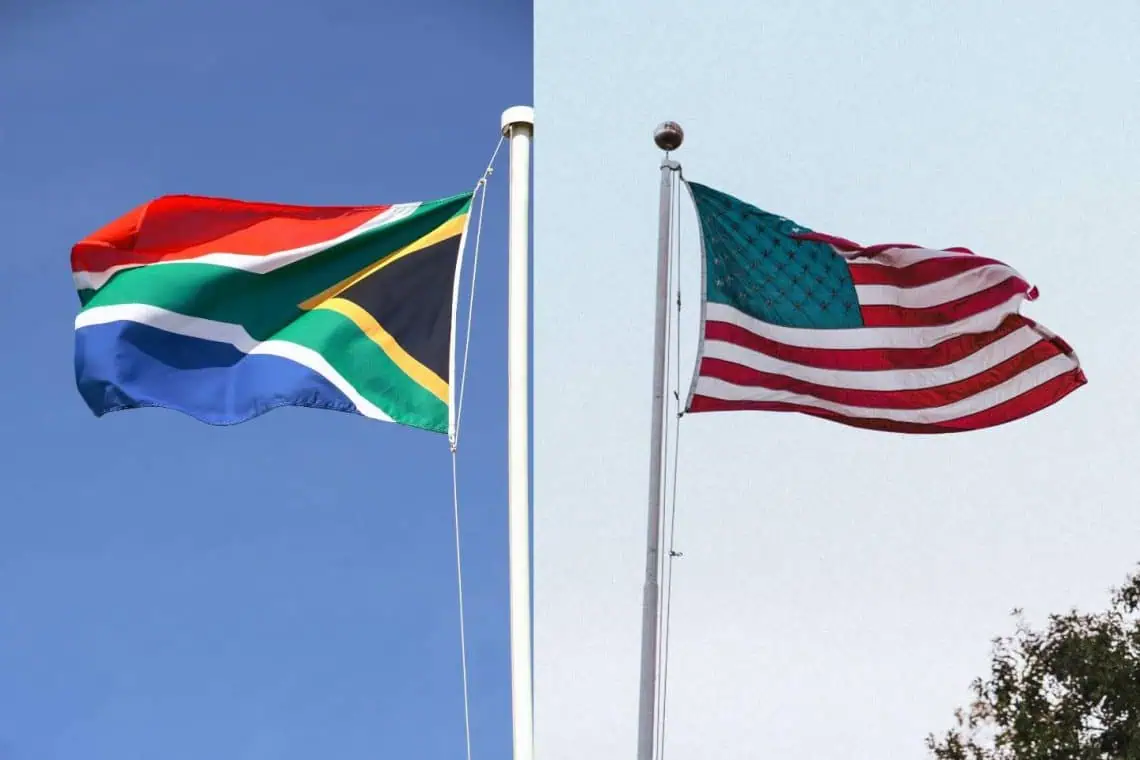

In the intricate dance of international diplomacy, where elaborate ceremonies often underscore the gravity of global pacts, South Africa’s transition of the G20 presidency to the United States unfolded with the subtlety of a confidential briefing. The unassuming handover, executed on November 25, 2025, at the Department of International Relations and Cooperation (Dirco) headquarters in Pretoria, has ignited a flurry of speculation among observers and stakeholders alike. What prompted this restrained affair? And what unspoken frictions simmer beneath the composed remarks of Dirco Director-General Zane Dangor? As echoes of fractured trade relations and the poignant “empty chair” incident reverberate through influential halls, this handover exposes underlying tensions in the G20’s cohesion, precisely as the forum gears up for a crucial 2026 agenda under American guidance.
From Rio’s Radiance to Johannesburg’s Subtle Challenges: Tracing the G20 Path
The G20, uniting the planet’s 20 foremost economies, cycles its leadership yearly to guide dialogues on urgent worldwide concerns such as climate action, trade disparities, and equitable progress. Brazil’s 2024 stewardship, peaking at the dynamic Rio de Janeiro Summit on November 18-19, established an ambitious blueprint for change. Guided by President Luiz Inácio Lula da Silva, the assembly yielded the G20 Rio de Janeiro Leaders’ Declaration, a pivotal accord championing progressive levies on the world’s richest, investments in bioeconomies, and enhanced authority for the UN General Assembly. At the Museum of Modern Art, South Africa’s President Cyril Ramaphosa received the symbolic gavel, vowing to elevate Africa’s perspectives under the banner of “Solidarity, Equality, Sustainability.”
Advancing to the Nasrec Expo Centre in Johannesburg for the 2025 Summit on November 22-23, this milestone event as the inaugural African-hosted G20 aimed to spotlight priorities of the Global South: alleviating debt burdens for emerging economies, curbing illicit financial outflows, and securing fair climate funding. The preparations drew R691 million (roughly $38.7 million) from South African public coffers, encompassing more than 140 nationwide sessions that integrated civil society via forums like Labour 20 and Youth 20. Nevertheless, the summit’s splendor was tempered by notable voids that bordered on deliberate abstentions. Chinese President Xi Jinping and Russian President Vladimir Putin opted out, attributing their absence to internal obligations. Yet, it was U.S. President Donald Trump’s conspicuous non-attendance that loomed largest, kindling a diplomatic firestorm.
These gaps not only disrupted the visual narrative of unity but also influenced procedural norms. The Johannesburg gathering, envisioned as a beacon for continental inclusion, grappled with the ripple effects of such high-profile withdrawals. Analysts note that while virtual participation has become commonplace post-pandemic, the physical absence of key figures like Trump—amid his vocal critiques—amplified perceptions of discord. This dynamic shifted focus from collaborative breakthroughs to the optics of division, prompting questions about the G20’s resilience in an era of unilateral impulses.
The “Empty Chair” Legacy: Echoes of U.S. Withdrawal
The “empty chair” motif harks back to the 1960 U.S. presidential debate, where Richard Nixon’s no-show inadvertently favored John F. Kennedy in the public eye. Within G20 annals, it reemerged during Argentina’s 2018 term amid U.S.-Russian frictions, symbolizing unbridgeable divides at critical junctures. For South Africa’s summit, the phrase acquired renewed potency. Trump, fresh from his polarizing 2024 reelection, positioned his boycott as a rebuke to South Africa’s purported “racist and anti-White” measures, zeroing in on land expropriation reforms designed to rectify apartheid’s lingering inequities. White House communiqués lambasted the “persecution” of Afrikaner farmers—a storyline bolstered by right-leaning U.S. outlets and reflected in diplomatic dispatches encouraging partners to resist the summit’s outcomes.
South African authorities mounted a vigorous defense. In a November 14 address, President Ramaphosa asserted the G20 would advance “with or without the U.S.,” even jesting about presenting the gavel to an empty seat should no high-ranking American appear. Foreign Minister Ronald Lamola reinforced this, affirming Pretoria’s openness to U.S. embassy personnel while demanding any transfer involve a duly authorized minister or leader. The U.S. responded by dispatching solely its chargé d’affaires, a rank deemed insufficient by South Africa, which rebuffed the on-site exchange as a “slight.” Ramaphosa later reflected post-session, “We must not permit external factors to erode the significance of Africa’s debut G20 presidency.”
This impasse transcended mere etiquette; it laid bare profound schisms. Reports indicate U.S. entreaties aimed to derail the Leaders’ Declaration, wary it might validate South African positions on international taxation and debt overhaul conflicting with Trump’s “America First” ethos. Nonetheless, in a masterful diplomatic maneuver, the other 19 nations alongside the African and European Unions ratified a comprehensive 30-page statement on November 22—the inaugural mid-summit G20 communiqué. It reiterated pledges to the UN’s 2030 Agenda, lauded task forces on AI governance and health resilience, and discreetly advanced Africa’s infrastructural imperatives, absent U.S. imprints. This early consensus, a departure from tradition, underscored the group’s adaptability, though it highlighted the fragility of unanimity when a superpower opts out.
Moreover, the “empty chair” incident drew parallels to historical precedents, such as the 2018 Buenos Aires tensions, where similar voids stalled progress on trade liberalization. In Johannesburg, it not only dominated media cycles but also fueled debates on G20 efficacy. Critics argue such boycotts erode the forum’s mandate, potentially encouraging a cascade of selective engagements. Proponents, however, view it as a testament to the remaining members’ resolve, proving multilateralism’s endurance sans universal buy-in.
Zane Dangor’s Reserved Discourse: Navigating Unseen Currents
At the forefront stands Zane Dangor, South Africa’s G20 Sherpa and Dirco Director-General, whose poised presence embodies this subdued saga. During a November 24 appearance on Newzroom Afrika, Dangor minimized the theatrics: “The consensus was for a subdued approach. This transcends South Africa; the U.S. similarly favors discretion over spectacle.” He outlined the Tuesday proceedings between a top Dirco figure and the U.S. chargé d’affaires, portraying it as shared prudence amid complexities.
Yet, what eludes Dangor’s commentary? Sources murmur of covert negotiations over prospective U.S. obstructions to subsequent engagements. Queried on the specter of South Africa’s barring from the 2026 U.S.-led summit in Washington, D.C., Dangor rebutted with equanimity: “Such a move would galvanize the collective; the U.S. would need to substantiate it.” He evaded the debunked “Afrikaner genocide” narrative—a falsehood absent from summit discourse yet central to Trump’s barbs. He also glossed over U.S. entreaties to sway allies against the declaration, details later divulged by Lamola.
In the veiled lexicon of diplomacy, Dangor’s omissions resonate profoundly, often denoting strategic maneuvering. South Africa, contending with domestic headwinds—2025 growth hovering at 0.6% and joblessness surpassing 32%—cannot risk outright confrontation with its premier trading counterpart ($20 billion yearly). The muted handover safeguards decorum, enabling Pretoria to tout a “triumphant” tenure while subtly conveying to Washington the repercussions of disengagement. As an unidentified Dirco insider confided to IOL, “We’re relinquishing the gavel, not our convictions.” Dangor’s tenure as Sherpa, marked by tireless coordination across 130 meetings, exemplifies the unsung labor sustaining such forums, blending tenacity with tact.
Delving deeper, Dangor’s role extended beyond protocol; he orchestrated the finance track, advancing debt sustainability protocols and countermeasures against illicit flows. His interviews reveal a diplomat attuned to global undercurrents, from BRICS synergies to UN alignments, positioning South Africa as a pivotal Global South advocate.
Trade Shadows: Enduring Ripples in International Exchange
The “empty chair” transcends metaphor, pulsing through commerce arenas. The G20’s fiscal pathway, stewarded by Dangor, propelled frameworks for debt viability and illicit flow curbs, yet U.S. nonparticipation hampered strides in digital commerce norms and WTO overhauls. From Geneva’s vantage, Trump’s cadre appears to wield the rebuff for leverage in African Growth and Opportunity Act (AGOA) parleys—a tariff-free U.S. portal indispensable for South African shipments of vehicles and vintages. With AGOA’s 2025 renewal pending, Pretoria apprehends escalated duties should it moderate its BRICS ties or land redress fervor.
The Johannesburg Declaration’s advocacy for “equitable, encompassing expansion” tacitly challenges U.S. isolationism, from steel impositions to “Buy American” edicts. As the U.S. claims the presidency on December 1, 2025, forecasters foresee a tilt toward dyadic accords over collective endeavors, marginalizing Southern Hemisphere inputs. Brazil’s Lula, a steadfast Ramaphosa confidant, cautioned in Rio that such rifts might “erode the G20’s credibility.” Dangor, however, exudes assurance: South Africa “discerns no grounds” for 2026 disruptions, wagering on European and Chinese suasion to sustain inclusivity.
These frictions manifest in granular trade metrics. South Africa’s exports under AGOA, peaking at $3.5 billion in 2024, face uncertainty amid renewal talks. U.S. tariffs could inflate costs for key sectors like automotive, where 20% of output heads stateside. Broader G20 finance deliberations, including cryptocurrency regulations and supply chain fortification, also suffered from the void, delaying consensus on critical minerals vital for green transitions. South Africa’s rich reserves in platinum and manganese position it centrally, yet U.S. absence stalled joint ventures, compelling Pretoria to pivot toward China and India for partnerships.
Furthermore, the boycott’s chill extends to investment flows. Foreign direct investment into South Africa dipped 15% in Q3 2025, per preliminary data, as U.S. firms hesitated amid diplomatic static. This underscores the interdependence: While South Africa champions multilateralism, its economy—grappling with energy woes and fiscal strains—relies on stable U.S. ties for growth. The low-key handover, then, serves as a pragmatic bridge, preserving avenues for reconciliation.
Handover Horizons: Cementing Africa’s G20 Imprint
Notwithstanding the snags, South Africa’s stewardship garners diplomatic accolades. Pioneering Africa’s summit spotlighted the continent, garnering endorsements for the African Continental Free Trade Area and $100 billion in climate pledges (albeit with implementation shortfalls). Engagement platforms galvanized thousands—from Soweto youth conclaves to corporate symposia—cultivating participatory policymaking. The declaration’s backing of UN reforms mirrors Ramaphosa’s General Assembly advocacy, casting Africa as a multilateral linchpin.
Gazing forward, the discreet handover affords a respite for fence-mending. As Dangor observed, the U.S. retains “unfettered access” to shape 2026’s docket, spanning AI oversight to health crisis readiness. Yet, murmurs endure: Might Trump’s circle wield the gavel for reprisals, or will mutual imperatives—taming inflation, securing chains—triumph? In commerce spheres, the “empty chair” endures as a parable, affirming that omissions mold legacies as profoundly as presences.
Beyond immediacies, South Africa’s imprint lingers in innovative tracks like the inequality task force, helmed by Nobel laureate Joseph Stiglitz, which probed wealth gaps and proposed redistributive mechanisms. Though vulnerable to U.S. scrutiny, its findings—advocating progressive global taxation—echo Rio’s ethos, potentially influencing future agendas. Engagement groups, too, yielded tangible gains: Youth 20 drafted digital inclusion blueprints, while Business 20 forged public-private pacts for sustainable mining, injecting $50 million in seed funding for African ventures.
The summit also catalyzed bilateral breakthroughs. Ramaphosa’s tete-a-tetes with EU counterparts yielded a critical minerals accord, streamlining exports of cobalt and lithium while mandating local beneficiation. With India, discussions advanced a BRICS+ framework for vaccine equity, building on pandemic lessons. These side deals, often eclipsed by the boycott, fortify South Africa’s post-presidency clout, transforming hosting costs into enduring networks.
South Africa’s G20 interlude concludes not in clamor, but calculated quietude. Zane Dangor’s veiled insights—on animosities, frailties, and aspirations—could profoundly steer the ensemble’s ensuing chapter. In a fragmented multipolar landscape, such nuance isn’t frailty; it’s diplomacy’s timeless craft, resilient and refined.
This episode reaffirms the G20’s evolving role: less a monolith, more a mosaic of voices. As the U.S. assumes reins, the challenge lies in harmonizing discord into dialogue, ensuring absences don’t eclipse actions. For South Africa, the legacy is twofold—a historic platform seized, and a blueprint for navigating power’s asymmetries.