

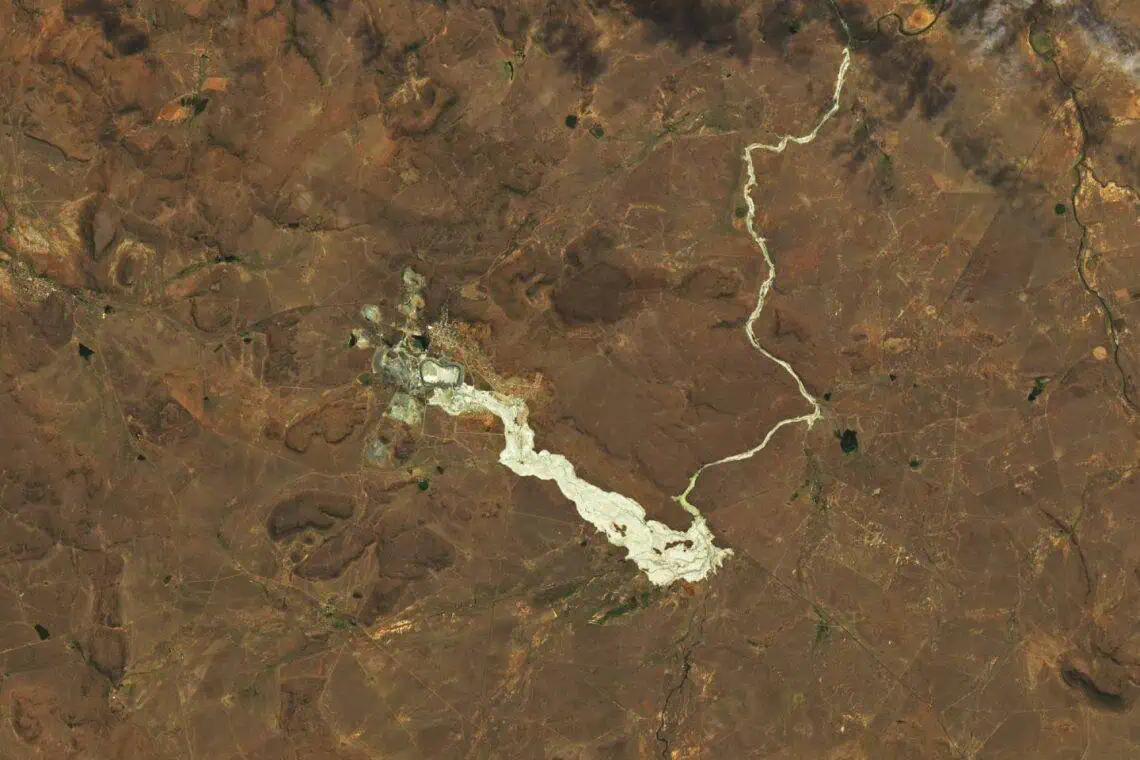

In the heart of South Africa’s Free State province, the scars of a devastating mining catastrophe from three years ago continue to haunt the small town of Jagersfontein. On September 11, 2022, the tailings dam at the historic Jagersfontein diamond mine catastrophically failed, releasing a toxic flood of mining waste that destroyed homes, claimed lives, and contaminated vital water sources. Fast forward to November 28, 2025, and the Department of Water and Sanitation (DWS) has finally unveiled its long-awaited independent investigation report. During a briefing at Diamante Hospital led by Deputy Ministers David Mahlobo and Sello Seitlhlolo, the document lays bare systemic failures in oversight and maintenance, igniting fresh calls for accountability. This pivotal disclosure not only highlights the government’s remediation efforts but also underscores the urgent need for sweeping reforms in South Africa’s mining sector to prevent future tragedies.
The 2022 Collapse: A Foreseeable Tragedy
The Jagersfontein mine, operational since the 1870s, was once a cornerstone of De Beers’ diamond empire, renowned for producing some of the world’s largest gems through open-pit and later underground mining. Ore extraction ceased in 1971, but the site’s legacy persisted in the form of massive tailings dams—repositories for the toxic byproducts of diamond processing. In 2010, ownership shifted to Jagersfontein Developments (JD), a consortium involving local firms like Superkolong and Sonop Diamond Mining, alongside international investors such as Luxembourg’s Reinet Investments. By early 2022, control had transferred to Dubai-based Stargems Group, which revived remining operations to extract residual diamonds from the old waste.
This remining revival, while economically promising, carried inherent risks that were tragically overlooked. At approximately 6:00 a.m. on that fateful Sunday, the Fine Tailings Storage Facility (FTSF)—a structure over 50 years old and not actively fed for decades—gave way. Over 6 million cubic meters of liquefied sludge, a viscous mixture of water, sand, heavy metals, and chemicals, surged forth like a “grey tsunami,” as eyewitnesses later described it. The deluge ravaged the nearby Charlesville and Itumeleng townships, demolishing or severely damaging around 164 homes, burying 1,600 hectares of prime farmland, and inundating critical infrastructure including roads, electricity substations, and water treatment facilities.
The human cost was immense and immediate. Official records confirm at least two deaths: Aaron Ralejana Moseou and Msokoli Petrus Khuthu, both residents caught in the flood’s path. Mantele Louisa Mokhali remains missing and presumed dead, while dozens suffered injuries ranging from fractures and hypothermia to respiratory distress from inhaling toxic dust. Hundreds were displaced, their possessions buried under meters of sludge, and livestock losses numbered in the hundreds, crippling local farmers. Vehicles were tossed like debris, and the Kopanong Local Municipality declared a state of disaster, mobilizing emergency response teams from across the province.
Beyond the physical destruction, the environmental fallout was profound. The contaminated slurry infiltrated the Riet River and its tributaries, threatening the downstream Kalkfontein Dam—a key reservoir for irrigation and drinking water in the region. Soil samples post-collapse revealed elevated levels of arsenic, cyanide, lead, and other heavy metals, raising alarms about long-term health risks such as cancer, neurological disorders, and birth defects among exposed populations. Residents like farmer Lefa Shale reported nosebleeds, chronic coughing, and the loss of over R70,000 in livestock without adequate compensation, echoing sentiments of betrayal from a community long intertwined with the mine’s fortunes.
Investigations quickly revealed that the disaster was not an act of God but a cascade of human errors. A 2020 dam safety assessment had flagged significant cracks in the facility’s walls and recommended immediate interventions, yet these warnings went unheeded. Workers testified to relentless slurry pumping into the dam, despite audible rumbles and visible leaks reported as early as the night before the breach. The absence of a mandatory dam safety license under the National Water Act (NWA) further exposed regulatory gaps, particularly for remining operations that skirted stricter oversight. This confluence of neglect transformed a dormant waste site into a ticking time bomb, underscoring how profit-driven decisions overrode safety protocols.
The DWS Report: Revelations and Rebukes
On this crisp November morning in 2025, the atmosphere at Diamante Hospital is charged with anticipation as Deputy Ministers Mahlobo and Seitlhlolo address a gathering of DWS officials, community leaders, affected residents, and journalists. The report, three years in gestation and compiled by experts from the Universities of Pretoria and Witwatersrand in collaboration with the DWS Dam Safety Regulation Directorate, meticulously dissects the collapse’s anatomy. It attributes the failure primarily to structural instability caused by uneven tailings deposition, exacerbated by the remining activities that overloaded the aging facility without adequate reinforcement.
Mahlobo, who has chaired the multi-stakeholder steering committee since the disaster’s outset, opens the briefing by reaffirming the government’s twin pillars of response: immediate remediation and long-term prevention. “This report is more than a document—it’s a roadmap to justice and resilience,” he states, detailing how directives issued post-collapse have led to the emptying of the remaining TSF compartment, preventing a potential secondary breach. JD has been compelled to finance extensive cleanups, including the removal of tailings from waterways and the rehabilitation of contaminated soils, at a cost running into hundreds of millions of rands.
Seitlhlolo complements this with data-driven optimism, presenting monthly water quality monitoring results that show pH levels in surface and groundwater stabilizing, though traces of heavy metals persist. “We’ve seen tangible progress: repaired homes and roads through Regional Bulk Infrastructure Grants, restored sanitation via Water Services Infrastructure Grants, and the launch of a national tailings dam registry in April 2023 to categorize and monitor high-risk sites,” he explains. This registry, a direct outcome of the Jagersfontein lessons, mandates regular audits and emergency preparedness plans for all facilities, aligning South Africa with the Global Industry Standard on Tailings Management adopted after Brazil’s Brumadinho disaster.
However, the report pulls no punches in its critique. It condemns JD for flagrant non-compliance with NWA Section 151, which bans polluting discharges into water resources, and highlights how remining loopholes allowed the operation to evade comprehensive environmental impact assessments. Publicly available satellite data from 2023 had already signaled the dam’s “decant pond” expansion—a precursor to instability—that regulators ignored. The deputies announce forthcoming enhancements, including mandatory community consultation for high-risk dams and stricter penalties for non-reporting, signaling a paradigm shift toward proactive governance.
Enduring Scars: The Human and Ecological Toll
Three years later, Jagersfontein’s recovery remains incomplete, a testament to the disaster’s deep-rooted impacts. The toxic legacy permeates every facet of life: soil analyses confirm persistent arsenic and cyanide contamination, leading to fish die-offs in the Riet River and bioaccumulation risks in crops that threaten food security in this agricultural enclave. Dust from drying tailings continues to blanket homes, aggravating respiratory ailments and skin conditions among residents, particularly children and the elderly. Groundwater boreholes, once reliable lifelines, now require constant testing, with fears of intergenerational health crises looming large.
The socio-economic ripple effects are equally stark. Farmers like Shale, whose herds were decimated, face ongoing battles for fair recompense, while displaced families endure substandard temporary housing far from their roots. A 2024 sociohistorical study frames the event as a “150-year industrial disaster,” tracing culpability from De Beers’ foundational decisions to JD’s cavalier remining revival, where short-term gains eclipsed community welfare. Community groups, including the Jagersfontein Lerumo Justice Forum, lambast the remediation pace as “glacial,” demanding inquests into all unnatural deaths under the Inquests Act and immediate aid packages of R20 million per affected family, coupled with lifelong health monitoring.
Yet, glimmers of progress persist. JD-funded initiatives have cleared residue from riverbeds, enabling partial land rehabilitation for grazing, and reforestation efforts aim to curb erosion. The DWS reports improving test results, with pH levels nearing pre-disaster norms, but experts caution that full ecological restoration could span decades. This duality—advancement amid adversity—fuels the community’s resolve, transforming grief into advocacy for equitable recovery.
Pursuit of Justice: Charges and Looming Trials
The report’s publication has supercharged the quest for accountability, building on milestones from earlier in the year. In August 2025, five employees of the engineering firm overseeing the dam—ranging in age from 34 to 80, including key operations and compliance managers—were indicted on grave charges: murder, malicious damage to property, and violations of the Occupational Health and Safety Act. Their inaugural court appearance on September 10, 2025, at Jagersfontein Magistrate’s Court was a watershed moment, with the case swiftly escalating to a regional court for trial. Hawks spokesperson Zweli Mohobeleli credited the collaborative probe involving DWS, the Department of Forestry, Fisheries and the Environment (DFFE), and independent specialists for unearthing irrefutable evidence of negligence.
Spotlight now intensifies on JD’s leadership. A criminal docket under NWA Section 151, initiated in November 2022, was finalized in July 2025 and forwarded to the National Prosecuting Authority (NPA) in Bloemfontein, potentially leading to director-level prosecutions that could pierce corporate protections. Civil society voices, amplified by the Tailings Working Group, insist, “This is merely the opening salvo; the owners must face the full weight of the law.” The briefing alludes to escalated enforcement, including possible license revocations, fulfilling Mahlobo’s 2022 pledge of unyielding pursuit.
Parallel class-action lawsuits are gaining traction, seeking redress for fatalities, property annihilation, and shattered livelihoods. President Cyril Ramaphosa’s post-disaster assurances of comprehensive support have rung hollow for many, prompting renewed demands from the Lerumo Forum. As Seitlhlolo poignantly remarks, “Justice delayed erodes trust, but this report illuminates the road to restoration.” With the NPA’s docket poised for action, 2026 could herald transformative verdicts, setting precedents for mining liability nationwide.
Reforming for the Future: Lessons from the Sludge
The Jagersfontein debacle serves as a stark harbinger of global tailings vulnerabilities, mirroring calamities like Brazil’s Brumadinho (270 deaths in 2019) and Canada’s Mount Polley spill (2014). South Africa’s countermeasures are multifaceted: the tailings registry enforces real-time risk profiling, while proposed parliamentary amendments seal remining exemptions, imposing rigorous NWA compliance. The DWS is integrating international benchmarks, such as annual third-party audits and community veto rights for proximate high-hazard dams, to foster a culture of transparency and vigilance.
Broader implications extend to workforce training and technological innovation. Investments in seismic monitoring and AI-driven predictive modeling could preempt failures, while empowering local stakeholders through education programs builds grassroots oversight. Economically, sustainable remining frameworks—balancing extraction with environmental stewardship—could revitalize communities without courting catastrophe.
For Jagersfontein’s indomitable residents, the report heralds not an endpoint but an ignition. As applause and chants of solidarity fill the hospital hall, Mahlobo’s closing words resonate: “From these ashes, we forge a safer tomorrow.” The toxic remnants may linger, but the collective clamor for equity endures, propelling South Africa toward a mining paradigm where human lives eclipse ledger lines. In confronting its extractive sins, the nation edges closer to redemption, ensuring Jagersfontein’s pain catalyzes profound change.
This unfolding saga reminds us that disasters are not inevitable but preventable—through diligence, dialogue, and daring reforms. As the Free State heals, its story beckons the world to heed the warnings buried in the sludge.