


Global energy tensions rise, impacting African economies and South African fuel costs this December.
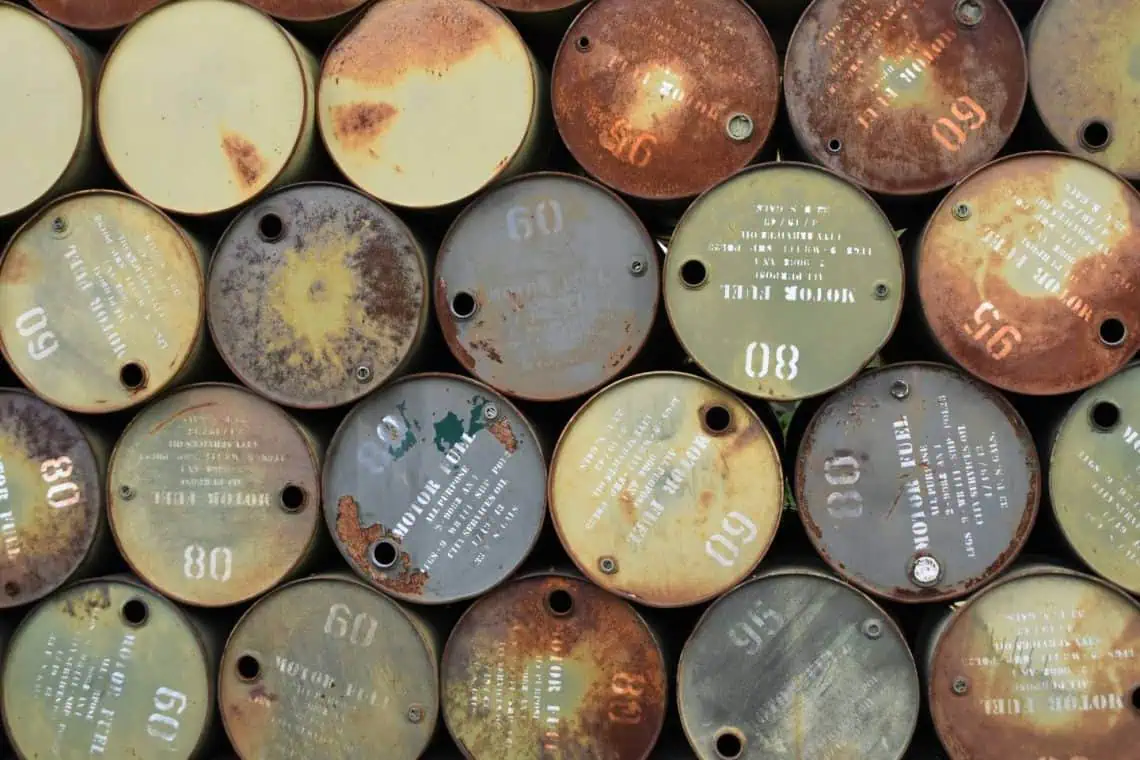
In the volatile world of global energy markets, a significant conflict is emerging that could transform international trade dynamics and the cost of filling up your vehicle. The International Energy Agency (IEA) has released alarming predictions of a substantial oil surplus in 2026, estimating that supply will exceed demand by up to 4.09 million barrels per day (bpd)—marking the largest excess since the agency began tracking. This pessimistic view sharply contrasts with the more optimistic projections from the OPEC+ cartel, which expects a tightly balanced market with just a minimal surplus of around 20,000 bpd. Central to this disagreement are differing perspectives: the IEA highlights slow demand expansion due to economic challenges and the rapid shift toward electrification, while OPEC+ holds firm to expectations of strong worldwide consumption patterns.
IEA’s Alarming Surplus Projection: Supply Flood vs. Weak Demand
The IEA’s November 2025 Oil Market Report sketches a concerning scenario of market disequilibrium that might inundate the sector with surplus crude. Worldwide oil supply is projected to jump by 3.1 million bpd in 2025, averaging 106.3 million bpd, and rise by an additional 2.5 million bpd in 2026 to reach 108.7 million bpd. This expansion stems from OPEC+’s proactive reversal of voluntary production restrictions—contributing 1.4 million bpd this year and 1.2 million bpd next—alongside robust gains from non-OPEC+ leaders such as the United States, Brazil, Canada, Guyana, and Argentina, which are anticipated to add 1.6 million bpd in 2025 and 1.2 million bpd in 2026.
On the demand front, however, the narrative shifts dramatically. The IEA anticipates annual oil use to increase by a modest 700,000 bpd in both 2025 and 2026, a notable slowdown from the 980,000 bpd growth in 2024 and well under the decade’s 2010s average of 1.3 million bpd. Contributing elements include underwhelming economic performance, enhanced vehicle fuel efficiency, and surging sales of electric vehicles (EVs), especially in major markets like China and Europe, all dampening demand for road transport fuels. Although petrochemical feedstocks could spur some recovery, the third quarter of 2025 registered only a 750,000 bpd year-over-year rise, improving from a tariff-affected 420,000 bpd in the second quarter but still trailing long-term patterns.
This disparity points to a formidable 4.09 million bpd surplus in 2026, representing nearly 4% of total global demand—a development that might inflate stockpiles and drive prices lower. With Brent crude hovering around $63 per barrel as of late November 2025, further declines seem plausible, aligning with the U.S. Energy Information Administration’s (EIA) forecast of an average $55 per barrel in 2026. The IEA cautions that “something’s got to give,” as escalating exports from the Middle East and production surges in the Americas could elevate crude inventories to peaks not witnessed since July 2021. Such a buildup risks destabilizing producer revenues and prompting urgent policy responses from key players.
Beyond the immediate numbers, the IEA’s outlook underscores broader structural shifts. The accelerating adoption of renewables and efficiency measures is eroding traditional oil demand in developed economies, while emerging markets grapple with uneven growth. For instance, China’s EV boom has already curbed gasoline consumption by an estimated 500,000 bpd this year alone, a trend expected to intensify. Meanwhile, non-OPEC+ supply resilience—bolstered by technological advances in U.S. shale and offshore developments in Guyana—ensures the surplus pressure persists, regardless of OPEC+ maneuvers.
OPEC+’s Optimistic Stance: Betting on Steady Expansion and Equilibrium
OPEC+ shows no signs of wavering, dismissing the IEA’s estimates as excessively gloomy. In its November 2025 Monthly Oil Market Report, the alliance adjusted its 2026 projection from a deficit to a negligible surplus of 20,000 bpd, crediting this to refined estimates of non-OPEC+ output growth, now pegged at 1.3 million bpd for the coming year. OPEC upholds vigorous demand projections of 1.3 million bpd for 2025 and marginally higher for 2026, propelled by resilient economic indicators, including boosted growth forecasts for the U.S., Japan, India, and China.
The alliance’s approach embodies a strategic gamble: ramping up production hikes from April 2025 onward to recapture market share, all while committing to monthly evaluations for potential tweaks. On November 2, 2025, OPEC+ endorsed continued production boosts through December but declared a halt to further increases in the first quarter of 2026, citing anticipated seasonal demand softness—a move that demonstrates adaptability in the face of surplus concerns. OPEC Secretary-General Haitham al Ghais rebuffed sensationalized media reports of an impending “glut,” emphasizing a fundamentally balanced market and criticizing distortions in coverage. This reliance on amplified consumption from developing economies could anchor prices, yet it courts the danger of amplifying the IEA’s anticipated excess should demand underwhelm.
Delving deeper, OPEC+’s confidence draws from granular data on non-OECD demand, where Asia’s petrochemical surge and aviation recovery are seen as counterweights to OECD stagnation. The cartel’s phased unwinding of cuts—totaling over 5.8 million bpd since 2023—reflects a deliberate pivot toward volume over price, aiming to counter U.S. dominance, which now accounts for 20% of global supply. However, internal compliance challenges, particularly from laggards like Kazakhstan, add layers of complexity to execution.
Challenges for African Oil Producers: Budget Pressures and Calls for Diversification
African oil-exporting countries find themselves squarely in the line of fire from this supply-demand standoff. OPEC heavyweights such as Nigeria, Angola, and Algeria—whose fiscal frameworks rely heavily on elevated oil revenue—confront intense budgetary strains. Nigeria’s 2025 budget benchmarks against $75 per barrel, Angola aims for $70, but with Brent lingering near $63 and downside risks mounting, shortfalls are inevitable. Prolonged surpluses could exacerbate deficits, slash public investments in vital infrastructure, and amplify debt risks in these oil-reliant nations.
Non-OPEC African entrants like Ghana, alongside up-and-comers in Namibia and Senegal, might weather the storm marginally better, but subdued prices diminish the allure for fresh exploration and development. The IEA observes that while non-OPEC+ growth benefits certain players, cartel-affiliated African exporters risk stricter quotas should OPEC+ revert to reductions, further crimping earnings. Analysts advocate swift diversification into renewables, natural gas, and value-added processing, aligning with the African Development Bank’s advocacy for equitable energy transitions to buffer against oil price swings. Intriguingly, with 71% of African states as net importers, a price plunge delivers mixed fortunes—affordable imports for many, but hampered expansion for export-dependent peers like Nigeria, where oil funds 70% of government spending.
This vulnerability is stark in Nigeria, Africa’s top producer, where oil revenues have already dipped 15% year-to-date due to theft and underinvestment, forcing subsidy reversals and naira devaluations. Angola, grappling with post-civil war reconstruction, faces similar woes, with its sovereign wealth fund strained by low inflows. Regional initiatives, such as the African Continental Free Trade Area, offer pathways to intra-African trade in refined products, reducing import bills and fostering resilience.
Prospects for South African Drivers: Potential R2/Liter Drop by Mid-2026
Turning domestically, South African drivers could reap rewards from this worldwide oversupply. Fuel pricing, overseen monthly by the Department of Mineral Resources and Energy (DMRE), correlates closely with global crude benchmarks and the rand-dollar rate. December 2025 delivers a bifurcated outlook: preliminary Central Energy Fund (CEF) estimates signal upticks—petrol rising 17-55 cents per liter, diesel up to 55 cents—spurred by U.S. sanctions on Russian behemoths Rosneft and Lukoil, which momentarily propelled Brent to $77 before a pullback. A firmer rand, trading at R17.20-R17.50 per USD, provides partial mitigation, though monthly averages will cement the hikes starting December 3.
Gazing forward, the IEA’s surplus scenario heralds meaningful easing. Should Brent settle at the EIA’s projected $55 average for 2026, with the rand stabilizing near R17/USD, forecasters project petrol prices could fall R1.50-R2 per liter by mid-year—equating to R300-R400 savings on a standard sedan’s full tank. Diesel, attuned to refining spreads, may experience sharper reductions. This follows a turbulent 2025, with inland prices oscillating between R20.55 and R21.59 per liter amid earlier rand frailty to R18.82/USD. For consumers, such relief could temper inflation, clocking in at 3.6% for October 2025, enhancing spending power against escalating household expenses like food and electricity.
Yet, uncertainties linger. Geopolitical flashpoints—intensifying Ukraine-Russia strife or renewed Iran curbs—might constrict supply, forestalling the glut. Locally, South Africa’s hurdles, from Sapref refinery overhauls to heavy import dependence, introduce volatility. The DMRE’s mechanism, blending 80% global parity with local levies, underscores that enduring low crude is essential for tangible benefits. Moreover, the slate levy slated for 2026 hikes could partially offset crude-driven drops, keeping net savings in check.
In the broader context, lower fuel costs could stimulate South Africa’s economy, where transport underpins 10% of GDP. Eased logistics might bolster manufacturing and agriculture, while holiday road trips become more affordable, injecting vitality into tourism. However, policymakers must navigate this windfall judiciously, channeling savings into green infrastructure to align with global decarbonization trends.
Steering Through the Energy Conflict: Future Trajectories
The OPEC+-IEA confrontation illuminates a critical juncture in energy geopolitics. OPEC+’s aggressive supply strategy seeks to safeguard territory against U.S. shale booms and Latin American newcomers, but flirts with a price skirmish injurious to producers universally. Consumers, particularly in import-reliant South Africa, eye the surplus as a boon for leaner pump prices—slashing festive travel outlays and lightening 2026 fiscal loads. African exporters, conversely, are compelled to hasten diversification, blending oil with solar, wind, and gas to forge sustainable pathways.
As stockpiles mount and prices waver, scrutiny intensifies on OPEC+’s forthcoming actions. Will they extend the Q1 2026 production freeze, or press ahead with expansions? The resolution may reconfigure global energy currents, from Lagos’s bustling refineries to Johannesburg’s bustling forecourts. In this intricate pull, equilibrium proves tricky, yet prospects—for astute consumers and adaptive economies—proliferate. Stakeholders worldwide, from Riyadh boardrooms to Pretoria policy desks, must blend vigilance with innovation to harness this flux for enduring prosperity.
Ultimately, this clash not only tests forecasting acumen but also resilience in an era of flux. With supply innovations clashing against demand transformations, the oil narrative evolves—from dominance to a mosaic of energies. For Africa, it’s a clarion call: leverage the glut’s lessons to pivot toward diversified, equitable growth, ensuring no nation is left adrift in the tide.