

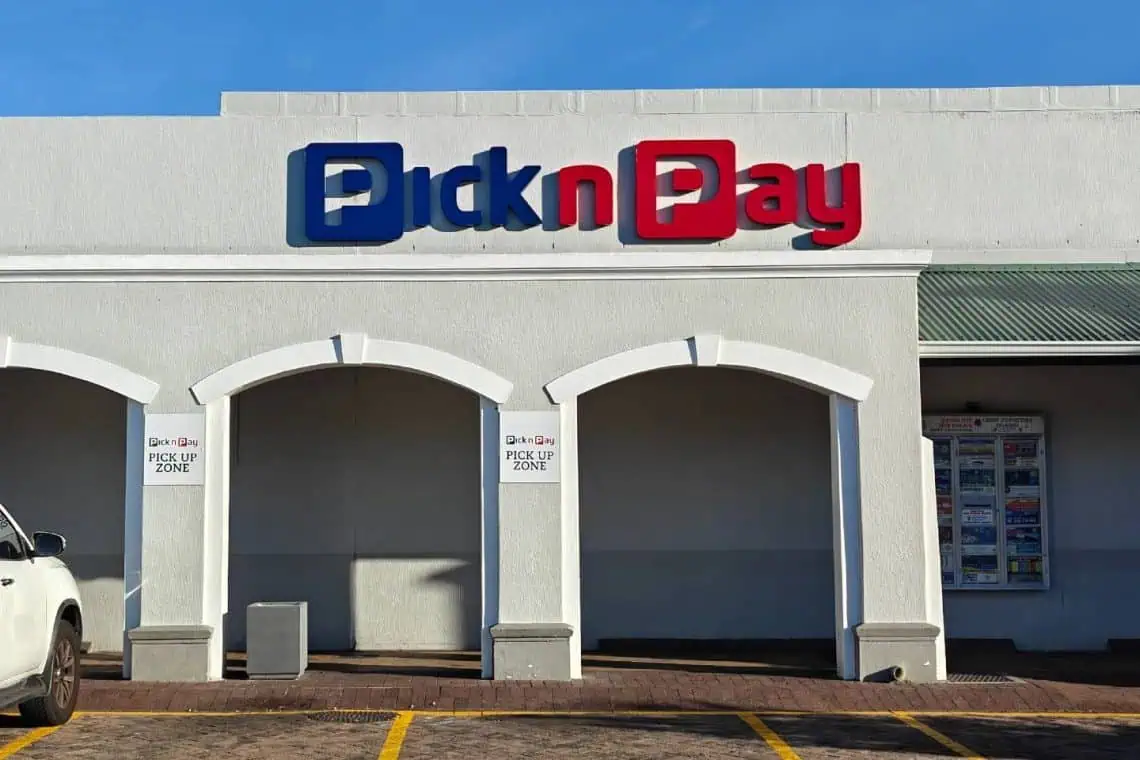

South Africa’s retail landscape is heating up, and Pick n Pay, the beloved supermarket chain, is at the epicenter of the storm. On December 1, 2025, the company announced a pivotal leadership shift: Group CFO Lerena Olivier will step down from her role following the 2026 Annual General Meeting in August. This move comes amid ongoing financial pressures, intensified competition from global behemoths like Walmart, and a fierce battle for market share in South Africa’s supermarket sector. As Olivier transitions to a strategic advisory position, the retailer has tapped auditing veteran Tina Rookledge as her successor. But what does this mean for Pick n Pay’s future? Let’s dive into the details of this shake-up and explore the broader implications for SA’s retail wars.
Leadership Shake-Up: Olivier’s Legacy and Rookledge’s Arrival
Lerena Olivier has been a steadfast pillar at Pick n Pay since joining in 2011 and ascending to CFO in 2019. Her tenure has been marked by navigating some of the company’s darkest hours, including the COVID-19 pandemic, the devastating 2021 KwaZulu-Natal riots, and a grueling two-stage recapitalization in 2025 that raised R12.5 billion to bolster the balance sheet. Olivier’s financial acumen helped steer the group through these crises, implementing cost controls and strategic divestitures, such as the sale of its pharmacy business to Clicks in 2021. These efforts not only stabilized operations during unprecedented disruptions but also laid the groundwork for the company’s ongoing recovery, demonstrating her ability to manage complex financial landscapes under pressure.
Despite these efforts, Olivier’s exit signals a deliberate succession plan amid Pick n Pay’s turnaround strategy. She won’t be leaving entirely; instead, she’ll shift to an executive role supporting CEO Sean Summers on priority projects tied to operational recovery and growth. This continuity is crucial as the company aims for sustainable profitability, allowing her institutional knowledge to inform key decisions without the full burden of day-to-day financial oversight.
Enter Tina Rookledge, whose appointment as Group Financial Director effective February 1, 2026, has been met with cautious optimism. With over 20 years in professional services, Rookledge spent six years as EY Western Cape’s regional managing partner, leading complex audits and governance projects for multinationals—including Pick n Pay itself, where EY has been the audit partner for a decade. Her deep understanding of the retailer’s finances and expertise in multidisciplinary team management position her well to tackle the challenges ahead. Rookledge will shadow Olivier for a six-month handover, ensuring a seamless transition before assuming full CFO duties post-AGM. This period will be essential for aligning her governance-focused approach with Pick n Pay’s operational realities, potentially introducing fresh strategies for risk mitigation and compliance in a volatile market.
This isn’t an isolated change. Pick n Pay’s board has been refreshing its composition throughout 2025. Gareth Ackerman, the long-serving chairman and Ackerman family scion, retired in August, passing the baton to James Formby, former CEO of Rand Merchant Bank. New independent directors like Pooven Viranna and Thabo Leeuw joined in June and February 2026, respectively, bolstering governance as the company eyes long-term stability. The Ackerman family’s stake has also diluted to 16.8% following a November 2025 share placement, ending their era of control but injecting fresh capital and perspectives. This shift towards a more diverse and independent board could enhance decision-making, drawing on broader expertise to navigate regulatory and economic complexities.
Mounting Losses: A Financial Snapshot of Strain
Pick n Pay’s financial woes have been well-documented, with cumulative losses exceeding R4 billion over the past two years. For the fiscal year ending March 2, 2025 (FY25), the group reported an attributable net loss of R736 million—a stark 78% improvement from the R3.3 billion hemorrhage in FY24. Headline loss per share narrowed to 61.54 cents from 172.21 cents, while trading profit surged to R1.76 billion from R405 million, largely buoyed by the discount chain Boxer‘s R2.3 billion contribution. These figures reflect the initial benefits of the recapitalization, which eliminated debt and created a net cash position of R4.2 billion, providing much-needed breathing room.
Yet, the core Pick n Pay supermarket segment remains a drag, posting a R549 million trading loss in FY25, down from R1.5 billion the prior year. This followed the closure or conversion of 40 underperforming stores, including 25 outright shutdowns and seven franchised conversions. Impairments plummeted from R2.4 billion to under R500 million, and net finance costs eased by 2.1%, thanks to lower interest expenses post-recapitalization. The strategic store rationalization, while painful, targeted chronic underperformers in high-competition areas, allowing resources to be redirected towards viable locations with stronger foot traffic and customer loyalty.
Interim results for the six months ended August 31, 2025, showed further progress: attributable loss after tax improved 40% to R496 million, with group trading profit up 273.5% to R310 million. However, analysts like Shaun Murison of Rand Swiss note that much of this stems from financing gains rather than core operational turnaround. The Pick n Pay segment’s FY26 trading loss is expected to align with FY25’s R621 million half-year figure, underscoring the marathon ahead. Despite these gains, persistent issues like supply chain inefficiencies and inflationary pressures on fresh produce continue to erode margins, highlighting the need for deeper structural reforms.
Pick n Pay now targets break-even for its core business on a trading profit-after-lease-interest basis by 2028, a year later than initially guided. CEO Summers has emphasized a “purposeful and methodical” approach, focusing on like-for-like sales growth (up 3.3% in FY25) and e-commerce expansion via the ASAP! delivery service. This extended timeline acknowledges the competitive headwinds and economic volatility, but it also allows for measured investments in technology and store formats that could yield sustainable returns over time.
Retail Wars Ignite: Walmart’s Bold SA Entry
No discussion of Pick n Pay’s challenges is complete without addressing the elephant in the aisle: Walmart. After acquiring Massmart in 2011—which operates Game, Makro, and Builders—the U.S. retail titan rebranded and launched its first Walmart-branded store on November 22, 2025, at Clearwater Mall in Roodepoort, Johannesburg. This African debut isn’t subtle; it includes a 60-minute delivery radius for orders within 5 km, directly challenging Pick n Pay’s ASAP! and Shoprite‘s dominant Checkers Sixty60. The rapid rollout, announced just months earlier in September, underscores Walmart’s aggressive push into emerging markets, leveraging its global scale to disrupt local dynamics.
Walmart’s arsenal? Everyday low prices that undercut competitors. A standard nine-item grocery basket at the new store priced lower than equivalents at Pick n Pay, Checkers, Woolworths, and SPAR, according to BusinessTech comparisons. The store stocks groceries, apparel, electronics, and household essentials, with a nod to local suppliers from its April 2025 Growth Summit across 12 African nations. Walmart International’s Kath McLay touted it as a commitment to “save money and live better,” echoing the chain’s global ethos. By prioritizing local sourcing, Walmart aims to build goodwill while maintaining cost advantages through efficient logistics and bulk procurement.
South Africa’s supermarket scene is already cutthroat. Shoprite, the market leader, commands over 40% share with aggressive pricing and Sixty60’s 94% on-time delivery rate, boasting R18.9 billion in sales for the year ended June 2025. Pick n Pay, historically third-largest by market cap, has lost ground to discounters like Boxer (now separately listed at R30 billion valuation) and emerging e-commerce threats from Takealot and Amazon. Walmart’s entry, projected to include more stores by year-end, could erode margins further, forcing incumbents to sharpen supply chains and loyalty programs like Pick n Pay’s Smart Saver card (1.4 million members as of March 2025). The influx of international players is accelerating digital adoption, with consumers increasingly favoring seamless omnichannel experiences that blend in-store convenience with rapid online fulfillment.
What’s Next? Turnaround Tactics and Investor Outlook
Under Summers, who returned as CEO in 2023, Pick n Pay is executing a multi-pronged recovery. Key initiatives include refurbishing 17 stores by end-2025, introducing a new Hypermarket format with expanded merchandise, and bolstering fresh produce and convenience offerings—like the 50,000 sqm Westown Square flagship in KwaZulu-Natal, opened in March 2025 with a sushi bar and sit-down coffee spot. The group operates 2,279 stores (2,090 in SA), including 145 Express forecourt sites, emphasizing omnichannel growth. These upgrades target affluent suburbs where customers seek premium experiences, while cost-saving measures in logistics aim to preserve affordability in value segments.
Boxer remains the star, with its R8.5 billion IPO providing liquidity and a buffer against core losses. Internal promotions, like Darren Langman’s elevation to Head of Retail in November 2024, signal a focus on operational excellence. Rookledge’s governance expertise could enhance risk management, vital in a sector plagued by theft and e-commerce disruption. By integrating advanced analytics for inventory control and fraud detection, Pick n Pay can mitigate shrinkage rates that have historically plagued South African retailers, estimated at 2-3% of turnover annually.
For investors, the outlook is mixed but hopeful. Shares dipped post-interim results but stabilized around R25-R27, buoyed by recapitalization and Boxer’s strength. Analysts praise transparency but warn of Walmart’s pricing power and economic headwinds like inflation and load-shedding. As Rookledge steps in, her ability to drive cost efficiencies and strategic investments will be tested against rivals’ firepower. Long-term, success hinges on capturing the growing middle-class demand for sustainable products, with Pick n Pay’s commitments to local sourcing and eco-friendly packaging positioning it as a socially responsible choice.
Pick n Pay’s CFO transition isn’t just a personnel change—it’s a bet on renewal in a warzone of retail innovation. With Olivier’s wisdom lingering and Rookledge’s precision at the helm, the giant could yet reclaim its throne. South African shoppers, ever price-savvy, will be watching closely as these battles unfold on shelves and screens alike. The coming years will test whether Pick n Pay can blend tradition with transformation, emerging not just as a survivor but as a leader in a digital-first retail era.