
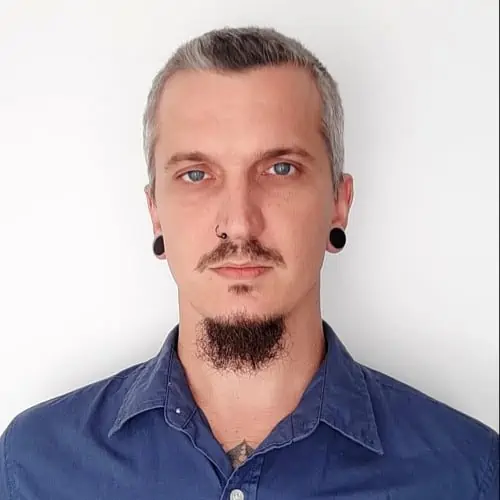


In the quiet suburbs of Brakpan, a single burst of gunfire shattered the illusion of safety for South Africa’s whistleblowers. On Friday evening, December 5, 2025, Marius “Vlam” van der Merwe—known to the nation only as Witness D in the high-stakes Madlanga Commission probe—pulled up to his home after a family dinner. What should have been a routine arrival turned into a nightmare. Ambushed by assailants wielding an AK-47, van der Merwe was gunned down in front of his wife and children, his holstered firearm untouched, his wallet and phone intact. This wasn’t a random robbery; it was an execution. The Madlanga Commission murder has ignited fury, with many asking: Is this the death knell for accountability in a democracy already battered by corruption? As fears mount for other witnesses, van der Merwe’s witness death exposes the perilous tightrope whistleblowers walk in post-apartheid South Africa.
The Man Behind the Mask: Who Was Witness D?
Marius van der Merwe, 41, was no stranger to danger. A former Ekurhuleni Metro Police Department (EMPD) reservist turned private security boss, he led operations against illegal mining syndicates—zama zamas—that plague Gauteng’s East Rand. His company, QRF Task Team, patrolled the shadowy world of abandoned shafts and underground empires, clashing with heavily armed networks tied to transnational crime. But it was his testimony before the Madlanga Commission that sealed his fate.
Launched in July 2025 by President Cyril Ramaphosa, the Madlanga Commission—chaired by retired Constitutional Court Justice Mbuyiseli Madlanga—delves into allegations of criminality, political interference, and corruption infiltrating South Africa’s criminal justice system. Van der Merwe, testifying anonymously in November as Witness D, dropped a bombshell. He alleged that EMPD officers, alongside South African Police Service (SAPS) members and private security, tortured a Mozambican warehouse robbery suspect at an unofficial Brakpan site. Methods included “tubing”—a brutal asphyxiation technique—and electric shocks. When the man died, van der Merwe claimed suspended EMPD deputy chief Brigadier Julius Mkhwanazi ordered him to dump the body in a Nigel dam, under threat of death.
His voice undisguised but face shielded, van der Merwe’s testimony implicated a web of cover-ups linking law enforcement to criminal elements. “I felt guilty,” he told the commission, tears streaming as he recounted disposing of the body. Weeks earlier, he’d survived an attempted hit by suspects in a white SUV during a zama zama patrol—a case SAPS now denies exists. Hours before his murder, van der Merwe confided to journalists: “I only have a few days left.” He planned to expose state officials complicit in illegal mining. This chilling prediction, shared just days prior, underscores the immediate peril he faced. Colleagues recall his unyielding commitment, often working alone in high-risk zones, driven by a deep-seated sense of justice forged from his years in law enforcement.
Van der Merwe’s background painted him as a reluctant hero. Born and raised in the East Rand, he joined the EMPD in the early 2000s, rising through the ranks amid the chaos of post-apartheid policing. By 2018, disillusioned with bureaucratic hurdles, he founded QRF Task Team, specializing in rapid-response operations for farmers plagued by stock theft and communities terrorized by illegal miners. His firm’s contracts with local authorities gave him unparalleled access to crime scenes, but also painted a target on his back. Friends describe him as “Yster”—iron-willed—with a laugh that could lighten the darkest stakeout. Yet, beneath the bravado lay a man haunted by moral dilemmas, culminating in his decision to testify.
A Heartbreak Goes Viral: The Widow’s TikTok Cry
As the nation reeled, Leanne van der Merwe, Marius’s widow, turned to TikTok for solace—and solace found her in the form of raw, collective grief. Under the handle @_lea_gray_ollie, her video tribute—set to a haunting melody—has amassed over 500,000 views, 38,000 likes, and thousands of comments. “How do I say goodbye?” she whispers, overlaying family photos with clips of happier times. The post, raw and unfiltered, captures a family’s unraveling: children orphaned in an instant, a wife witnessing her husband’s final breaths.
The video’s virality has amplified calls for justice, with users flooding comments: “Let’s stand up South Africa, this is too much now.” Leanne’s plea transcends personal loss, becoming a rallying cry against systemic failure. Friends describe Marius as a man of unyielding integrity—a community pillar who gave his last R10 to those in need. Her tribute humanizes the statistics of whistleblower safety, reminding us that behind every exposé is a family paying the ultimate price. In the days following, Leanne has received an outpouring of support, from candlelight vigils in Brakpan to messages from fellow whistleblowers sharing their own fears. This digital elegy has not only mourned a loss but mobilized a movement, with hashtags like #JusticeForVlam trending nationwide.
The Madlanga Mandate: Unmasking a Rotten Core
To grasp the stakes of the Madlanga Commission murder, one must understand its scope. Sparked by KwaZulu-Natal Police Commissioner Lt-Gen Nhlanhla Mkhwanazi‘s allegations, the inquiry probes how politicians, senior cops, prosecutors, and intelligence operatives collude with cartels. Hearings, which kicked off in September 2025, have uncovered WhatsApp chats linking drug lord Vusimuzi “Cat” Matlala to officials, alongside tales of torture sites and body dumps.
Van der Merwe’s account fits a pattern: EMPD’s alleged infiltration by zama zama networks, where cops moonlight as protectors for illegal miners extracting gold worth billions. The commission’s closed sessions—challenged in court by media—aim to shield witnesses, but critics argue they breed opacity. As one analyst noted, “This kind of mafia-state behaviour… is terrifying and brazen.” The inquiry has already led to suspensions, including Mkhwanazi’s, and prompted parliamentary debates on reforming witness protections. Yet, with hearings ongoing into 2026, the murder raises doubts about whether the commission can complete its work without further bloodshed.
Delving deeper, the Madlanga Commission has exposed layers of complicity that extend beyond Gauteng. Testimonies from high-ranking officers reveal how criminal syndicates, dubbed the “Big Five,” have embedded themselves in police structures, influencing everything from tender awards to case dockets. Van der Merwe’s evidence on the 2022 custody death added fuel to these fires, linking local EMPD rot to broader national threats. Legal experts warn that without swift prosecutions, the commission risks becoming a mere spectacle, eroding public trust further.
Whistleblower Safety: A Broken Shield?
The witness death lays bare South Africa’s whistleblower crisis. Van der Merwe declined formal protection, believing the danger had passed post-testimony. Yet others, like Lt-Gen Dumisani Khumalo, head of Crime Intelligence, fell mysteriously ill during hearings—poisoning suspected, though unproven. Whistleblower Patricia Morgan-Mashale, in hiding since 2022, warns: “Their safety is a serious concern… How did they know his identity?” The incident highlights systemic flaws in the Witness Protection Act, which, despite its intentions, suffers from chronic underfunding and leaks.
| High-Profile Whistleblower Murders in SA | Date | Context |
| Babita Deokaran | August 2021 | Gunned down after exposing Gauteng Health corruption; six arrests made. |
| Pamela Mabini | March 2025 | Activist killed for aiding probe into televangelist Timothy Omotoso’s abuses. |
| Marius van der Merwe (Witness D) | December 2025 | Assassinated post-Madlanga testimony on police torture/cover-up. |
This table underscores a grim trend: From Deokaran’s driveway ambush to Mabini’s doorstep slaying, whistleblowers face retaliation without recourse. The Witness Protection Act exists on paper, but implementation lags—underfunded, understaffed, and riddled with leaks. Amnesty International decries the imbalance: “Secret testimonies harm openness, but the current system needs urgent fixes.” Advocacy groups like Defend Our Democracy are pushing for the Protected Disclosures Bill, which could introduce financial incentives and mandatory safeguards, but progress stalls amid political inertia.
Experts point to international models, such as the U.S. False Claims Act, where whistleblowers receive up to 30% of recovered funds. In South Africa, similar reforms could empower citizens, but only if paired with robust enforcement. Van der Merwe’s case, where CCTV footage captured his futile attempt to draw his weapon, illustrates the inadequacy—protection must begin before threats materialize.
National Outrage: From Ramaphosa to the Streets
President Ramaphosa called it “an attack on justice,” vowing to “redouble efforts” for whistleblower safety. A NATJOINTS summit—SA’s top security forum—convened urgently, deploying ballistics experts and intelligence to the scene. National Police Commissioner Gen Fannie Masemola briefed Justice Madlanga, activating a manhunt for the “hit orderer” and gunmen.
Opposition parties amplified the alarm. The DA labeled it a “cold-blooded assassination” undermining democracy’s foundations. The EFF decried “mafia-state behaviour,” while Justice Minister Mmamoloko Kubayi pushed for testimony reforms—no live broadcasts, enhanced safeguards. On X (formerly Twitter), outrage trended: Users shared Leanne’s video, demanding accountability. “Their blood is on your hands,” one post fired at Ramaphosa. Community vigils, like the candlelight gathering in Brakpan, drew hundreds, blending grief with demands for systemic change.
Civil society mobilized swiftly. Organizations like Corruption Watch and the Ahmed Kathrada Foundation issued statements condemning the killing as a direct assault on democratic institutions. Protests outside the Union Buildings echoed calls for a dedicated whistleblower fund, while legal aid groups offered pro bono support to van der Merwe’s family. This groundswell reflects a broader awakening: South Africans, weary of unpunished graft, are uniting to honor the fallen by fortifying the fight.
Is This an Assault on SA’s Democracy?
Absolutely. The Madlanga Commission murder isn’t isolated—it’s symptomatic of a justice system colonized by the very criminals it should combat. When a man like van der Merwe, who fought zama zamas and bared his soul for truth, is felled by an AK-47 at his gate, it signals to every potential witness: Speak, and perish. Sources whisper that other Madlanga witnesses are withdrawing, terrified of being “next.” Political analyst Zakhele Ndlovu warns: “There is no functional system to protect whistleblowers.”
Yet glimmers of resolve persist. The Protected Disclosures Bill, slated for Parliament, promises oversight and rewards for whistleblowers. Ramaphosa’s February 2025 SONA pledge to finalize protections must materialize—now. As Leanne van der Merwe’s TikTok echoes “How do I say goodbye?”, South Africa faces a crossroads: Fortify the brave, or watch democracy bleed out, one witness at a time. International observers, including the UN Human Rights Council, have urged expedited reforms, citing van der Merwe’s death as a litmus test for SA’s commitment to the rule of law.
Looking ahead, the Madlanga Commission’s interim report, due in early 2026, could catalyze action. Recommendations may include a centralized protection agency and anonymous reporting hotlines. But without political will, these remain hollow. Van der Merwe’s legacy? A nation awakened, demanding that his witness death not be in vain. The Madlanga probe presses on, but without ironclad whistleblower safety, it risks becoming another tombstone in SA’s hall of forgotten truths. His story, woven into the fabric of this inquiry, serves as a stark reminder: In the battle against corruption, the cost of silence is steeper than the price of courage.
The ripple effects extend to everyday citizens. In townships like Brakpan, where illegal mining funds violence and poverty, van der Merwe’s patrols once brought fleeting hope. Now, residents fear reprisals for speaking out. Economists estimate zama zama operations siphon R20 billion annually from SA’s economy, fueling a cycle of despair. Breaking it requires not just commissions, but community-led initiatives backed by secure whistleblower channels. As Leanne van der Merwe navigates widowhood, her resolve to continue his work inspires others. In memorials and marches, South Africans are vowing: Vlam’s flame will not flicker out.