

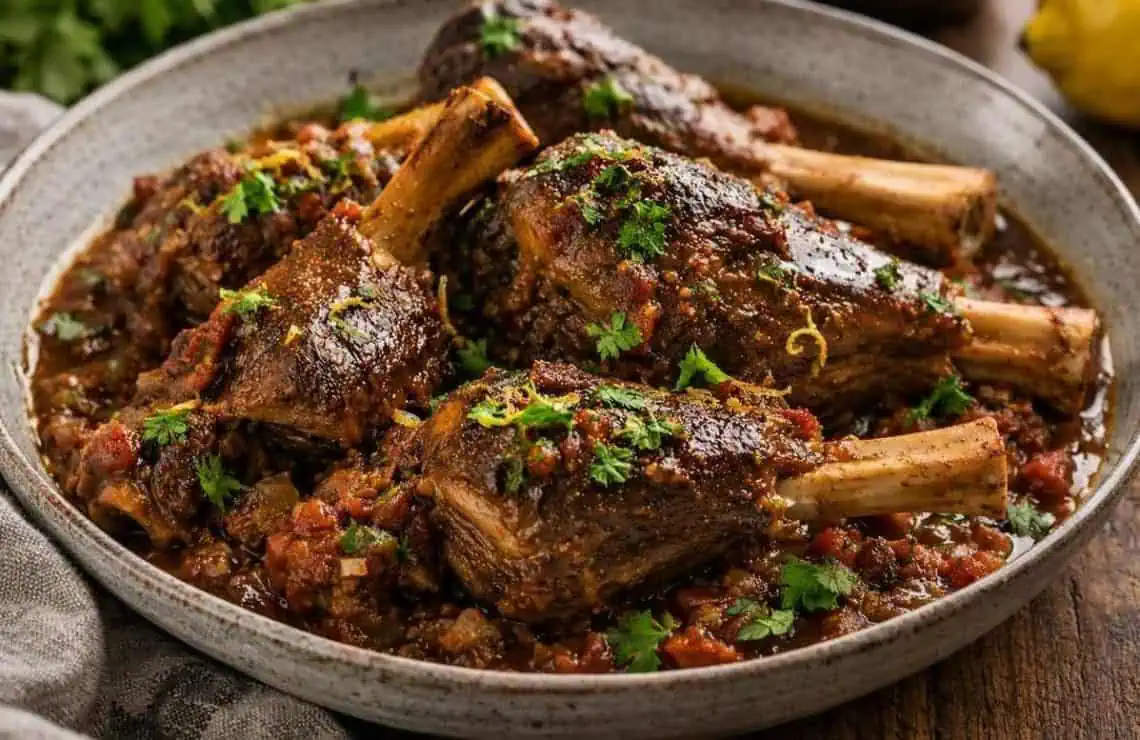

There’s a reason lamb shanks show up on the menu of every serious winter restaurant — cheap cuts of meat rarely reward you like this. But shanks aren’t cheap anymore, so this version treats them properly: a hard sear for flavour, a proper wine reduction, and a slow oven braise that turns tough, well-worked muscle into something that falls off the bone with a spoon.
This modern take on the classic shank braise swaps the all-in-one fry-up for a more deliberate build — browning, deglazing, reducing — so every mouthful of the tomato-and-coriander sauce actually tastes of the wine and meat that made it, not just simmered-together ingredients.
Lamb shanks are one of those cuts where technique matters more than the ingredient list. This recipe keeps things simple — six shanks, a bottle of white wine, tomato paste, coriander — but changes how they’re cooked, giving you a restaurant-quality braise with a glossy, reduced sauce instead of a thin, boiled-down gravy.
Ingredients
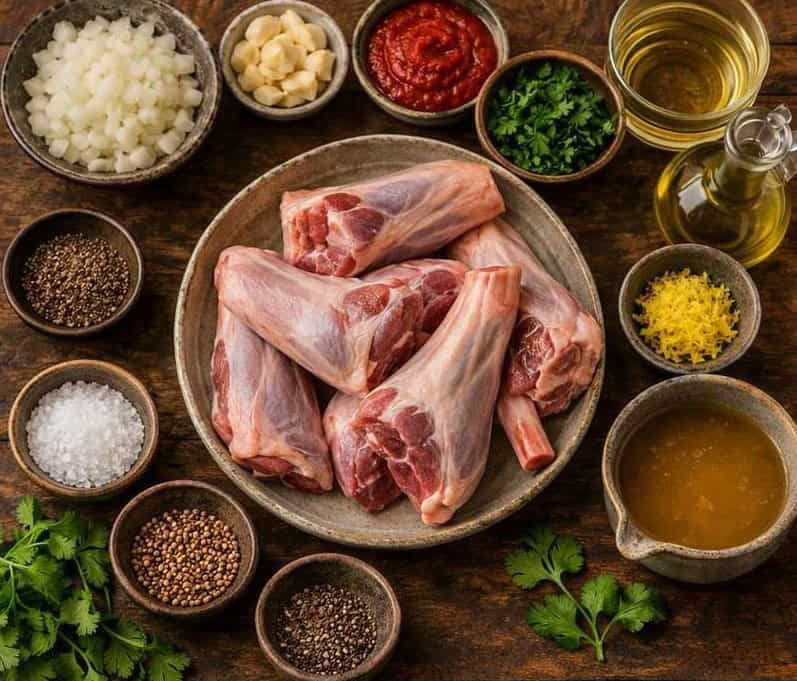
- 6 lamb shanks
- 2 medium onions, finely diced
- 4 garlic cloves, crushed
- 250ml tomato paste
- 50ml dry white wine
- 4 tablespoons fresh coriander, chopped (plus extra to finish)
- 1 teaspoons ground coriander seed
- 2 teaspoons salt
- 1 tablespoons black pepper, ground
- 3 tablespoons olive oil
- 300ml lamb or chicken stock
- 1 lemon, zested
Instructions
- Sear seasoned shanks hard in oil until deeply browned.
- Soften onions and garlic in the same pot, deglaze with white wine and reduce by half.
- Stir in tomato paste, coriander, and stock, return the shanks, and braise low and slow (oven or stovetop) until the meat falls from the bone.
- Rest, reduce the sauce if needed, finish with lemon zest and fresh coriander.
Pair with Creamy Mash or Polenta!
More detailed instructions in the printed version below
Modern Braised Lamb Shanks Recipe — Fall-Off-The-Bone in White Wine & Coriander

Ingredients
- 6 lamb shanks
- 2 medium onions
- 4 garlic cloves crushed
- 250ml tomato paste
- 500ml dry white wine
- 4 tablespoons fresh coriander chopped (plus extra for finish)
- 1 tsp ground coriander seed
- 2 tsp salt
- 1 tbsp black pepper ground
- 3 tbsp olive oil
- 300ml lamb or chicken stock
- 1 lemon zested
Instructions
- Season and sear the shanks: Pat the 6 lamb shanks completely dry and season all over with 2 teaspoons salt and 1 tablespoons black pepper, ground. Heat 3 tablespoons olive oil in a heavy-based casserole or Dutch oven over high heat and sear the shanks in batches until deeply browned on all sides, about 3-4 minutes per side. Don't crowd the pan — this browning is where most of the flavour comes from. Remove and set aside.

- Build the base: Lower the heat to medium and add the 2 medium onions, finely diced to the same pot, scraping up any browned bits. Cook until soft and golden, about 8 minutes 08:00. Add the 4 garlic cloves, crushed and cook for 1 minute more, until fragrant.
- Deglaze with wine: Pour in the 500ml dry white wine and bring to a boil, scraping the base of the pot well. Let it reduce by roughly half — this concentrates the flavour and cooks off the raw alcohol.
- Add tomato, coriander and stock: Stir in the 250ml tomato paste, chopped 4 tablespoons fresh coriander, chopped (plus extra to finish), and ground coriander seed 1 teaspoons ground coriander seed. Return the shanks to the pot along with the 300 ml lamb or chicken stock, making sure the liquid comes about two-thirds up the shanks. Bring to a gentle simmer.
- Braise low and slow: Cover and transfer to a 150°C (300°F) oven, or keep on the lowest stovetop simmer. Cook until the meat is falling-away tender and pulls easily from the bone.
- Reduce and finish: Lift the shanks out onto a warm plate. If the sauce is thin, simmer it uncovered on the stovetop for 10 minutes 10:00 until glossy and coating the back of a spoon. Check seasoning, stir through the 1 lemon, zested, return the shanks to coat, and finish with extra fresh coriander.
- Note:Modern touches vs. the original: searing the shanks properly before braising (rather than frying everything together) builds a deep fond; deglazing and reducing the wine separately concentrates flavour instead of diluting it; a low, covered oven braise gives more even, hands-off tenderness than stovetop simmering; and finishing with lemon zest and fresh herbs lifts the richness of an expensive cut so none of it goes to waste.