

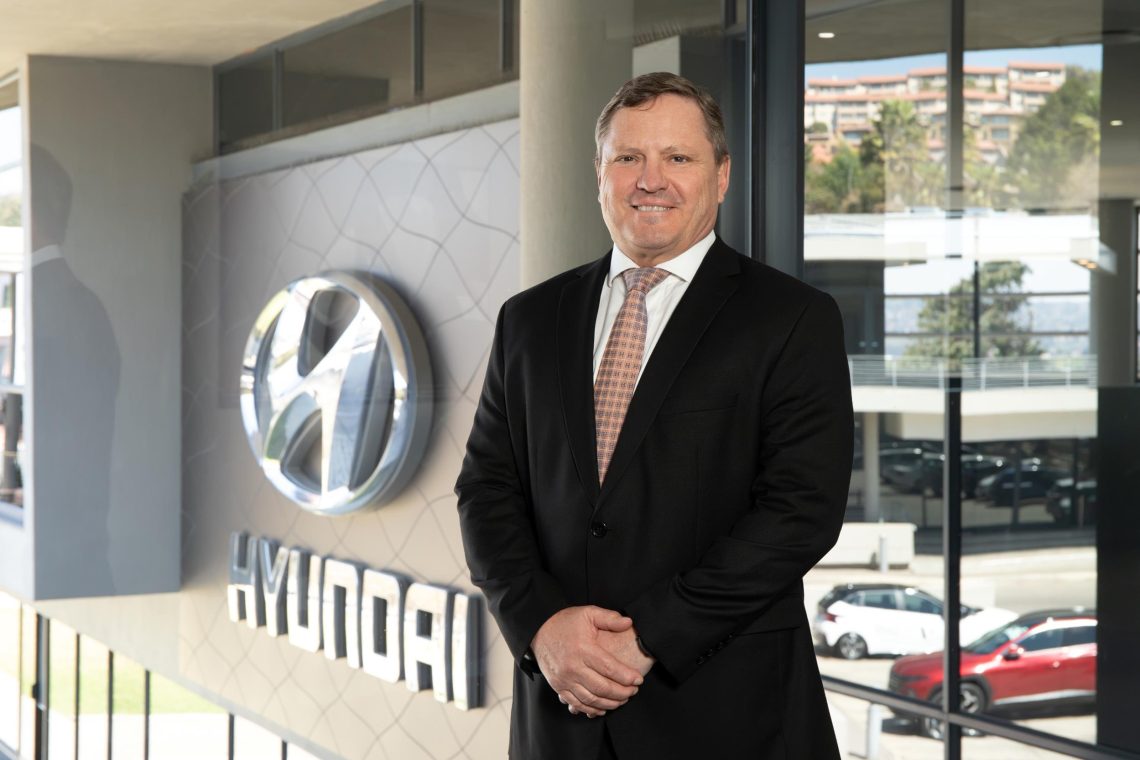

Hyundai Automotive South Africa CEO Stanley Anderson has warned that the local industry’s growing focus on purchase price risks overlooking what happens after the sale. This matters to private buyers and fleet operators weighing up a new vehicle in what is becoming one of the most competitive new-vehicle markets in the world. He made the comments in Johannesburg on 29 September 2026.
Stanley Anderson and Hyundai in South Africa
Anderson joined Hyundai Automotive South Africa in 2001. He became Marketing Director in 2004, Sales and Operations Director in 2015 and CEO in July 2025. Over that period, Hyundai has sold more than 800 000 vehicles in South Africa and built a national dealer footprint of approximately 100 outlets.
The market is undergoing a structural shift. There are 67 brands competing for consumer and fleet spending, and new entrants, particularly from China, are expanding rapidly. This is putting pressure on established manufacturers to show more than sales volumes.
Ownership costs beyond the purchase price
“A lower purchase price can certainly attract a customer,” said Anderson. “But the ownership equation goes much further. Depreciation, parts availability, repair times, dealer coverage and total cost of ownership all influence the value of a vehicle.”
Hyundai aftersales and workshop turnaround
According to Hyundai, 90% of accident-damaged vehicles are returned to the road within 30 days. Corporate customers’ vehicles are tracked by VIN, and any unit that remains in a workshop for more than three days triggers intervention from the company’s senior corporate team.
Anderson said these systems show why infrastructure matters in an increasingly crowded market. “A vehicle that is sitting in a workshop is not generating value for a corporate customer. Downtime has a real business cost,” he said.
Hyundai growth targets and product pipeline
Hyundai currently ranks fourth in South Africa, and Anderson is targeting a move into the top three within 3 years. The company is working with its global parent on a three to four-year product pipeline, evaluating potential models against South African market demand, specifications and pricing.
Anderson, who has more than 36 years of local automotive experience, describes the next phase as disciplined growth. It builds on the existing infrastructure and customer base, with continued investment in products, capabilities and the ownership experience. For buyers, the plan points to more Hyundai vehicles on the local market, although no specific models have been named.
Supplied by QuickPic (Hyundai)
This story is based on aggregated news, press release(s) or other sources and was prepared with the help of AI tools, which can make mistakes. Prices, specifications, general information and availability may change, so confirm the details with the manufacturer, other news sources or a dealer.