


- Aftermarket traded about R933 billion in 2025.
- R202.6 billion contributed to GDP.
- More than 310 000 jobs supported.
- Around 76% of vehicles out of warranty.
- 31% fewer qualified artisans than 2009.
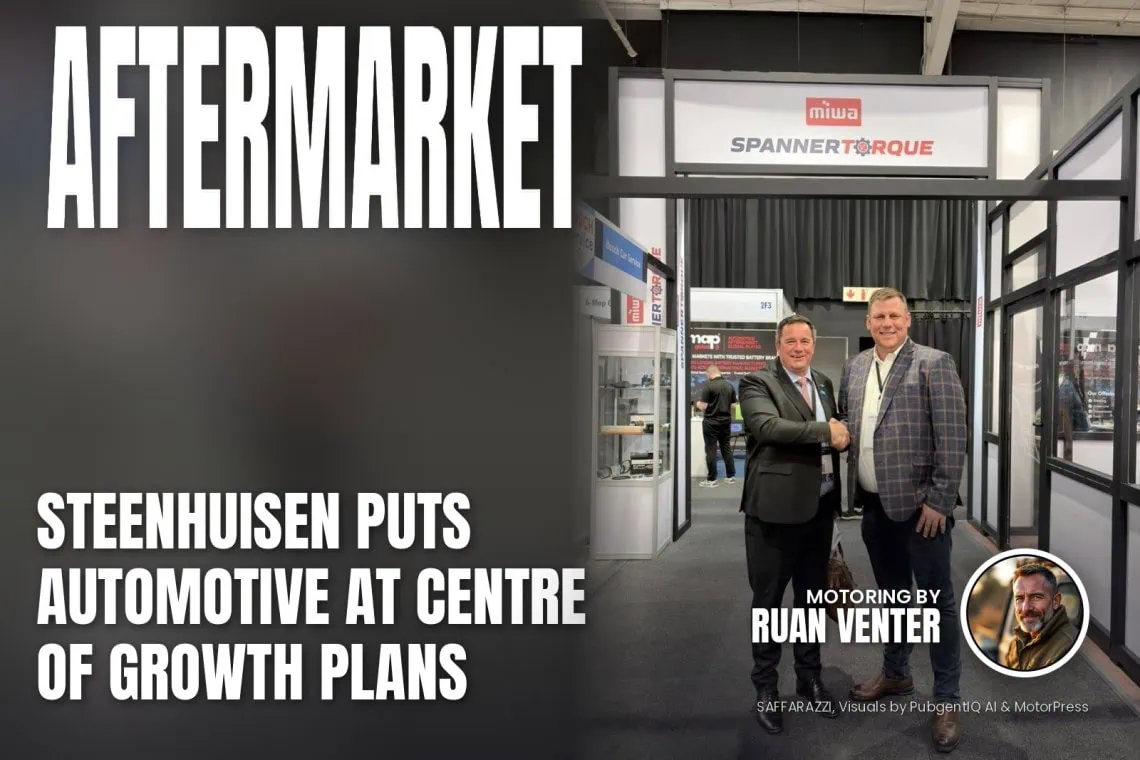
Deputy Minister of Trade, Industry and Competition John Steenhuisen has called South Africa’s automotive aftermarket a major contributor to the economy, in his opening address at the CEO Breakfast at Automechanika Johannesburg 2026 at the Gallagher Convention Centre. The Retail Motor Industry Organisation (RMI) welcomed the recognition.
According to Steenhuisen, the retail and aftermarket economy traded approximately R933 billion in 2025, contributed R202.6 billion to GDP and supported more than 310 000 jobs, around 70% of total automotive employment. It spans more than 23 000 businesses, most of them small and medium-sized enterprises, which keep the country’s approximately 13 million vehicles roadworthy. “If manufacturing is the birth of the vehicle, the aftermarket is the life of the vehicle,” he said.
Localisation of replacement parts in South Africa
The country imported approximately R107.5 billion worth of replacement parts in 2025, while around 76% of vehicles on its roads are outside their warranty period. Steenhuisen noted that the opportunity is not limited to the roughly 600 000 vehicles produced annually, but lies in the fleet already in use.
He said the review of the Automotive Production and Development Programme (APDP2) should consider the businesses that maintain and repair vehicles. “Localisation must extend beyond the factory gate,” he added.
Regional trade under the AfCFTA
The African Continental Free Trade Area was identified as another opening, with demand across Southern Africa growing for affordable replacement parts, remanufactured components, technical expertise and aftermarket services. Exports, in his view, are no longer confined to complete vehicles and original equipment components.
Artisan skills and road safety
While apprenticeship numbers have increased, South Africa has approximately 31% fewer qualified automotive artisans than in 2009. Electric and hybrid vehicles, driver-assistance systems and newer diagnostic tools all demand deeper technical capability. Henk Ferreira, Chief Operating Officer of the RMI, said the skills pipeline must keep pace, and backed collaboration between industry, government, merSETA, TVET colleges and training providers.
Maintenance, quality repairs and roadworthiness testing also reduce risk on the roads, Steenhuisen said, describing proper maintenance as “a public good”. Repair and remanufacturing, he added, support a circular economy by extending vehicle life and reducing waste.
Call for implementation from government and industry
Closing his address, the Deputy Minister urged a stronger focus on implementation, noting that the businesses, skills pipeline, customers and infrastructure already exist. He thanked the RMI, Messe Frankfurt, industry associations and exhibitors, while Ferreira welcomed the emphasis on practical, sustained cooperation between the state and the sector.
Supplied by MotorPress (Cathy Findley PR)
This story is based on aggregated news, press release(s) or other sources and was prepared with the help of AI tools, which can make mistakes. Prices, specifications, general information and availability may change, so confirm the details with the manufacturer, other news sources or a dealer.
Enjoyed this story? We need your help.
Add Saffarazzi as a preferred source. You’ll see more of our stories on Google, and you’ll help us grow.