
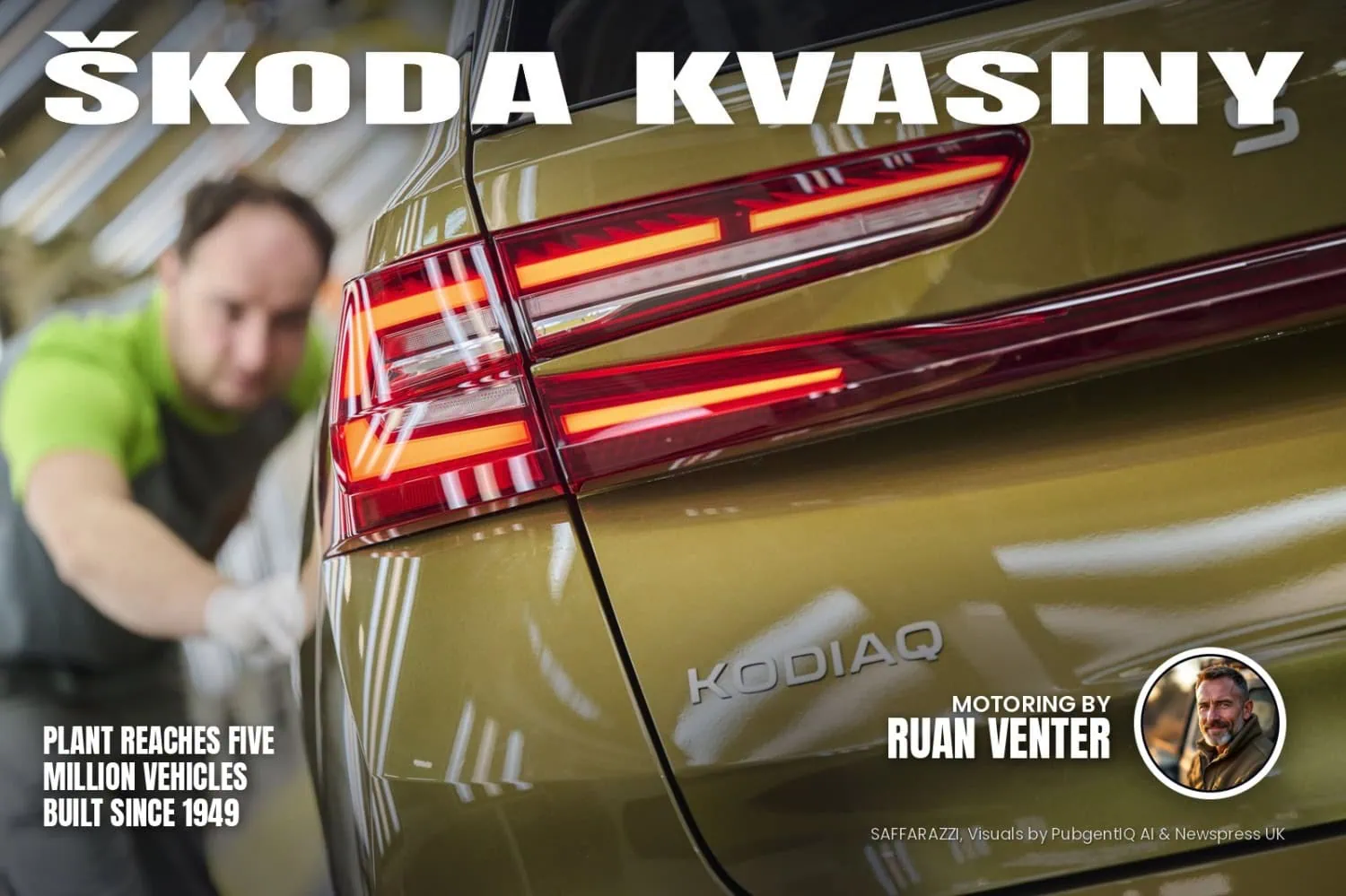
- Kvasiny plant builds its five-millionth Škoda.
- Site part of Škoda since 1949.
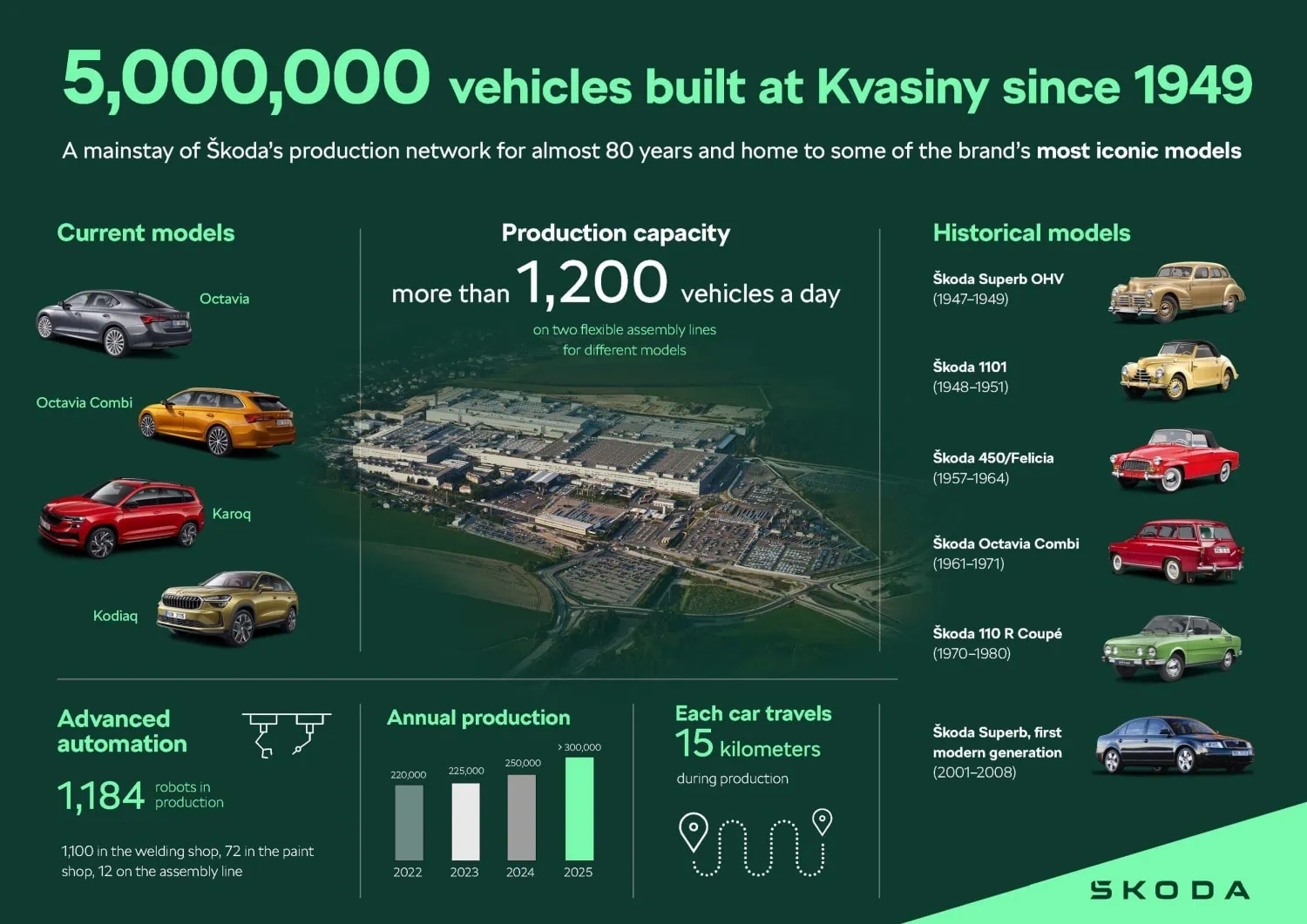
- Record 301,500 vehicles produced in 2025.
- Builds Octavia, Octavia Combi, Karoq and Kodiaq.
- One-millionth Karoq built there this summer.
Kvasiny, the factory that began assembling car bodies in 1934, has now built five million vehicles for Škoda Auto since officially becoming part of the carmaker in 1949. Over almost 80 years with the brand, it has produced family cars, sports coupés, commercial vehicles and SUVs.
Andreas Dick, Škoda Auto Chief Production Officer, said the plant’s history “demonstrates its ability to adapt to changing market demand”, adding that ongoing modernisation and increased output “reflect the exceptional dedication of our colleagues at Kvasiny”.
Early Kvasiny models and sports coupés
Complete vehicle production started when the site joined Škoda in 1949 as part of the then national automotive enterprise AZNP. Among the first models built there were the 1101 ‘Tudor’ and the flagship Superb OHV. Later came the Škoda 450/Felicia roadster from 1957 to 1964 and the Octavia Combi between 1961 and 1971.
The factory was also the birthplace of rear-engined coupés, including the 200 RS and 130 RS racing cars and the 110 R, Garde and Rapid production models. In the 1990s, two versions of the Pick-up commercial vehicle were made there, one based on the Favorit and the other on the Felicia, with the latter also built as the VW Caddy.
Superb, Yeti and plant modernisation
Production of the first-generation Superb in 2001 prompted significant expansion and modernisation. The Roomster followed from 2006 to 2015, as did the Yeti SUV from 2009 to 2017 and the Superb iV, Škoda’s first plug-in hybrid.
Two assembly lines can now build different models, letting the plant respond quickly to changes in demand. Recent additions include an automated small parts warehouse, a multifunctional competence centre, a training centre and an expanded welding shop, while the dProduction project introduced in 2019 digitalised production processes and work instructions. This year, a new chassis pre-assembly section was added for plug-in hybrid and hybrid models, the Kodiaq welding line was automated, and the paint shop’s topcoat line was rebuilt with new paint application robots.
Octavia, Karoq and Kodiaq production today
The plant currently builds the Karoq and Kodiaq SUVs and, since 2024, the Octavia, including the Combi version. That addition helped it reach a record 301,500 vehicles in 2025, and the one-millionth Karoq rolled off its line this summer.
Supplied by Newspress UK (Škoda)
This story is based on aggregated news, press release(s) or other sources and was prepared with the help of AI tools, which can make mistakes. Prices, specifications, general information and availability may change, so confirm the details with the manufacturer, other news sources or a dealer.
Enjoyed this story? We need your help.
Add Saffarazzi as a preferred source. You’ll see more of our stories on Google, and you’ll help us grow.