

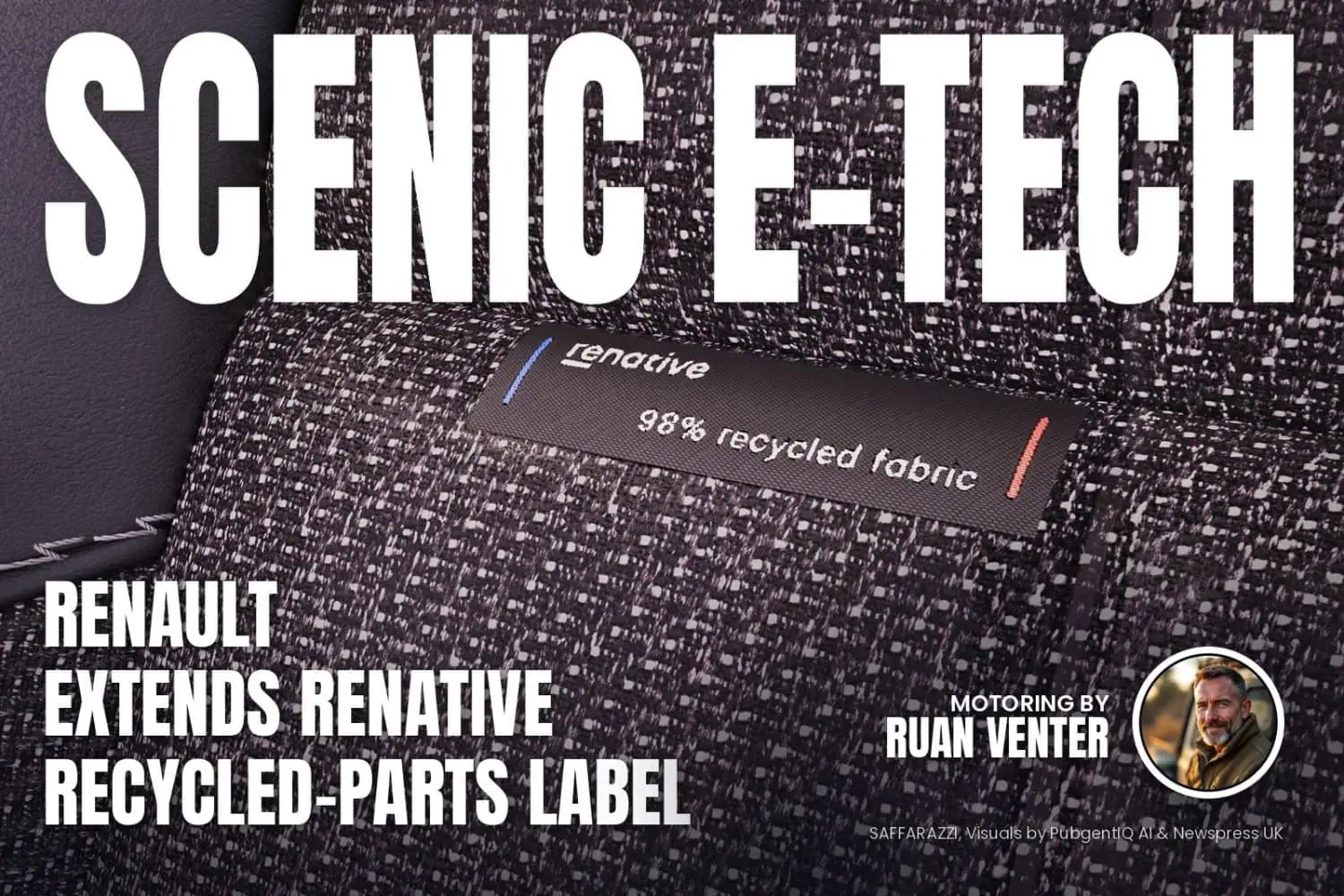
- Renative label moves from after-sales to new cars.
- Scenic E-Tech electric is first to carry it.
- Techno finish seats use 98% recycled textile.
- Over 2,000 renative after-sales references exist.
- Remanufactured parts average 30% cheaper than new.
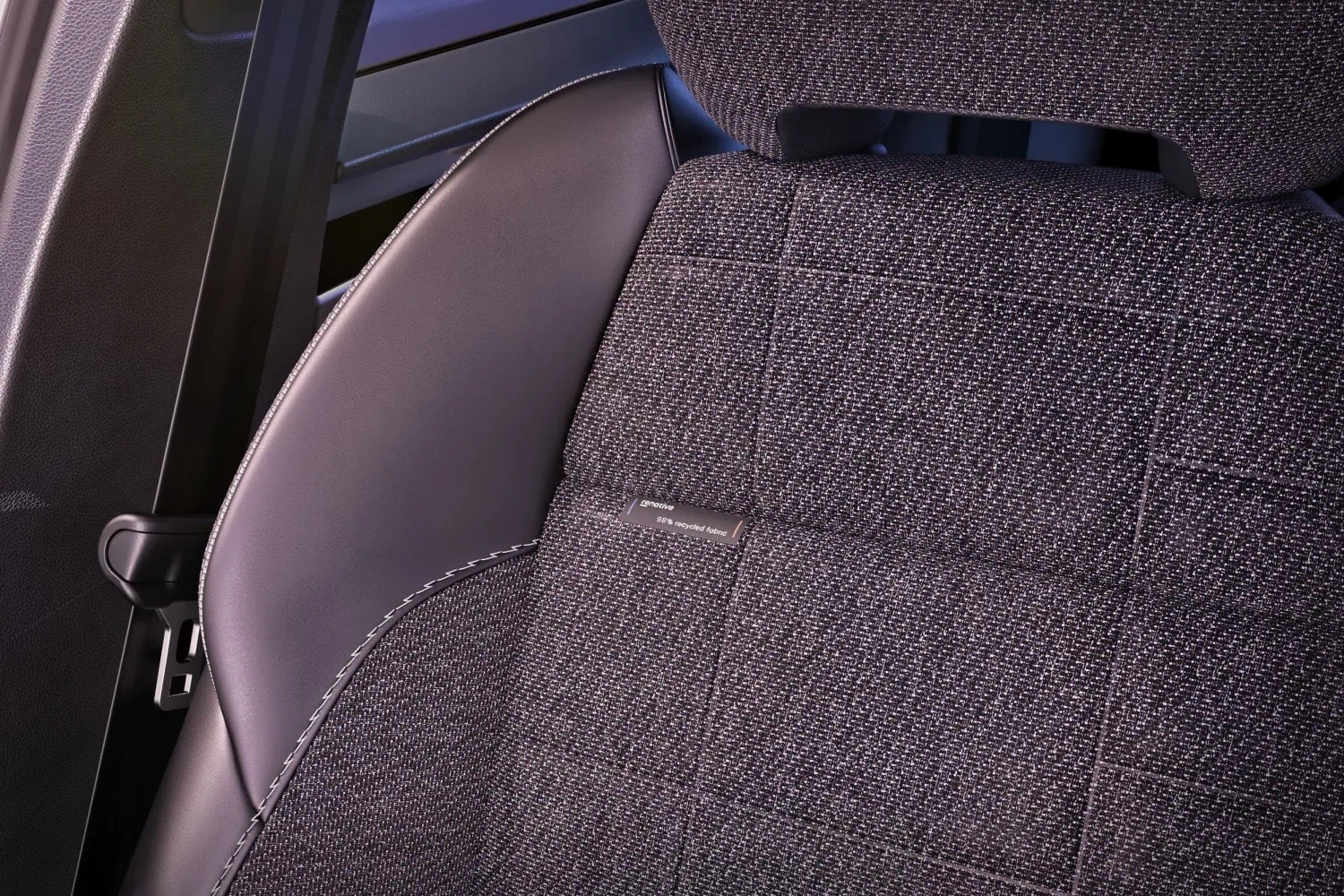
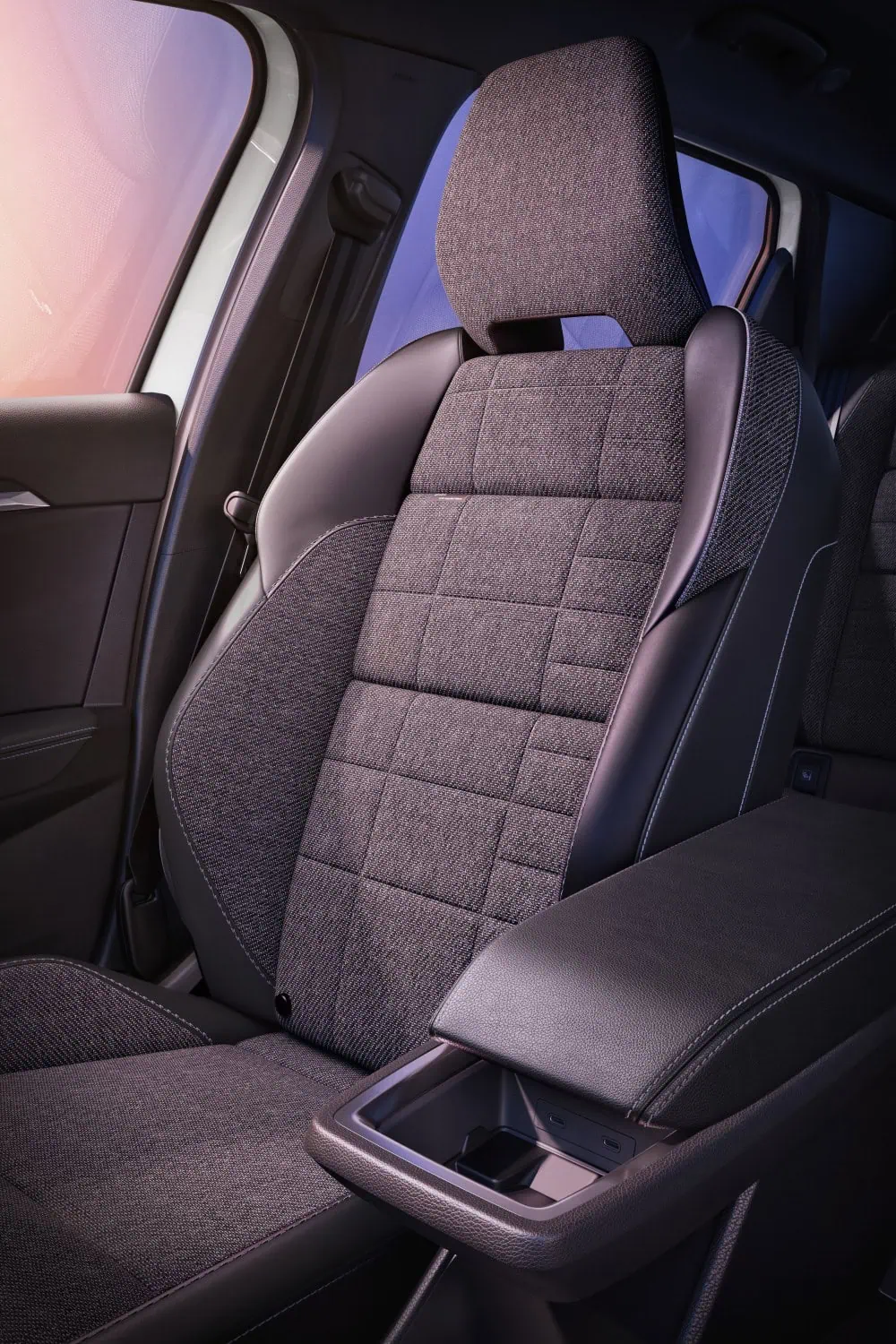
In techno finish, the Scenic E-Tech electric’s seats will be the first parts in a new Renault to wear the renative® name, the brand’s label for components with high proportions of recycled and circular materials. The seat textile is 98% recycled.
Until now the umbrella brand has been used only in Renault Group’s after-sales business. Extending it to new vehicles is meant to let customers identify where recycled content is used in the car itself.
Why materials matter for electric cars
As electrification cuts CO₂ emissions from vehicle use, attention is shifting to materials, which can represent nearly 50% of an electric vehicle’s carbon footprint across its life cycle. Renault says it is limiting virgin raw materials, adding more recycled content and prioritising materials with a low carbon footprint.
Recycled content across the Renault range
The work dates back to 1991, when recycled plastics went into the first-generation Clio. Today the New Clio Esprit Alpine uses at least 33.9% of materials sourced from the circular economy, and its wheels contain 50% circular aluminium. The Renault 5 E-Tech electric uses 100% recycled textiles on the Techno, Iconic and Roland Garros versions.
Elsewhere, the dashboard of the Master contains up to 20% of materials recycled from end-of-life vehicles, while the Solarbay® panoramic glass roof offered on Scenic, Symbioz and Rafale has over 50% circular materials.
How renative is applied in the Scenic
Other parts of the Scenic also use recycled material. The dashboard structure is 80% recycled polypropylene and the headliner is made from 99.5% recycled plastic bottles. The label is not meant to mark every part with recycled content, only those with a notably high level. After the seats, it could be extended to plastics, aluminium, steel and glass across the range.
Renative parts in after-sales
In after-sales, renative® already covers over 2,000 references, including remanufactured parts, reconditioned batteries, repaired electronic components, reused parts, re-refined oils and accessories with recycled materials. On average, a remanufactured part is 30% cheaper than a new equivalent while meeting the same performance, quality and safety requirements. Further information is available at www.press.renault.co.uk.
Sourced from Newspress UK (Renault)
This story is based on aggregated news, press release(s) or other sources and was prepared with the help of AI tools, which can make mistakes. Prices, specifications, general information and availability may change, so confirm the details with the manufacturer, other news sources or a dealer.
Enjoyed this story? We need your help.
Add Saffarazzi as a preferred source. You’ll see more of our stories on Google, and you’ll help us grow.