
- Inland 95 petrol holds above R30 a litre.
- Rooftop solar capacity reached 8 294 MW by mid-2026.
- 22 389 new energy vehicles sold, January to September 2026.
- Plug-in hybrids and EVs exceed half of sales.
- Volvo backs home and workplace charging.
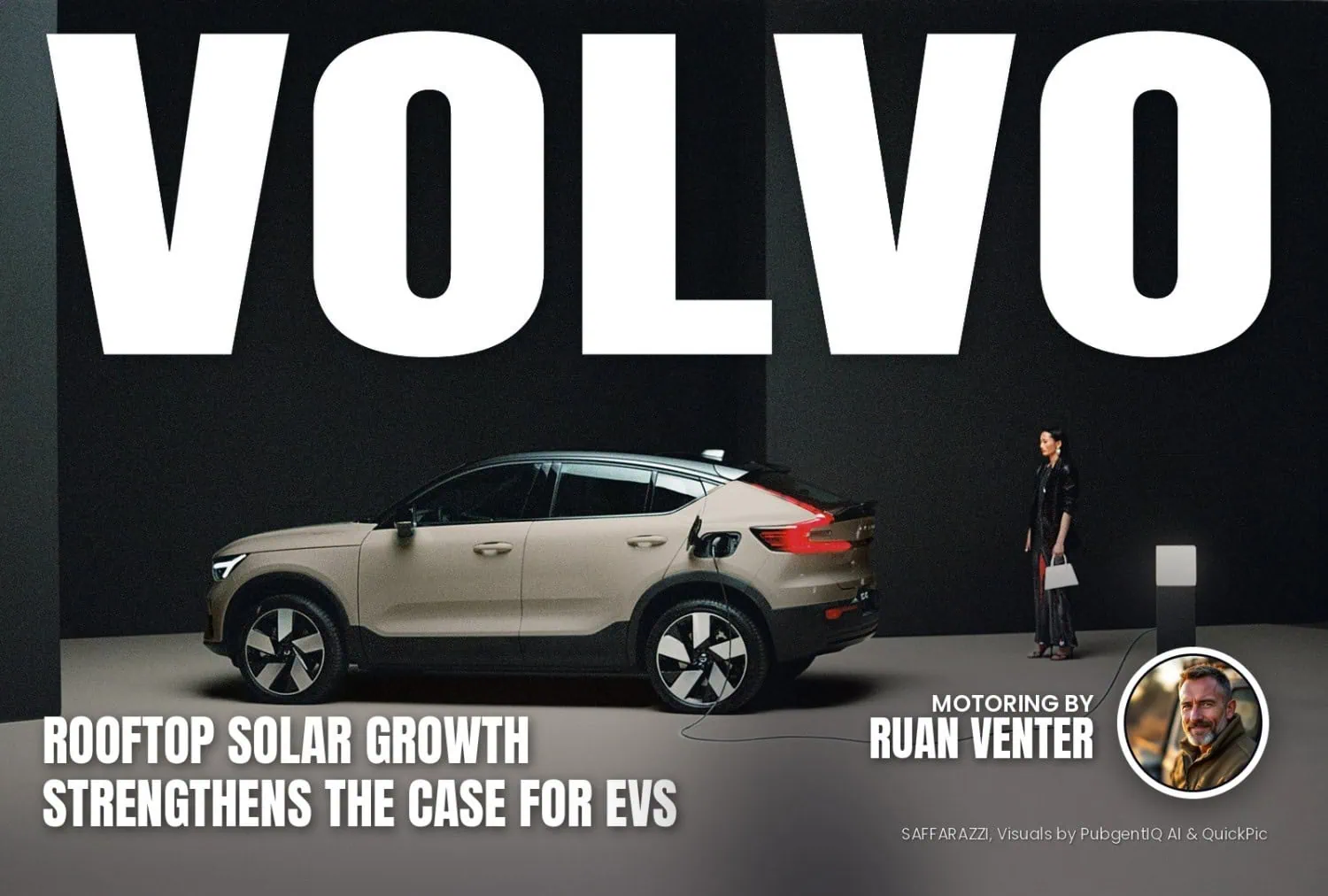
Inland 95 petrol is holding above R30 a litre after the Department of Mineral and Petroleum Resources’ November adjustment. Against that backdrop, Volvo Car SA argues that South Africa’s growth in private rooftop solar makes electric vehicles and plug-in hybrids a practical choice for more motorists.
For many local buyers, the main doubt about going electric has been a simple one. If the national grid is under well-documented pressure, does an electric vehicle make sense? Automotive experts say private energy systems at homes and businesses change that equation.
Volvo on charging where cars park
Vusi Machie, Product and Pricing Manager at Volvo Car SA, says drivers need to rethink how they top up energy. “Charging works best when it happens where the car already spends its time,” he says. In his view, plugging in at home or at work means the battery charges overnight or during office hours, “closer to parking with electricity than to refuelling”.
New energy vehicle sales in South Africa
Sales figures from naamsa, the Automotive Business Council, show 22 389 new energy vehicles were recorded in South Africa between January and September 2026. That nine-month tally is already higher than the totals of previous years.
Plug-in hybrids and fully electric vehicles account for more than half of those sales, which indicates that buyers are choosing models that can be charged from a plug rather than conventional hybrids alone.
Rooftop solar capacity and home charging
Estimates from the National Transmission Company South Africa put behind-the-meter rooftop solar capacity in the country at 8 294 MW by mid-2026. This is generation installed on homes and business premises rather than supplied through the national grid.
Households with rooftop panels and battery storage can increasingly run daily commutes on electricity they generate themselves. Energy harvested while a car is parked in daylight can be stored and used for evening driving, linking home power systems directly to personal transport.
For motorists weighing the switch, the practical starting point is access to charging at home or at work. Combined with solar and storage, that setup reduces exposure to monthly fuel price changes.
Supplied by QuickPic (Volvo Car)
This story is based on aggregated news, press release(s) or other sources and was prepared with the help of AI tools, which can make mistakes. Prices, specifications, general information and availability may change, so confirm the details with the manufacturer, other news sources or a dealer.
Enjoyed this story? We need your help.
Add Saffarazzi as a preferred source. You’ll see more of our stories on Google, and you’ll help us grow.