

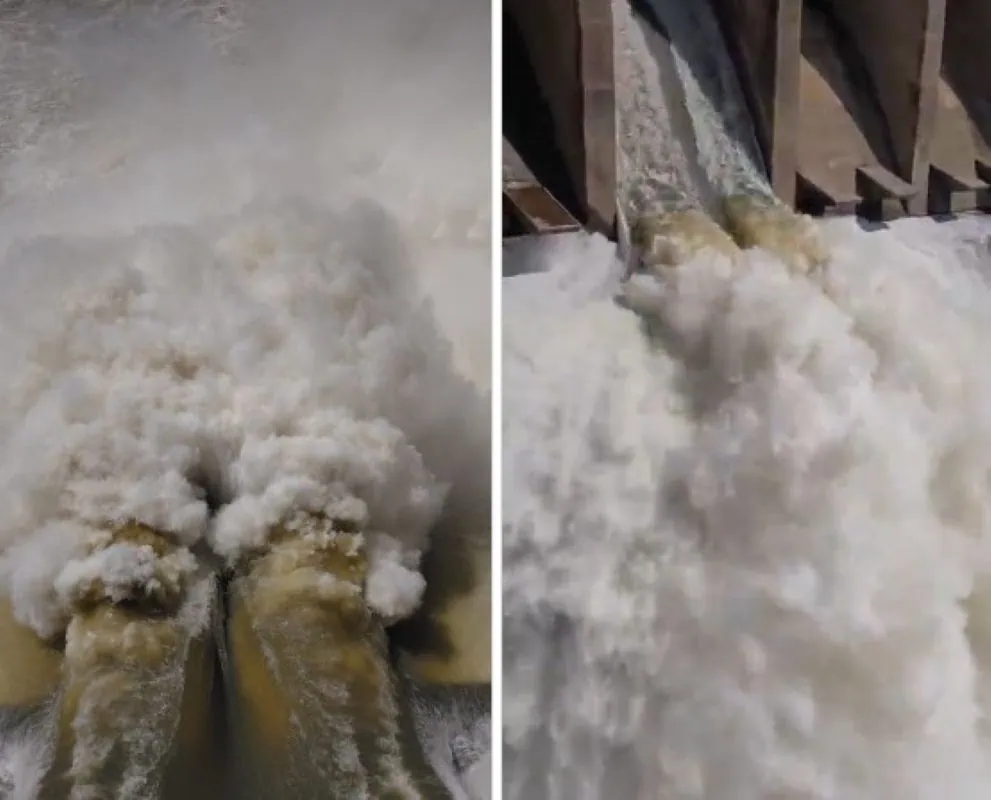
The Department of Water and Sanitation (DWS) opened a sluice gate at the Vaal Dam on Thursday afternoon, releasing water from a dam already above full capacity after heavy rainfall in the upper Vaal River catchment pushed inflows sharply higher.
The rain has driven runoff into the river system and on into the dam, which stood at 111.64% of full supply capacity by 2pm. Inflows had climbed to 787.72 cubic metres per second (m³/s), up from about 756 m³/s at 7am.
DWS said the gate opened later than the planned 12:00 because of technical challenges.
Vaal Dam sluice gate opening a ‘controlled measure’
With the gate open, total outflow is expected to rise to between 130 m³/s and 150 m³/s, depending on the dam level and the gate’s discharge characteristics.
On those figures, the dam – near Vereeniging on the border of the Free State, Gauteng and Mpumalanga provinces – is taking in roughly five to six times more water than it is releasing.
DWS spokesperson Wisane Mavasa said the release is “a controlled operational measure aimed at managing the increasing volume of water entering the dam”.
How long it lasts will depend on inflows, storage levels and ongoing hydrological assessments.
Vaal Dam release: Does one open sluice gate mean flooding?
No, not by itself. DWS has stressed that opening one sluice gate does not automatically mean flooding will occur.
It warns, however, that rising river levels and faster currents could create dangerous conditions for people living or working near the water, particularly in low-lying areas.
The department has named four areas to watch:
- Vereeniging
- Vanderbijlpark
- Vaalpark
- Parys
The water flows from the dam – to the Vaal Barrage and on down the Vaal River towards Bloemhof Dam.
Why Bloemhof Dam matters
DWS is also managing Bloemhof Dam, which had reached 88.9% of capacity at 7am on Thursday, with inflows of about 227 m³/s and outflows of about 20 m³/s. Because of ongoing rehabilitation work, its storage must stay at or below 90%.
After flood-routing assessments, DWS initially recommended raising Bloemhof’s outflow to about 300 m³/s by 2pm.
The assessments factor in the extra water coming from the Vaal Dam, its travel time downstream and further runoff along the way. The two dams’ releases are coordinated.
Vaal Dam: A smaller release than last November
This is far smaller than last year’s releases.
In late November 2025, DWS had 10 Vaal Dam gates open, releasing about 1,500 m³/s, and warned that some residents along the river might need to be evacuated. The department has made no evacuation call this time.
Safety advice for communities
DWS urges people along the river to:
- Avoid entering or crossing fast-flowing rivers.
- Stay away from flooded low-water bridges.
- Keep children and livestock away from riverbanks.
- Take care around riverfront properties and low-lying areas.
- Follow official updates from DWS and local authorities.
Familiar crossings and access points should not be assumed safe while conditions change.
What happens next
DWS says it will keep monitoring dam levels, inflows and downstream conditions, and will adjust releases as needed. If inflows keep rising, the department may have to release more water.
Enjoyed this story? We need your help.
Add Saffarazzi as a preferred source. You’ll see more of our stories on Google, and you’ll help us grow.